
Quick Summary: Testing soundbar vs. speaker bass involves comparing how well each reproduces low-frequency sounds. A good bass test reveals which system delivers richer, more impactful lows for movies, music, and games, ensuring a more immersive audio experience.
When you’re setting up a new home entertainment system, a big question often pops up: how do different audio options handle bass? You might be wondering if that sleek soundbar can truly deliver the thunderous lows you love in action movies, or if dedicated speakers still hold the crown. It’s exciting to get that powerful rumble, but comparing soundbars and speakers for bass can feel a bit tricky if you’re not sure where to start. Don’t worry, this guide is here to simplify it all! We’ll walk you through easy ways to test and understand the bass performance of your soundbar versus traditional speakers, helping you make a choice that truly rocks your world. Get ready to hear the difference!
The Rumble Factor: Understanding Bass in Home Audio

Bass is the heartbeat of your audio. It’s that deep, resonant sound that you can often feel as much as hear. For gamers, it’s the explosion shaking your seat. For music lovers, it’s the thumping beat that makes you want to dance. For movie buffs, it’s the engine roar or the earthquake tremor that pulls you deeper into the scene. When we talk about bass in home audio, we’re generally referring to frequencies below 200 Hz. The lower the frequency, the deeper the sound.
Different audio setups handle this crucial part of sound very differently. A good bass response means hearing those low notes with clarity, depth, and impact, without them sounding muddy or distorted. It’s about feeling the power and nuance, not just a vague rumble. This is where the comparison between soundbars and traditional speaker systems really comes into play, especially when you want to perform a soundbar vs. speaker bass test.
Soundbars: The Sleek Powerhouses
Soundbars have become incredibly popular because they offer a significant audio upgrade over your TV’s built-in speakers in a compact, stylish package. They often integrate multiple speaker drivers into a single unit, and many come with a separate wireless subwoofer to handle the low-end frequencies.
The magic of a soundbar’s bass often hinges on that subwoofer. Without one, a standard soundbar might struggle to produce truly deep, room-filling bass, as its smaller drivers have physical limitations. However, with a dedicated subwoofer, a good soundbar system can deliver surprisingly robust bass, making movie nights and gaming sessions much more exciting. The convenience of a single unit (or a slim bar with a discreet sub) is a huge draw for many.
Speaker Systems: The Traditional Force
Traditional speaker systems, often referred to as home theater in a box (HTIB) or component systems, typically involve multiple separate speakers strategically placed around your room. This usually includes left and right front speakers, a center channel for dialogue, and surround speakers. Crucially, these systems often have larger, more powerful woofers (the speaker drivers specifically designed for bass frequencies) built into their front speakers, or they are paired with a substantial standalone subwoofer.
The advantage here is the potential for more dedicated components designed for specific sound ranges. Larger speaker cabinets and dedicated woofers can genuinely move more air, allowing for deeper, more impactful bass. The ability to position speakers independently also helps create a more enveloping sound stage, which can enhance the perception of bass. For audiophiles and enthusiasts seeking the most impactful and detailed low-end, a well-configured speaker system often has an edge.
Why a Soundbar Vs. Speaker Bass Test is Essential

A soundbar vs. speaker bass test isn’t just for audiophiles; it’s for anyone who wants their entertainment to sound truly alive. When you’re choosing, or even just troubleshooting your current setup, understanding how bass is reproduced is key to a satisfying listening experience.
- Immersive Entertainment: Deep bass makes movies feel cinematic, games feel urgent, and music feel visceral. Without it, you’re missing a huge part of the emotional punch.
- Accurate Representation: Different audio formats and music genres rely heavily on bass. A good test ensures your system can reproduce these sounds as intended by the artists or filmmakers.
- Identifying Limitations: Testing helps you pinpoint if your current system is lacking in bass, or if a potential upgrade is truly worth it. It highlights whether that new soundbar’s subwoofer is up to par or if your existing speakers are underperforming.
- Making Informed Decisions: Whether you’re buying a new system or optimizing your current one, a bass test provides concrete evidence to guide your purchases and adjustments.
This direct comparison is the best way to ensure you’re getting the audio quality you desire. Let’s dive into how you can conduct your own soundbar vs. speaker bass test right at home.
How to Conduct a Soundbar Vs. Speaker Bass Test

Performing a soundbar vs. speaker bass test doesn’t require fancy equipment, just a few key steps and some well-chosen audio content. The goal is to isolate and evaluate the low-frequency response of each system.
Step 1: Gather Your Test Material
The content you use is crucial. You need audio tracks that are known for their strong, clear bass content.
- Music Genres: Look for tracks heavy on basslines, particularly in genres like electronic dance music (EDM), hip-hop, reggae, dubstep, and some forms of rock and funk.
- Movie Scenes: Action movies are a goldmine. Think about scenes with explosions, car chases, powerful engine sounds, deep orchestral scores, or seismic events. Scenes from films like “Gravity,” “Blade Runner 2049,” “Mad Max: Fury Road,” or “The Dark Knight” are excellent choices.
- Game Audio: Many video games feature incredible sound design. Explosions, engine revs, dramatic music swells, and deep ambient sounds in games like “Cyberpunk 2077,” “The Last of Us Part II,” or racing simulators can be very revealing.
- Bass Test Tones: You can also use specialized bass test tones. Websites like AudioCheck offer pure sine wave tones at various low frequencies (e.g., 30 Hz, 40 Hz, 50 Hz, 60 Hz). This is a more technical way to see at what frequency each system starts to roll off or distort.
Step 2: Set Up Your Test Environment
Your room plays a big part in how bass sounds.
- Placement: Ensure your soundbar or speakers are positioned according to their optimal placement guidelines. For soundbars, this is typically centered below your TV. For surround speakers, follow the standard home theater speaker layout.
- Room Acoustics: Try to minimize excessive background noise that could interfere with your bass perception. Close windows and turn off noisy appliances.
- Volume Level: Set a consistent, comfortable listening volume. Avoid excessively high volumes, which can introduce distortion and mask subtle differences. A moderate, realistic volume is best for comparison.
Step 3: Perform the Listening Test
This is where you put your ears to the test.
- Play the same audio clip (music, movie scene, or tone) on both your soundbar and your speaker system. If you’re comparing systems, you’ll need to connect each one to your TV or source device sequentially. If you’re evaluating a single system, play different segments that highlight various bass elements.
- Focus on specific bass characteristics:
- Depth: Can you hear the really low, foundational notes? Or does it sound thinner?
- Impact: Does the bass hit hard and punchy, like a kick drum or an explosion? Or is it soft and distant?
- Clarity: Is the bass distinct and well-defined, or does it sound muddy, boomy, or overwhelming the rest of the audio?
- Extension: How low does the bass go? Can it reproduce those sub-20 Hz tones, or does it struggle and fade out?
- Distortion: At moderate volumes, does the bass sound clean? Or does it crackle or distort, indicating the system is being pushed too hard?
- Switch back and forth: Listen to a short segment, then immediately switch to the other system and play the same segment. This direct A/B comparison is highly effective.
- Repeat with various content: Don’t rely on just one song or scene. Use a variety to get a well-rounded understanding of each system’s capabilities across different types of audio.
Step 4: Evaluate Subwoofer Performance (If Applicable)
If your soundbar or speaker system includes a subwoofer, pay special attention to its contribution during the test.
- Seamless Integration: Does the subwoofer blend well with the main speakers, or does it sound like a separate, disconnected unit? Good integration means the bass feels like a natural extension of the sound.
- Placement Effects: Experiment with subwoofer placement. Sometimes moving a subwoofer just a foot or two can dramatically change its perceived bass output, especially in smaller rooms. A common trick is the “subwoofer crawl”: place the sub where you typically sit and crawl around the room listening for the spot where the bass sounds best, then put the sub there.
- Volume Controls: Many subwoofers have their own volume control. Adjust this to find a balance where the bass is present and impactful but doesn’t overpower vocals or other sounds.
Step 5: Consider Room Size and Acoustics
The size of your room and its acoustic properties will significantly affect bass response—this applies to both soundbars and speaker systems. Hard surfaces like bare walls and floors can reflect bass, making it sound boomy. Soft surfaces like carpets, curtains, and furniture absorb bass, potentially making it sound weaker.
A larger room will require more powerful bass to fill it effectively. A small apartment might find even a modest subwoofer or speaker’s bass too powerful if not managed carefully. This is why perceived bass quality can vary widely between different listening environments, even with the same audio gear. For acoustical treatment tips, the Institute of Acoustics offers some general principles, though professional advice is an option. Understanding your room is a vital part of any soundbar vs. speaker bass test.
Comparing Bass Performance: Soundbar vs. Speaker Systems
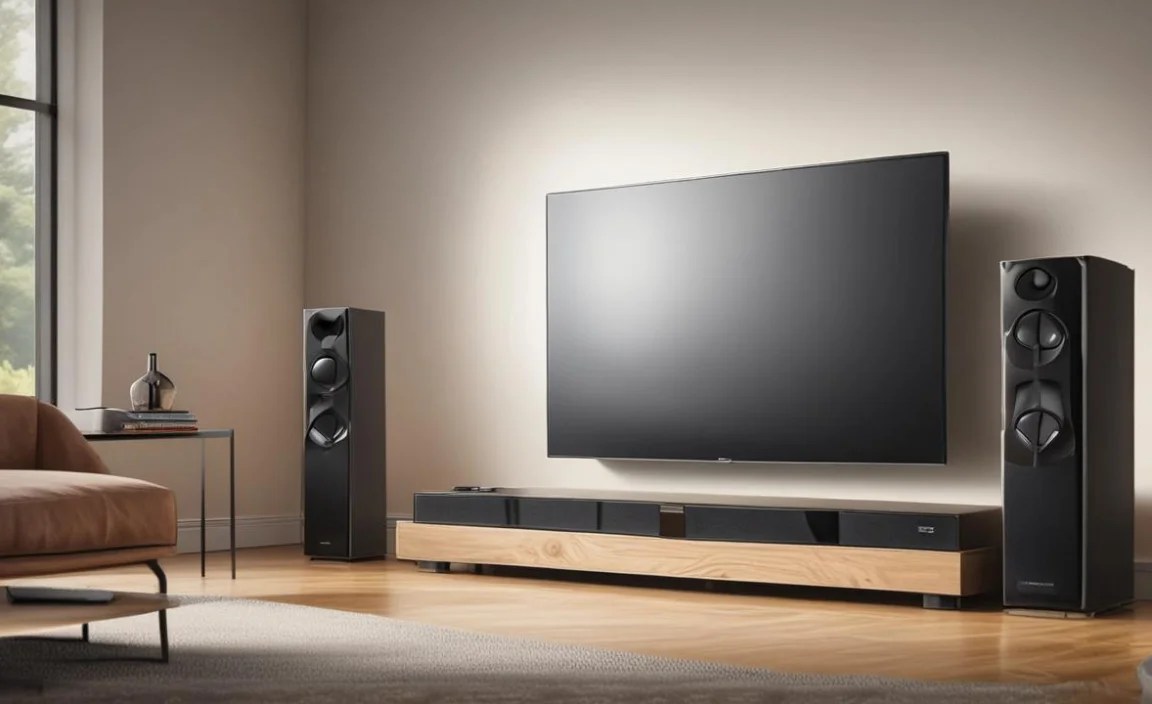
When you’re evaluating the results of your soundbar vs. speaker bass test, certain patterns often emerge. It’s not always black and white, but understanding these general tendencies can help you interpret your findings.
Key Differences in Bass Reproduction
Here’s a look at how they typically stack up:
| Feature | Soundbar (with Subwoofer) | Dedicated Speaker System (with Subwoofer or larger woofers) |
|---|---|---|
| Depth & Extension | Can be excellent, especially with a good, dedicated subwoofer. May struggle with the absolute lowest sub-bass frequencies compared to high-end systems. | Often superior. Larger woofers and dedicated subwoofers can typically reproduce deeper and more extended bass. |
| Impact & Punch | Good, particularly for movie sound effects. Can sometimes feel less precise or varied than discrete speakers. | Generally excellent. Can deliver tight, punchy bass for music and powerful, visceral lows for movies. |
| Clarity & Definition | Varies greatly by model. Higher-end soundbars with better processing and subwoofers excel. Cheaper models can be muddy. | Often higher. Dedicated drivers and careful system tuning can lead to very clean, articulate bass. |
| Room Filling Potential | Good for medium-sized rooms. May be insufficient for very large spaces without a powerful sub. | Excellent. Can be scaled with more powerful subwoofers and larger speakers for any room size. |
| Integration & Cohesion | Can sometimes feel less integrated if sub is not tuned well. Wireless subs can be less precise than wired. | Generally better if components are matched carefully. Wired connections often offer the most stable and consistent performance. |
| Ease of Setup | Very easy. Bar plus sub is usually plug-and-play. | More complex, requiring running wires and precise speaker placement. |
Factors Affecting Your Test Results
It’s important to remember that the results of your soundbar vs. speaker bass test will depend on several variables:
- Price Point: A high-end soundbar will often outperform a budget speaker system, and vice-versa.
- Subwoofer Quality: For both soundbars and speaker systems, the quality and size of the subwoofer are massive factors in bass performance. A small, basic subwoofer will struggle regardless of the main unit.
- Speaker Driver Size: Larger woofers in traditional speakers can move more air, contributing to deeper bass.
- Room Acoustics: As mentioned, your room’s shape, size, and materials significantly influence how bass sounds.
- Source Material Quality: The original audio recording or mix matters. A poorly mixed track won’t sound good on any system.
- System Calibration: Even within a category, differences in digital signal processing (DSP) and calibration can impact bass output and clarity.
When to Choose a Soundbar for Bass

You might lean towards a soundbar if:
- Simplicity is Key: You want a significant audio upgrade without the complexity of multiple wires and speakers.
- Aesthetics Matter: You prefer a clean, minimalist look and want to avoid cluttering your living space with speakers.
- Your Room is Medium-Sized: A well-matched soundbar and subwoofer can provide ample bass for most living rooms and bedrooms.
- Convenience is Paramount: You value easy setup and operation above all else.
- You’re Upgrading from TV Speakers: Even a decent entry-level soundbar with a subwoofer will offer a dramatic improvement in bass compared to your TV’s built-in sound.
Many modern soundbars, especially those in the mid-to-high price range with dedicated subwoofers, offer systems like Dolby Atmos which can create a more immersive sound field, including virtual bass enhancement. Brands like Sonos, Samsung (with their Q-series), and LG often have soundbars that punch well above their weight in bass performance for their size.
When to Choose a Speaker System for Bass
A speaker system might be your preferred choice if:
- Ultimate Bass Impact is Your Goal: You want the most powerful, deepest, and most impactful bass possible for an intensely immersive experience.
- You’re a Home Theater Enthusiast: You are building a dedicated home theater room or want the most authentic surround sound experience.
- Audio Fidelity is Top Priority: You prioritize precise, detailed, and uncompromised sound reproduction across all frequencies, especially the low end.
- Your Room is Large or You Have Open-Plan Living: You need larger, more powerful speaker units and subwoofers to fill a significant space effectively.
- You Enjoy Customization and Upgradability: You want the flexibility to choose individual components and upgrade parts of your system over time.
For unparalleled bass, consider systems with large floorstanding speakers that house substantial woofers, or dedicated home theater subwoofers that can reach very low frequencies (e.g., SVS Sound is a well-respected brand known for its potent subwoofers). Building a system from components typically involves receivers (like Denon, Marantz, or Yamaha) and speaker packages from brands such as Klipsch, Polk Audio, or Bowers & Wilkins, offering a level of performance that’s hard to match with an all-in-one solution.
Tips for Maximizing Bass Performance
Regardless of whether you’re using a soundbar or a speaker system, there are ways to get the most out of your bass.
- Subwoofer Placement is Key: Experiment! Corners often boost bass but can make it ‘boomy’. Mid-wall placement can offer cleaner output but might be less powerful. The ‘subwoofer crawl’ is a fantastic tip to find the sweet spot.
- Room Calibration: Many AV receivers and high-end soundbars come with calibration microphones (e.g., Audyssey for Denon/Marantz, YPAO for Yamaha). Use these tools to automatically adjust speaker levels, distances, and EQ for your specific room.
- Check Bass Management Settings: If you have an AV Receiver, ensure your speaker settings (size, crossover frequency) are configured correctly. For bass-heavy speakers or subs, setting them to ‘Large’ might be appropriate, while smaller satellites should often be set to ‘Small’ with their bass redirected to the subwoofer.
- EQ Adjustments: If your system allows, a slight boost in the 50-100 Hz range can add warmth and punch. Be cautious, as too much boost can lead to muddiness. Conversely, if bass is too boomy, a slight cut in the frequencies causing the issue (often around 80-150 Hz).