
Choosing speakers with great bass in 2025 is simple with our “Proven Bass Test.” Focus on speaker size, power, and listening to diverse bass-heavy tracks. This guide breaks down how to assess bass quality, ensuring your next speaker purchase delivers satisfying low-end punch for music, movies, and gaming.
Finding the perfect speakers can feel like a quest. You want that rich, deep bass that makes music thump and movies rumble your chest, but how do you actually know if a speaker can deliver? It’s a common worry, especially when you’re out shopping or browsing online. Many speakers promise powerful bass, but the reality often falls short. Don’t worry! This guide is here to help. We’ll walk you through a straightforward, proven method—the “Bass Test”—to confidently pick speakers that truly excel in the low frequencies. Get ready to experience sound like never before.
What exactly is a “Proven Bass Test” when buying speakers? It’s a practical approach to evaluating a speaker’s ability to reproduce low-frequency sounds accurately and powerfully. This involves listening to specific types of audio content and paying attention to certain characteristics of the bass. It’s less about complex technical specs and more about what your ears can detect.
Why Bass Matters: It’s More Than Just Loud

Bass is the foundation of sound. It’s what gives music its groove, movies their impact, and games their immersive feel. Without good bass, your audio experience can sound thin, even tinny. We’re not just talking about boom; we’re talking about clarity, depth, and the ability to feel the music.
- Music: From the kick drum in rock to the synth bass in electronic music, good bass brings rhythm and soul.
- Movies: Explosions, car chases, and dramatic scores rely on deep bass for a true cinematic experience.
- Gaming: Explosions, engine roars, and even subtle environmental cues in games are often conveyed through low frequencies, enhancing immersion.
The 2025 Speaker Landscape: What’s New and Important

The speaker market in 2025 continues to evolve. We’re seeing more wireless connectivity, smart features, and a push for better audio quality at various price points. However, the core principles of good bass reproduction remain the same. Key factors influencing bass performance include:
- Driver Size: Larger speaker drivers (woofers) can generally move more air, which is crucial for producing lower frequencies.
- Cabinet Design: The enclosure (or cabinet) plays a vital role in how bass frequencies are produced and reinforced. Different designs, like bass reflex or sealed enclosures, have their own strengths. For more on acoustic enclosures, you can explore resources from places like the Acoustics Society of America.
- Amplifier Power: While not the sole determinant, sufficient power allows the speaker to drive larger woofers effectively and produce bass without distortion.
- DSP (Digital Signal Processing): In modern speakers, DSP can be used to enhance bass response, often compensating for smaller driver sizes or cabinet limitations.
Your Proven Bass Test: Step-by-Step
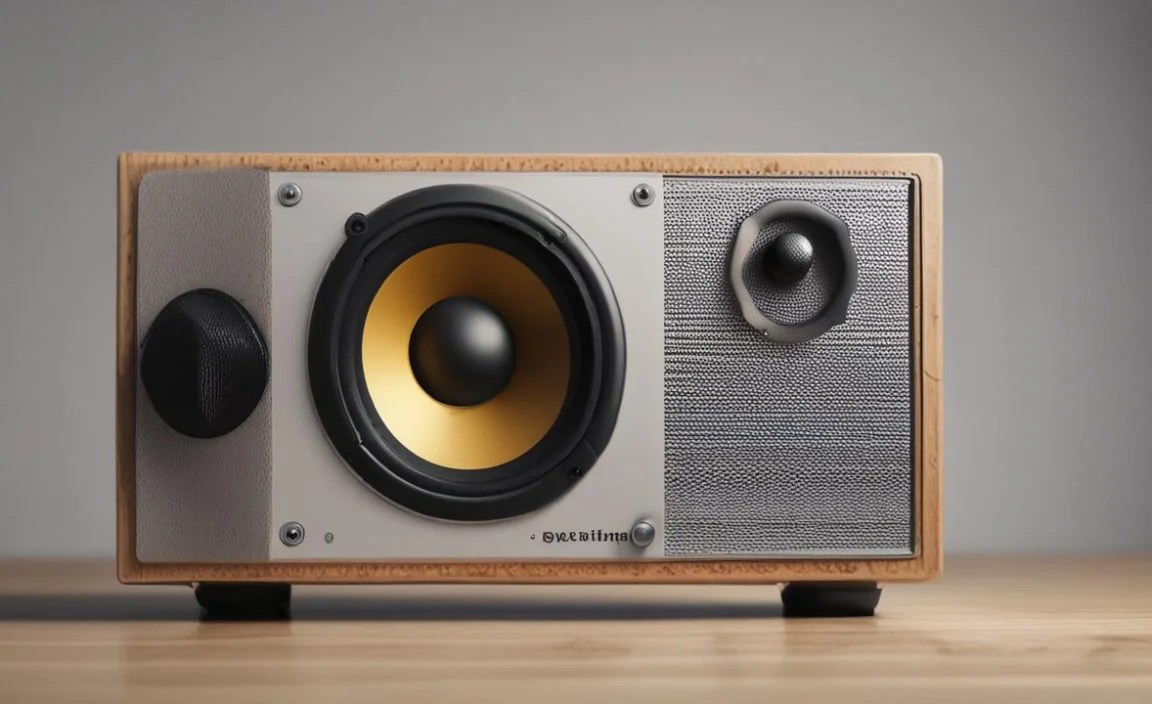
This test is designed to be easy to follow, whether you’re in a store or testing speakers at home with your own devices. The goal is to listen critically and compare.
Step 1: Gather Your Bass-Test Tracks
The right music is key. You need songs that are well-recorded and showcase a good range of low frequencies. Forget about generic pop songs made for general listening; we need tracks that test bass.
Recommended Genres and Artists (for a good workout):
- Electronic/Dance: Artists like Daft Punk, Deadmau5, Bassnectar, or anything with a prominent synthesized bassline.
- Hip-Hop/R&B: Look for artists with deep, resonant basslines, such as Kendrick Lamar, Dr. Dre, or J Dilla.
- Reggae/Dub: These genres are legendary for their deep, driving bass. Bob Marley, King Tubby, or Lee “Scratch” Perry are great choices.
- Classical/Film Scores: Pieces with powerful orchestral bass drums, pipe organs, or deep sub-bass effects can reveal a speaker’s capability. Think Hans Zimmer or John Williams scores.
- Rock: While not always bass-centric, artists like Pink Floyd or Led Zeppelin feature distinctive bass guitar work that can highlight clarity and depth when played well.
Specific Song Suggestions:
-
- “Get Lucky” – Daft Punk ft. Pharrell Williams (Smooth, groovy bassline)
- “The Sound of Silence” – The Disturbed (Dramatic, deep vocal tones and powerful orchestral hits)
- “Bangarang” – Skrillex ft. Sirah (Aggressive, deep sub-bass drops)
- “Why So Serious?” by Hans Zimmer (from The Dark Knight soundtrack) (Incredibly deep, impactful sub-bass)
- “Billie Jean” – Michael Jackson (Iconic, clear, and punchy bassline)
Step 2: Prepare Your Listening Environment (If Possible)
If you’re testing in a store, do your best with the environment. If you’re testing at home, try to listen in a space that’s similar to where you’ll use the speakers. Large, empty rooms can make bass sound boomy, while small, cluttered rooms might dampen it.
Step 3: The Listening Session – What to Listen For
Play your prepared tracks. Don’t just have it on in the background. Focus your attention on the low frequencies. What are your ears telling you?
Key Bass Qualities to Evaluate:
-
-
- Depth: Can you hear the lowest notes? Does the bass feel deep and resonant, or more like a mid-range thud?
- Clarity/Definition: Can you distinguish individual bass notes, or does it sound muddy and indistinct? Good bass isn’t just loud; it should have character and articulation.
- Punch/Impact: Does the bass hit with authority? Does it have a satisfying “thump” or “kick” that you can feel?
- Extension: How low does the bass go? Does it fade out quickly, or does it have a sustained tail that adds fullness?
- Balance: Does the bass overpower the rest of the music, or is it well-integrated with the mids and highs? A speaker that only does bass well isn’t ideal.
- Distortion: At reasonable listening volumes, does the bass crackle, rattle, or sound strained? This indicates the speaker is being pushed beyond its capabilities.
-
Step 4: Comparative Listening is Crucial
The best way to judge bass is by comparing speakers side-by-side. If possible, set up two or three speakers you’re considering and play the exact same test track on each. Cycle through them repeatedly.
Use a table like this to make notes:
| Speaker Model | Depth (1-5) | Clarity (1-5) | Punch (1-5) | Balance (1-5) | Overall Bass Impression |
|---|---|---|---|---|---|
| Speaker A (e.g., BrandX Compact) | 3 | 4 | 3 | 4 | Good clarity, decent punch, but lacks deep extension. |
| Speaker B (e.g., BrandY Floorstander) | 4 | 3 | 4 | 3 | Very deep and punchy, but can sometimes overshadow vocals. |
| Speaker C (e.g., BrandZ Bookshelf) | 2 | 5 | 2 | 5 | Very clear mids and highs, but bass is almost non-existent. |
Step 5: Test with Different Types of “Bass Content”
While music is great, also consider what else you’ll use the speakers for.
-
-
- Movies/TV Shows: Play a scene known for its strong audio effects. Think of a blockbuster movie trailer or a scene with deep rumbles.
- Gaming: If you’re a gamer, play a game that relies on impactful sound design. Test explosions, engine sounds, and ambient noise.
-
This helps ensure the bass translates well across different media.
Beyond the Test: Other Factors for Bass Performance

While our Bass Test is effective, remember these other considerations:
Speaker Size and Type
Generally, larger speakers can produce deeper bass. However, clever design and technology can enable smaller speakers to punch above their weight.
-
-
- Bookshelf Speakers: Compact, good for smaller rooms. Bass is usually present but might lack extreme depth compared to floorstanders. Many benefit from a subwoofer.
- Floorstanding Speakers: Typically have larger drivers and cabinets, offering more potential for deep, powerful bass.
- Subwoofers: These are dedicated to low frequencies. If deep bass is your top priority and the main speakers are lacking, a powered subwoofer is often the best solution. You can find excellent guides on subwoofer integration from resources like Crutchfield, a respected name in audio.
- Soundbars: Some soundbars come with a wireless subwoofer, which can provide impressive bass for their size. Others rely solely on clever processing and smaller drivers, with mixed results for deep bass.
-
Power Requirements (Amplification)
For passive speakers (those that need a separate amplifier), ensure your amplifier is powerful enough to drive them properly, especially for demanding bass. For active speakers (with built-in amps) or soundbars, manufacturer specifications can give clues, but listening is still key.
Room Acoustics
Even the best speakers can sound poor in a poorly treated room. Hard surfaces can cause bass to bounce around (making it boomy), while soft furnishings can absorb it (making it weak). Optimal speaker placement is critical, and small adjustments can make a big difference. For more on room acoustics, resources from audio engineering societies can offer a deeper dive.
Common Bass Troubleshooting & Myths

Let’s debunk some common myths and address issues:
-
-
- “Bigger is always better”: Not necessarily. A well-designed smaller speaker with good technology can outperform a poorly designed large one.
- “Distortion means more power”: Actually, distortion often means the speaker or amplifier is being pushed too hard, beyond its limits. Lower the volume or upgrade your equipment.
- “Only subwoofers do bass”: While subwoofers specialize in the lowest frequencies (often below 80 Hz), good main speakers should be able to reproduce a wide range of bass notes with clarity and impact.
- “My speaker sounds muddy”: This could be due to the speaker itself, but more often it’s room acoustics or poor speaker placement. Try moving your speakers around or adding some soft furnishings.
-
Choosing Speakers for Different Uses
Your primary use case can also guide your bass expectations.
For Music Lovers
Clarity and accuracy are paramount. You want bass that is tight, well-defined, and musical, adding groove without overpowering the vocals or instruments. Genres like jazz, classical, and acoustic will require a different kind of bass reproduction than EDM or hip-hop.
For Home Theater Enthusiasts
Impact and extension are key. You want to feel the rumble of explosions and the deep resonance of movie scores. A dedicated subwoofer is almost essential here, working in tandem with your main front speakers and surrounds.
For Gamers
A blend of impact, definition, and spatial awareness. Gaming requires bass that is punchy for sudden impacts (like gunfire or explosions) but also detailed enough to convey subtle environmental cues and directional audio.
Budget Considerations for Bass
Great bass doesn’t always require a fortune, but there are trade-offs:
-
-
- Entry-Level ($<200 per speaker/soundbar): Expect decent bass response, but it might lack extreme depth, power, or refinement. Often benefits from careful placement or a separate subwoofer.
- Mid-Range ($200 – $800 per speaker/soundbar): You’ll find strong performers with good bass extension, clarity, and punch. Many systems in this range will include a subwoofer or have drivers capable of impressive low-end.
- High-End ($800+ per speaker/soundbar): Expect sophisticated driver technology, advanced cabinet designs, and superior bass performance across the board – deep, clear, powerful, and distortion-free.
-
Table: Bass Performance vs. Price Point (General Guide)
| Price Point (Approx. per Main Speaker/Soundbar) | Typical Bass Extension | Bass Clarity & Definition | Bass Punch & Impact | Likely Need for Subwoofer |
|---|---|---|---|---|
| Under $200 | Moderate (e.g., 60-80 Hz) | Fair to Good | Fair to Good | Often High |
| $200 – $800 | Good (e.g., 50-60 Hz) | Good to Very Good | Good to Very Good | Moderate to Low |
| Over $800 | Very Good to Excellent (e.g., 30-50 Hz) | Excellent | Excellent | Low (unless seeking extreme LFE or room filling) |
FAQ: Your Bass Buying Questions Answered
Q1: How do I know if a speaker’s bass is “good enough”?
A1: “Good enough” is subjective. Use the “Proven Bass Test” with your favorite music and movies. If the bass feels deep, clear, and impactful without being muddy or distorted at your preferred listening levels, it’s likely good enough for you.
Q2: Can small speakers really produce good bass?
A2: Yes, with modern technology! Advanced cabinet designs (like ported enclosures), larger-diameter drivers for their size, and digital signal processing (DSP) allow many compact speakers to deliver surprisingly deep and satisfying bass.
Q3: What does “frequency response range” mean for bass?
A3: It’s a technical specification showing the range of low frequencies (measured in Hertz, Hz) a speaker can reproduce. A lower starting number (e.g., 40 Hz vs. 80 Hz) indicates the speaker can go deeper. However, always listen to confirm how well it reproduces those low notes.
Q4: Should I always buy a speaker system with a subwoofer included?
A4: It depends on your needs and budget. For music, a good pair of main speakers might suffice. For movies or deep bass enthusiasts, a system with a subwoofer (or adding one later) is highly recommended for the best experience.
Q5: How important is speaker placement for bass?
A5: Extremely important! Placing speakers near walls or in corners can often enhance bass output, but it can also make it boomy or uneven. Experimenting with placement is crucial to get the best bass response in your room.
Q6: What if a speaker’s bass sounds distorted?
A6: Distortion usually means the speaker is being overdriven—either the volume is too high, or the speaker isn’t powerful enough for the task. Try lowering the volume. If the distortion persists at moderate levels, that speaker might not be suitable for your needs.
Conclusion: Trust Your Ears and This Guide
Choosing speakers with impressive bass for 2025 doesn’t have to be a mystery. By employing the “Proven Bass Test” outlined here—focusing on your favorite bass-heavy tracks, listening for depth, clarity, and punch, and comparing options carefully—you can confidently select speakers that deliver the low-end performance you crave. Remember that speaker size, room acoustics, and your specific use case (music, movies, or gaming) all play a role. Don’t get lost in jargon; trust your ears, armed with the knowledge from this guide. Happy listening, and enjoy that satisfying bass!