
Looking for the best speaker brands without breaking the bank? Our guide ranks top affordable options, helping you find amazing sound for under $50, perfect for music lovers, gamers, and home entertainment buffs seeking quality audio value.
Finding great sound doesn’t have to cost a fortune. Many people struggle to choose speakers that offer good quality without an eye-watering price tag. It can feel overwhelming with so many options out there, each making bold claims. But don’t worry! This guide is here to make it simple. We’ll walk you through some of the best speaker brands that deliver impressive performance on a budget, making sure you get the most bang for your buck.
We’ll explore why certain brands consistently offer great value and what features to look for. Get ready to discover how to upgrade your listening experience without emptying your wallet. Let’s dive into the world of affordable, high-quality speakers!
Why Affordable Speakers Still Rock

The idea that you need to spend a lot to get good sound is a myth. Many brands are dedicated to making excellent audio accessible to everyone. They achieve this by focusing on smart design, efficient manufacturing, and understanding what everyday users truly need and value. You might be surprised at the rich bass, clear highs, and balanced sound that can come from speakers that won’t make your credit card weep.
These brands often cut down on unnecessary frills, focusing instead on core audio performance. This means you get cleaner sound, better build quality, and a more enjoyable listening experience without paying for features you might not use. It’s all about smart choices and value.
Key Features to Look for in Affordable Speakers

When you’re on the hunt for budget-friendly speakers, keep these essential features in mind. They are your compass for navigating the market and selecting a pair that will truly satisfy your audio needs.
- Sound Quality: This is paramount. Listen for clear highs, well-defined mids, and present, not boomy, bass. Read reviews and, if possible, test them yourself. Good frequency response (how well it reproduces different pitches) is key. The Federal Communications Commission (FCC) offers consumer advisories that can indirectly help in understanding audio standards and consumer rights.
- Connectivity: How will you connect your speakers? Look for standard options like 3.5mm aux inputs, USB connections, or Bluetooth for wireless convenience. For multi-room setups, Wi-Fi compatibility might be a plus, but often pushes the price up.
- Build Quality: Even affordable speakers should feel sturdy. Look for dense materials rather than flimsy plastic. This contributes to better sound isolation and longevity.
- Size and Design: Consider where you’ll place them. Bookshelf speakers are versatile, while smaller desktop speakers are great for limited spaces. Aesthetics matter too; choose something that fits your room.
- Power Output (Wattage): While higher wattage can mean louder sound, it’s not the only factor. A well-designed speaker with lower wattage can often sound better than a poorly designed one with high wattage. For typical desktop or small room use, 10-50 watts is usually more than enough.
Top Speaker Brands for Your Money (Ranked Affordably)
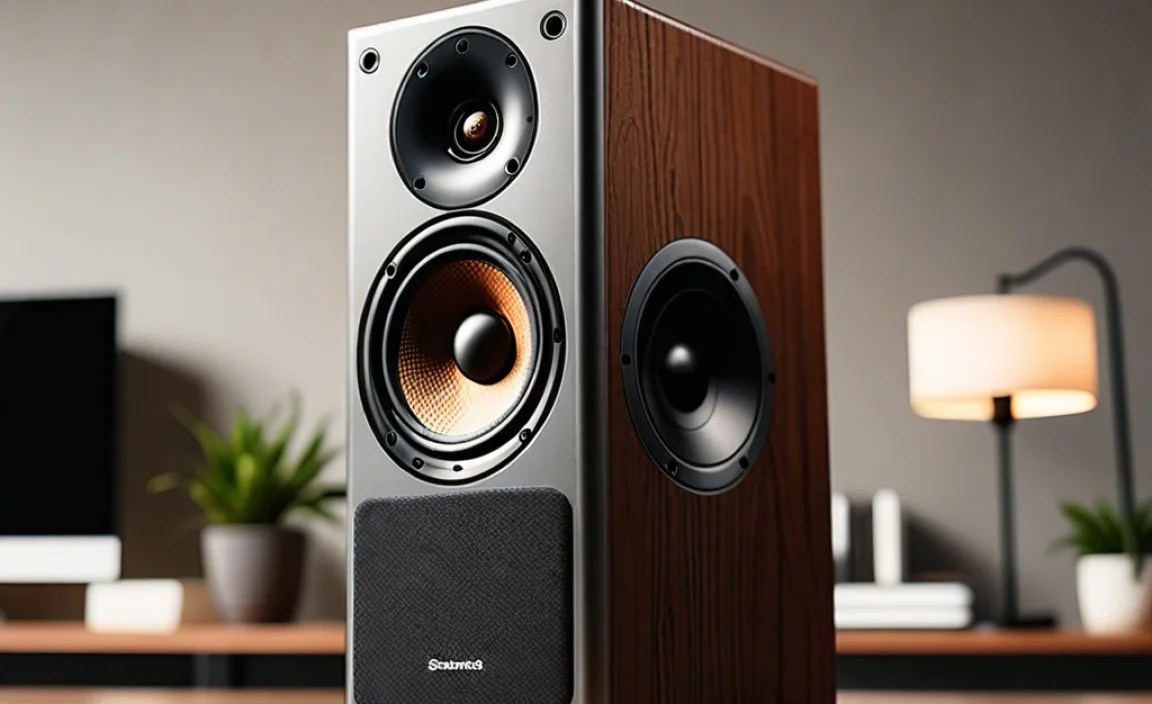
Here’s a look at some of the most reliable brands that consistently deliver excellent performance without demanding a premium price. We’re focusing on models that are often available for under $100, with many fantastic options even under $50. This ranking prioritizes consistent value, user reviews, and product innovation in the budget segment.
1. Edifier
Edifier is a powerhouse in the affordable audio space. They offer a vast range of speakers, from compact desktop units to more substantial bookshelf models, all while maintaining impressive sound quality for their price point. Their build quality is often better than competitors in the same bracket, and they frequently include smart features like Bluetooth connectivity as standard.
Why they’re great:
- Excellent sound balance – clear highs and mids, surprisingly good bass.
- Robust build quality, often using wood enclosures.
- Feature-rich, including Bluetooth on many models.
- Wide variety of designs and sizes.
2. Logitech
Logitech is a well-known name in computer peripherals, and their speakers are no exception. They focus on practical, reliable audio solutions for everyday computing, gaming, and general entertainment Hifi. Their 2.1 systems are particularly popular, offering a dedicated subwoofer for enhanced bass that’s rare at lower price points. While not always the most audiophile-grade, they offer a solid, well-rounded experience for most users.
Why they’re great:
- Widely available and easy to find.
- Good value, especially their 2.1 systems.
- Designed for desktop use, creating an immersive soundstage.
- Durable and reliable performance.
3. Creative
Creative has been a consistent player in the PC audio market for decades. They offer a range of speakers that are known for their versatility and decent sound, often at very competitive prices. They excel at providing simple plug-and-play solutions that offer a significant upgrade over built-in laptop speakers. Look for their Pebble line for exceptionally small but capable desktop speakers.
Why they’re great:
- Inexpensive and widely accessible.
- Compact designs are perfect for small spaces.
- Easy to set up and use.
- Offers decent clarity for casual listening and gaming.
4. PreSonus (Eris Series Entry-Level Models)
While PreSonus offers professional audio gear, their entry-level Eris line (like the Eris E3.5 or E4.5) often hits a sweet spot for budget-conscious users who want a step up in studio-monitor-like quality. These are technically active monitors, meaning they have built-in amplifiers. They offer a flatter, more neutral sound profile ideal for music production, mixing, or anyone who appreciates accuracy in their audio.
Why they’re great:
- Neutral and accurate sound reproduction.
- Built-in amplifiers mean no separate receiver needed.
- Excellent for accuracy-conscious listeners and creators.
- Professional design and robust construction.
5. Anker (Soundcore)
While Anker is more recognized for its charging accessories, its Soundcore division has been making waves with affordable Bluetooth speakers. These are primarily portable, but many models offer impressive audio quality and battery life for their size and cost. They are a fantastic option for those who need versatility and don’t necessarily need large, wired desktop speakers.
Why they’re great:
- Excellent portability and battery life.
- Surprisingly good bass for their size.
- Water-resistant options available.
- User-friendly Bluetooth connectivity.
Comparing Affordable Speaker Options

To help you visualize the differences and make an informed decision, here’s a comparison table of popular models or series from these brands that typically fall into the affordable category. Prices are approximate and can vary based on retailers and sales.
| Brand | Popular Affordable Series/Model | Approximate Price Range (USD) | Key Features | Best For |
|---|---|---|---|---|
| Edifier | R1280DBs / RT1000B | $80 – $150 | Bluetooth, RCA, Optical inputs, wooden enclosure, good bass and treble control. | Versatile home audio, desktop listening, small living rooms. |
| Logitech | Z207 / Z313 | $30 – $60 | Compact design, easy controls, 2.0 or 2.1 channel options, plug-and-play. | Basic desktop audio, students, budget gamers. |
| Creative | Pebble V2 / T100 | $25 – $80 | Super compact (Pebble), larger desktop (T100), USB-C power (V2), clear mids. | Space-saving desktop setups, portability, general PC use. |
| PreSonus | Eris E3.5 / E4.5 | $100 – $150 | Studio monitor-like sound, balanced frequency response, RCA and TRS inputs, front-panel auxin/headphone. | Accurate listening, casual music production, discerning audiophiles on a budget. |
| Anker (Soundcore) | Soundcore Flare 2 / Motion+ | $40 – $80 | Portable Bluetooth, 360° sound (Flare 2), waterproof, long battery life, app EQ. | On-the-go listening, casual parties, outdoor use. |
A Deeper Dive: What Makes a Speaker Affordable Yet Good?
It’s not magic; it’s smart engineering and business. Several factors contribute to a brand’s ability to offer quality sound at a lower price:
- Direct-to-Consumer Models: Many budget brands bypass traditional retail markups by selling primarily online. This saves a significant amount on distribution and retail space costs, which is passed on to you.
- Focus on Core Components: Instead of using premium materials for the casing or adding complex, unnecessary features, these brands invest more in the drivers (the actual speaker cones), amplifiers, and crossovers (which split the audio signal). This direct investment in sound reproduction is crucial.
- Optimized Manufacturing: Brands that sell in high volumes can benefit from economies of scale. They work with manufacturers to streamline production processes, reducing manufacturing costs per unit.
- Simplified Aesthetics: While some high-end speakers boast intricate cabinet designs, affordable options often rely on clean, minimalist aesthetics using reliable, cost-effective materials like MDF (Medium-Density Fibreboard).
- Digital Signal Processing (DSP): Modern DSP allows brands to fine-tune the sound output digitally. This can compensate for less expensive acoustic designs, helping to achieve a more balanced sound profile than would otherwise be possible.
Setting Up Your Affordable Speakers
Getting your new speakers hooked up is usually a breeze. Here’s a general guide:
- Placement is Key: Position your speakers at ear level, forming an equilateral triangle with your listening position. For desktop speakers, place them on either side of your monitor. Avoid corners where bass can become muddy.
- Connect the Cables:
- Wired (3.5mm AUX): Connect one end to your computer’s headphone jack (or audio out) and the other to the “Input” port on your speakers.
- USB: If your speakers have a USB connection, plug it into your computer. This often handles both audio and power.
- Bluetooth: Turn on Bluetooth on your device, put your speakers in pairing mode, and select them from your device’s Bluetooth list.
- RCA/XLR: If connecting to an audio interface or receiver, use the appropriate RCA or XLR cables to connect the “Output” of your source to the “Input” of your speakers.
- Power Up: Connect the power adapter to your speakers and plug them into a wall outlet.
- Adjust Settings: Turn on your speakers. Use the volume knob on the speakers and your computer/device. Many speakers also have bass and treble controls – experiment to find what sounds best for your music or content.
Are Expensive Speakers Always Better?
Not necessarily. While ultra-high-end speakers use exotic materials, advanced engineering, and rigorous testing to achieve sonic perfection, the difference in sound quality diminishes significantly as prices rise beyond a certain point. For the average listener, the jump from basic computer speakers to a good affordable pair from brands like Edifier or PreSonus will be far more dramatic than the jump from a $150 pair to a $1500 pair. The “sweet spot” for value is often found in the budget and mid-range categories.
It’s about diminishing returns. You pay a premium for the absolute last few percentage points of sonic clarity, the absolute finest materials, and brand prestige. For everyday listening, gaming, and casual music enjoyment, affordable options offer exceptional value.
Frequently Asked Questions (FAQs)
Q1: What is the best budget speaker brand for gaming?
A1: For gaming, Logitech is a strong contender due to its focus on 2.1 systems that provide impactful bass for explosions and immersive effects. Edifier also offers excellent clarity for game audio, and their desktop models create a great soundstage.
Q2: Can I get good Bluetooth speakers for under $50?
A2: Yes! Brands like Anker (Soundcore) and Creative often have very capable Bluetooth speakers in this price range. While they might not have the deepest bass or loudest volume, they offer satisfying sound for casual listening, portability, and convenience.
Q3: What does “active” vs. “passive” speaker mean?
A3: Active speakers have a built-in amplifier, meaning you can connect them directly to your audio source (like a phone or computer). Passive speakers require an external amplifier or receiver to power them. Most affordable desktop and Bluetooth speakers are active.
Q4: How important is wattage for small speakers?
A4: Wattage (power) is less crucial than you might think for small speakers. Sound quality, driver efficiency, and proper enclosure design play a bigger role. For desktop use, 10-30 watts per speaker (or 50 watts for a 2.1 system) is usually plenty of power for clear, room-filling sound without distortion.
Q5: What cables do I need to connect speakers to my laptop?
A5: Most laptops use a 3.5mm headphone jack, so a pair of speakers with a 3.5mm AUX input is the most common connection. Some newer speakers use USB for both audio and power, offering potentially cleaner sound. Bluetooth speakers connect wirelessly, requiring no cables at all.
Q6: Where can I read reliable reviews for budget speakers?
A6: Look for tech review websites, audio enthusiast forums, and reputable YouTube channels that focus on budget tech. Always check user reviews on retail sites, but be wary of overly positive or negative single reviews. Sites like Rtings.com do in-depth analysis, though they focus more on mid-to-high-end, they sometimes cover budget options.
Q7: Do I need a subwoofer for better bass?
A7: While a dedicated subwoofer provides the deepest and most impactful bass, many affordable 2.1 speaker systems (like some from Logitech) include one and offer a significant bass boost. For smaller rooms or basic listening, good quality stereo speakers (like from Edifier or PreSonus) can offer sufficient bass without a separate sub.
Conclusion
Embarking on the journey to find great sound on a budget is a rewarding experience. We’ve explored how brands like Edifier, Logitech, Creative, PreSonus, and Anker consistently provide excellent audio performance without demanding a fortune. By focusing on key features like sound quality, connectivity, and build, you can confidently choose speakers that enhance your music, games, and movies.
Remember, the “best” speaker is subjective and depends on your personal needs and listening environment. However, the brands and principles outlined in this guide offer a fantastic starting point for anyone looking to upgrade their audio experience affordably. Happy listening!