
Get incredible sound without breaking the bank! Discover how to find affordable speaker systems with subwoofers that deliver powerful bass and rich audio for music, movies, and gaming.
Are you tired of tinny audio from your current speakers? Do you dream of feeling the rumble of a movie explosion or the deep beat of your favorite song? Many people think great sound with a subwoofer means spending a fortune. But it doesn’t have to! We’re here to show you exactly how to find amazing speaker systems with subwoofers that are easy on your wallet. No confusing tech jargon, just simple advice to help you boost your audio experience.
Getting a speaker with a subwoofer doesn’t have to be a luxury. With a little know-how, you can unlock that immersive sound you’ve been craving. We’ll walk you through what to look for, where to find the best deals, and how to set it all up. Get ready to transform your listening!
Why a Subwoofer Makes a Big Difference
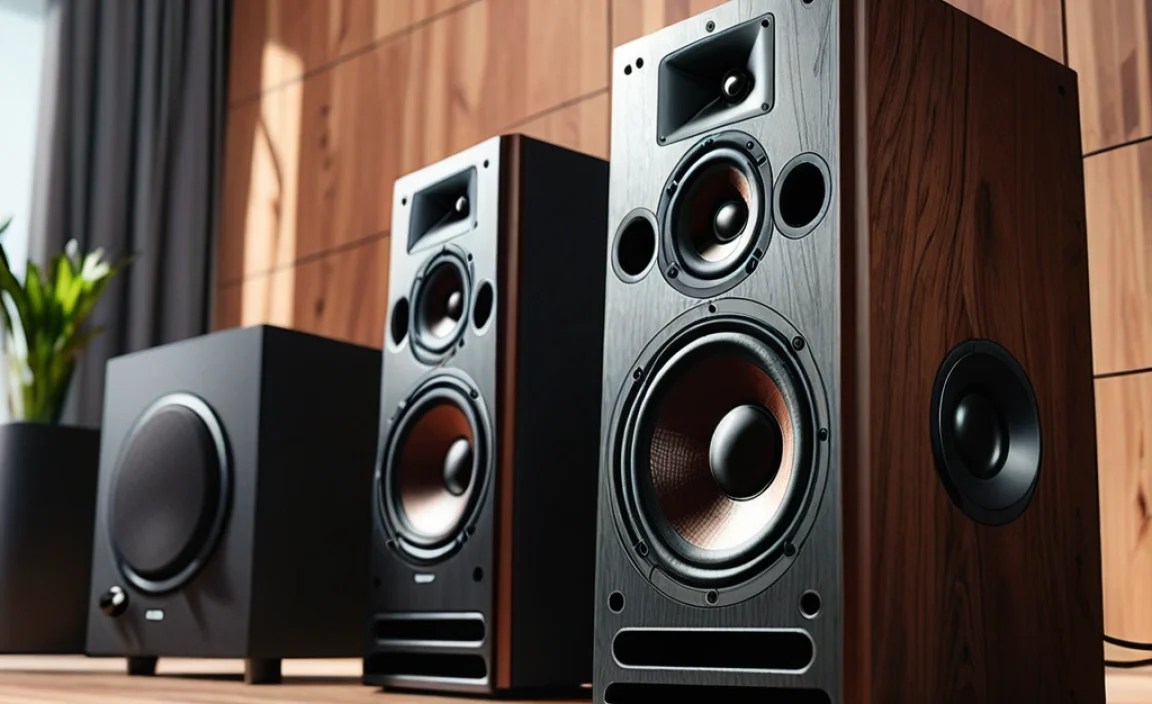
You might be wondering, “Why bother with a separate subwoofer?” It’s simple: subwoofers are designed for one job – reproducing low-frequency sounds, also known as bass. Standard speakers, especially smaller ones, often struggle to produce these deep, resonant notes. A subwoofer adds that missing punch and depth, making everything sound fuller and more dynamic.
- Fuller Sound: Bass frequencies fill out the sound spectrum, making music richer and movie sound effects more impactful.
- Immersive Experience: Feel the rumble of explosions, the thump of a bassline, or the roar of an engine, pulling you deeper into your entertainment.
- Reduced Strain on Main Speakers: When a subwoofer handles the bass, your main speakers don’t have to work as hard, potentially leading to clearer mid and high frequencies.
Think of it like a great steak dinner. The main dish is delicious, but a perfectly prepared side dish of mashed potatoes and gravy adds so much more richness and satisfaction. A subwoofer is that essential savory addition to your audio meal.
Defining “Cheap”: What to Expect for Your Budget

When we talk about “speaker with subwoofer cheap,” we’re not talking about the absolute bottom-of-the-barrel, low-quality options that might disappoint. Instead, we’re aiming for excellent value. This means finding systems that offer a significant upgrade in sound quality and bass response without costing hundreds or thousands of dollars. We’re looking for that sweet spot where performance meets affordability.
For a truly budget-friendly setup, you can typically expect to find:
- 2.1 Systems: This is the most common configuration for affordable systems. It includes two main satellite speakers (for left and right channels) and one dedicated subwoofer.
- Wired Connections: While wireless is becoming more common, cheaper systems often rely on wired connections for speakers and input. This is usually straightforward to set up.
- Basic Materials: The housing for speakers and subwoofers might be made of MDF (medium-density fiberboard) or durable plastic, which is perfectly fine for everyday use.
- Essential Features: You’ll get the core functionality: powerful bass from the subwoofer and clear sound from the satellites. Advanced features like extensive EQ controls or smart connectivity might be limited, but the core audio experience will be vastly improved.
We are generally looking at the under $200 price range, though sometimes you can find incredible deals that dip even lower during sales events. Brands known for offering good bang for your buck are often the best place to start.
Where to Find Affordable Speaker and Subwoofer Deals

Finding a great deal requires knowing where to look. Fortunately, the market is packed with options for audio gear on a budget. Here are some of the best places to hunt for your next affordable speaker with a subwoofer:
Online Retail Giants
These platforms are often your first stop due to their vast selection and competitive pricing. They also frequently have sales and customer reviews to help guide your decision.
- Amazon: With countless brands and models, Amazon is a prime spot. Look for brands like Logitech, Creative, Edifier, and less common but well-reviewed budget brands. Pay close attention to user reviews.
- Best Buy: While sometimes pricier, Best Buy offers a good selection of audio equipment, and their “Open-Box” or “Clearance” sections can yield fantastic deals on returned or refurbished items.
- Walmart/Target: For the absolute most budget-friendly options, these stores often carry entry-level 2.1 systems that can be a significant step up from built-in TV speakers.
Specialty Audio Retailers (Online)
While often associated with higher-end gear, some specialty retailers also carry budget-friendly lines or have excellent sales. Check their clearance or outlet sections.
- Crutchfield: Known for excellent customer service and expert advice, Crutchfield also has a good range of affordable options and often provides helpful buying guides.
- Newegg: A great resource for computer peripherals, Newegg also has a solid selection of PC speakers and home audio systems, often with competitive pricing.
Refurbished and Used Markets
Don’t shy away from refurbished or used equipment! Many reputable sellers offer certified refurbished products with warranties. Used platforms can offer incredible savings, but proceed with caution.
- Manufacturer Refurbished Sites: Many brands (like Bose, Klipsch, etc.) have their own refurbished sections on their websites. These are often as good as new and come with a warranty.
- eBay: A treasure trove for used audio gear. Be sure to check seller ratings, read descriptions carefully, and look for items with return policies.
- Local Marketplaces (Craigslist, Facebook Marketplace): You might find local gems. Always arrange to test the speakers before buying and meet in a safe, public place.
Brand-Specific Deals
Certain brands consistently offer good value in the budget and mid-range audio market. Keep an eye on their direct website sales:
- Logitech: Famous for PC peripherals, Logitech offers some of the best entry-level 2.1 speaker systems that are reliable and sound good for the price.
- Creative: Another brand that excels in affordable PC audio solutions, offering various 2.1 systems that punch above their weight.
- Edifier: Known for stylish designs and impressive sound quality for their price points, Edifier is a fantastic brand to consider for budget bookshelf speakers and 2.1 systems.
Key Features to Look for in an Affordable System

When you’re shopping for a speaker with a subwoofer on a budget, certain features will provide the most impact for your money. Focus on these, and you’ll be well on your way to better sound.
System Type: 2.1 is Your Friend
For affordability and a significant upgrade, stick to 2.1 systems. These consist of two satellite speakers (left and right) and a single powered subwoofer. This configuration is designed to deliver stereo sound with dedicated bass, which is the most common and cost-effective way to get that full audio experience.
Power Output (R.M.S.)
Power is measured in watts. For a small to medium-sized room, a total power output of 40 to 100 watts RMS (Root Mean Square) should be more than sufficient. RMS is a better indicator of continuous, usable power than peak or PMPO (Peak Music Power Output) ratings, which can be misleading.
A system with 50W RMS might sound great in a personal office, while 100W RMS would be better suited for a living room or larger space. Don’t get too hung up on the highest numbers; listenability matters more.
Subwoofer Size
The size of the subwoofer driver (the speaker cone itself) often correlates with its ability to produce lower frequencies and deeper bass. For affordable systems, you’ll typically find subwoofers with drivers ranging from 4 inches to 6.5 inches. A 5-inch or 6-inch driver will usually offer a good balance of size and impactful bass for most rooms.
Connectivity Options
Ensure the system has the inputs you need. Most affordable systems will have:
- 3.5mm Auxiliary (AUX) Input: This is the most common connection and works with almost any computer, smartphone, tablet, or MP3 player.
- RCA Inputs: Some systems, particularly those designed for home theater or gaming consoles, might use RCA jacks. You might need an adapter cable if your source device doesn’t have RCA outputs.
- USB or Bluetooth (Less Common on Cheapest Models): While highly convenient, built-in Bluetooth or USB playback capabilities are often found on slightly more expensive models. If budget is paramount, prioritize sound quality over wireless features.
Controls and Adjustments
Look for systems that offer at least some basic controls. The most useful adjustments on an affordable system are:
- Subwoofer Volume Control: This is crucial! It allows you to dial in the bass to your preference, preventing it from overpowering the mids and highs.
- Master Volume Control: Standard for any speaker system.
- Tone/Treble Control (Bonus): If you find a system with a separate tone or treble adjustment, it’s a great bonus for fine-tuning the clarity of the satellite speakers.
Build Quality and Materials
While you won’t get audiophile-grade wood enclosures at bargain prices, look for systems that feel solid. Pressboard or MDF is common and effective for speaker enclosures. Avoid systems that feel overly flimsy or made of very thin plastic, as they can vibrate and introduce unwanted distortion.
Setting Up Your New Speaker System: A Simple Guide
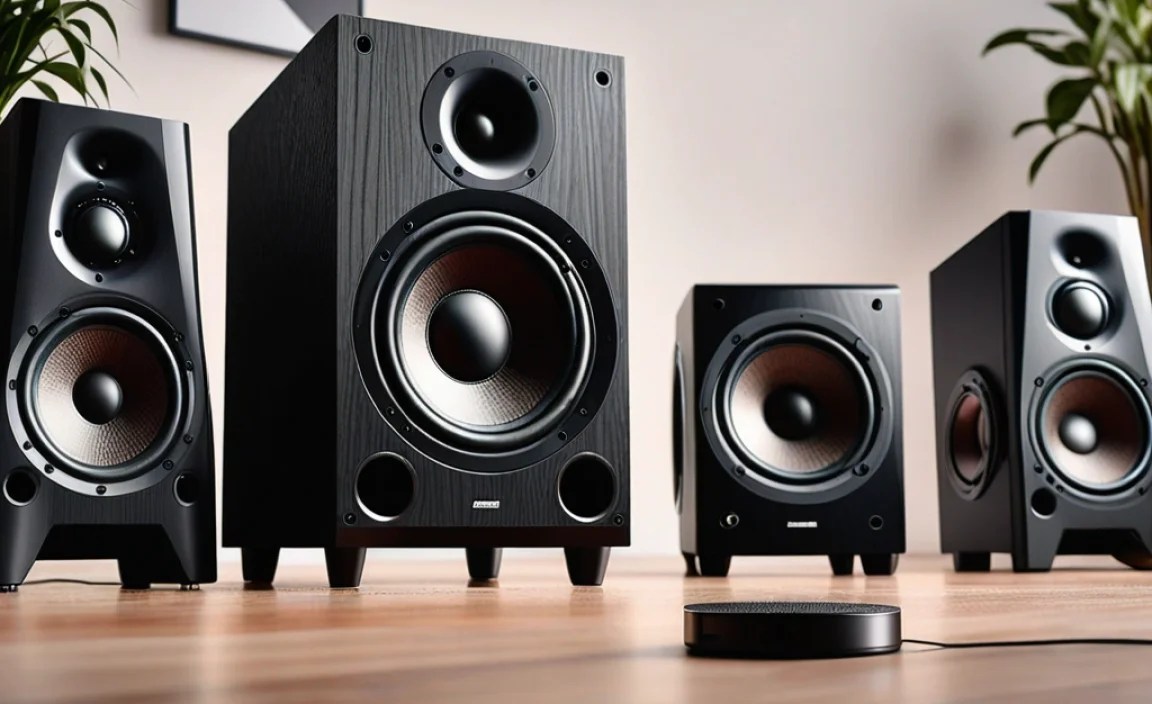
Getting your new affordable speaker with a subwoofer up and running is usually a straightforward process. Most 2.1 systems are designed for plug-and-play simplicity. Here’s a step-by-step guide:
-
Unpack and Inspect:
Carefully unpack all components. You should typically have the subwoofer unit, two satellite speakers (often labeled left and right or marked with their respective symbols), and an audio cable (usually a 3.5mm to 3.5mm or 3.5mm to RCA). Check for any visible damage from shipping.
-
Placement is Key:
Satellite Speakers: Position the left and right satellite speakers on either side of your monitor, TV, or listening position. They should ideally be at ear level. For desktop use, place them about an arm’s length away from your ears.
Subwoofer: The placement of the subwoofer is a bit more flexible because deep bass frequencies are less directional. However, placing it in a corner of the room often helps to boost bass output. Experiment with different locations; sometimes, right next to your desk or entertainment center works best. Avoid completely enclosed spaces like cabinets, as this can muffle the sound. A common trick is the “subwoofer crawl”: place the subwoofer in your main listening position, play some bass-heavy music, and crawl around the room. Where the bass sounds best to you is a good spot to place the subwoofer.
-
Connect the Satellite Speakers to the Subwoofer:
Most 2.1 systems have specific output jacks on the back of the subwoofer labeled “Front L” and “Front R” or similar. These are usually spring clips or RCA jacks. Connect the wires from your left satellite speaker to the “L” output and the right satellite speaker to the “R” output. Ensure a secure connection.
-
Connect the Subwoofer to Your Audio Source:
This is where your audio cable comes in.
- 3.5mm AUX: If your subwoofer and audio source (computer, phone) both have 3.5mm jacks, connect one end of the cable to the “AUX In” or “Line In” port on the subwoofer and the other end to the audio-out port on your device.
- RCA: If your subwoofer has RCA inputs (usually red and white) and your source has RCA outs, connect them accordingly. If your source has a 3.5mm jack, you’ll need a 3.5mm to RCA adapter cable.
-
Power Up:
Plug the power cords for the subwoofer (which usually powers the satellites too) and any separate satellite speakers into a wall outlet or surge protector. Turn on the power switch, typically located on the back or side of the subwoofer.
-
Adjust Settings:
Start with all volume controls (master and subwoofer) turned down low. Play some audio from your connected device. Gradually increase the master volume on the speakers. Then, use the subwoofer volume control to blend the bass to your liking. You want it to be present and impactful, but not so loud that it overpowers everything else. Refer to the user manual for specific details about your model’s controls.
That’s it! You’ve successfully set up your affordable speaker system with a subwoofer. Enjoy the significantly improved sound!
Budget Speaker and Subwoofer Models to Consider
While specific models and prices fluctuate, here are some excellent examples of affordable speaker systems with subwoofers that consistently offer great value. These are often known for reliably delivering a satisfying audio experience without breaking the bank.
Logitech Z313
This is a perennial favorite for a reason. It’s incredibly budget-friendly, easy to set up, and provides a noticeable bass boost compared to basic computer speakers. It’s perfect for a small office or dorm room.
- Pros: Extremely affordable, simple setup, decent bass for its size, compact satellites.
- Cons: Bass can sometimes be boomy rather than tight, limited controls.
- Best for: Everyday computer use, casual music listening, adding some punch to YouTube videos.
Creative Pebble Plus
While the name “Pebble” might suggest small, these speakers, paired with their down-firing subwoofer, offer a surprisingly full sound for their tiny footprint. The unique spherical design is also quite stylish.
- Pros: Compact and stylish design, surprisingly good bass for the size, easy USB power and 3.5mm audio connection.
- Cons: Subwoofer is relatively small and won’t shake the room, power is adequate but not overwhelming.
- Best for: Desktop setups where space is limited, excellent for PCs and laptops.
Edifier M2300 / M3200
Edifier consistently produces great-value audio. Their 2.1 systems often feature better build quality and sound refinement than many competitors in the same price bracket. The M2300 (or similar models like the M3200) offer a good balance of power, clarity, and bass response.
- Pros: Good sound clarity, solid bass for the price, attractive design, often includes a wired remote for convenient control.
- Cons: Can be slightly more expensive than the absolute cheapest options, availability might vary.
- Best for: Upgrading your PC or small living room audio, users who appreciate good design and sound quality without overspending.
Anker Soundcore Select Pro
While Anker is known for its portable Bluetooth speakers, their more stationary or stereo offerings can also impress. The Soundcore line often provides a good balance of power and clarity. Always check their current 2.1 offerings for good value.
- Pros: Brand reputation for quality, often good power output, balanced sound profile.
- Cons: May not always be available in a specific 2.1 configuration, prices can fluctuate.
- Best for: Users who trust the Anker brand for reliable audio performance.
Entry-Level Cyber Acoustics or Pyle Systems
Brands like Cyber Acoustics and Pyle often offer some of the most affordable 2.1 systems on the market. These can be a great entry point if your budget is extremely tight.
- Pros: Very low price point, readily available.
- Cons: Sound quality and build may be less refined, bass might be less controlled.
- Best for: The absolute tightest budgets, occasional use, basic audio needs.
Quick Comparison Table for Popular Budget 2.1 Systems
| Model | Approximate Price Range (USD) | RMS Power (Approx.) | Subwoofer Size (Approx.) | Connectivity | Best For |
|---|---|---|---|---|---|
| Logitech Z313 | $30 – $50 | 25W | 4-inch | 3.5mm AUX | Basic PC/Desktop Audio |
| Creative Pebble Plus | $40 – $60 |