
Choosing the right speaker stands can make a surprising difference in how your audio sounds and how your room looks. Ever feel like your music or movie audio is a bit muddy, or your setup looks cluttered? Often, the culprit isn’t the speakers themselves, but how they’re positioned. Finding the right height and angle is key, and that’s where stands come in. But with so many options out there, it can feel a little overwhelming. Don’t worry! We’re here to help you navigate through all the choices. We’ll break down the different types of speaker stands and what to look for, so you can make a decision that sounds great and looks even better.
Why Speaker Stands Matter: More Than Just Height

Think of speaker stands as the unsung heroes of your audio setup. They do more than just lift your speakers off the floor; they play a crucial role in optimizing sound quality and enhancing your listening experience. When speakers are placed directly on a desk, shelf, or the floor, they can suffer from vibrations and acoustic interference. This is called acoustic coupling, where the surface the speaker rests on vibrates along with the speaker’s sound. This can lead to a less clear, less defined sound, especially in the bass frequencies.
Proper speaker stands isolate your speakers from these surfaces. They help to:
- Improve Clarity: By reducing vibrations, stands allow your speakers to produce a cleaner, more accurate sound. You’ll hear more detail in your music or dialogue.
- Enhance Bass Response: Vibrations can muddle bass. Stands help your speakers deliver tighter, more impactful bass.
- Optimize Stereo Imaging: Placing your speakers at the correct ear level and distance is vital for creating a realistic soundstage. Stands ensure they are positioned correctly for the best stereo separation.
- Reduce Room Resonance: Placing speakers too close to walls or furniture can cause sound to bounce around unevenly, creating echoes or ‘boomy’ sounds. Stands allow for better placement away from these interfering surfaces.
- Protect Your Gear: Keeping speakers elevated can prevent accidental spills, bumps, or damage from pets and children.
- Aesthetic Appeal: Good speaker stands reduce clutter and present a more professional, organized look for your home theater or listening room.
Essentially, the right speaker stands help your speakers perform at their absolute best, delivering the sound the engineers intended.
Understanding Different Types of Speaker Stands

When you start looking for speaker stands, you’ll quickly see there are many styles to choose from. Each type has its own advantages and is suited for different needs and speaker sizes. Let’s break down the most common types you’ll encounter:
Bookshelf Speaker Stands
These are probably the most common type. They are designed to hold smaller to medium-sized bookshelf speakers. Typically, they consist of a base, a vertical support, and a top plate where the speaker rests. They come in a huge variety of styles, from simple and minimalist to more elaborate designs.
Key Features:
- Adjustable Height: Many offer telescoping height adjustments.
- Top Plates: Vary in size and can sometimes be angled for better sound direction.
- Stability: Usually quite stable, with wider bases for balance.
- Material: Commonly made from wood, metal, or a combination.
Ideal For:
- Home studios
- Living room setups
- Surround sound systems
- Anyone wanting to position bookshelf speakers at ear level.
Studio Monitor Stands
These are a specialized kind of bookshelf speaker stand often seen in recording studios. Their primary goal is exceptional isolation and vibration control to provide the most accurate sound reproduction possible for critical listening and mixing. They often feature specific dampening materials and designs to minimize unwanted resonance.
Key Features:
- Isolation Pads: Come with foam or rubber pads to decouple the speaker from the stand.
- Heavy-Duty Construction: Built to be very rigid and stable.
- Adjustability: Often have a wider range of height and angle adjustments.
- Desk-Mount Options: Some are designed to clamp onto a desk, saving floor space.
Ideal For:
- Professional recording studios
- Home studios for music production
- Audiophiles seeking precise sound.
Floorstanding (Tower) Speaker Stands
These are designed for larger, floorstanding or ‘tower’ speakers that are already quite tall. They often serve a more aesthetic purpose by providing a sturdy base, cleaning up the look of large speakers, and ensuring they remain stable. Some also provide a slight lift or tilt.
Key Features:
- Robust Bases: Ensure stability for heavy speakers.
- Minimalist Design: Often have a simple, elegant look to complement the large speakers.
- Protection: Prevent the bottom of expensive tower speakers from getting scratched or damaged.
Ideal For:
- Large home theater systems
- Hi-fi listening rooms with tower speakers.
Subwoofer Stands
While subwoofers are often placed directly on the floor due to their weight and deep bass frequencies, some audiophiles use stands to decouple them from the floor and potentially reduce vibrations felt throughout the room. These are less common and require very robust construction.
Key Features:
- Extreme Strength: Built to support heavy subwoofers.
- Vibration Dampening: Focus on isolating the subwoofer from the floor.
Ideal For:
- Specific home theater setups where rumble reduction is critical.
Satellite/Surround Speaker Mounts
These are designed for the small speakers often used in surround sound systems (like 5.1 or 7.1 setups). They are typically smaller, often wall-mountable, or designed to attach to the back of a TV. They are less about precise audio positioning and more about discreet placement and creating an immersive sound field.
Key Features:
- Compact Size: Designed for small satellite speakers.
- Mounting Versatility: Can be wall-mounted, ceiling-mounted, or clamped.
- Adjustable Angles: To direct sound towards the listener.
Ideal For:
- Home theater surround sound systems.
- Creating an immersive audio experience.
DIY & Alternative Speaker Stand Ideas
Think outside the box! Sometimes the best solution is one you create yourself or repurpose. For those on a budget or with unique needs, DIY options can be fantastic. This could involve building simple wooden stands, using sturdy furniture like solid end tables, or even repurposing items like concrete blocks (though these need careful consideration for aesthetics and stability).
Essential Features to Consider
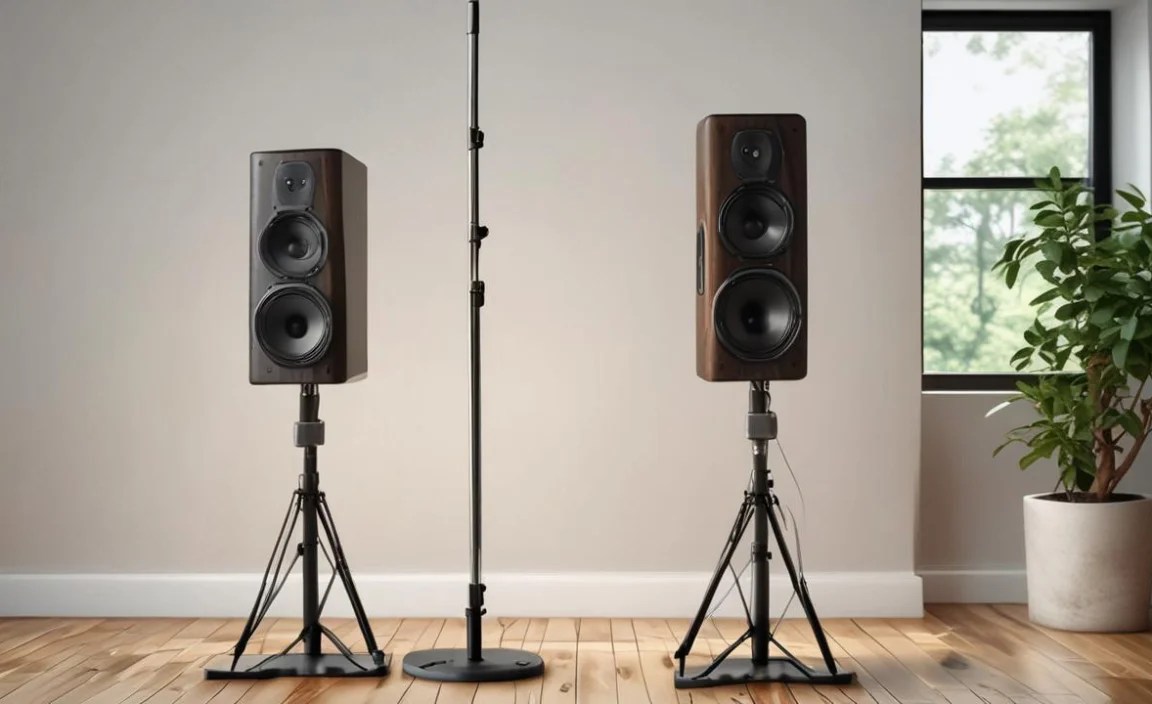
When you’re comparing speaker stands, don’t just look at the type. There are several features that will impact performance, stability, and how well they fit into your space.
Height and Adjustability
This is perhaps the most critical factor. For optimal stereo imaging and clarity, your tweeters (the small drivers that produce high frequencies) should ideally be at ear level when you’re in your primary listening position. Measure the height of your speakers and consider where you’ll be sitting. Stands with adjustable height are incredibly versatile, allowing you to fine-tune the positioning. Fixed-height stands require you to get a perfect match for your setup.
For general recommendations on speaker placement, you can refer to resources like the Dolby speaker setup guide, which offers insights for home theater systems.
Stability and Load Capacity
A wobbly speaker stand is not only an eyesore but a potential hazard. Your stands need to be stable enough to prevent your speakers from toppling over, especially if you have pets, children, or live in an area prone to vibrations. Always check the weight capacity of the stand to ensure it can comfortably support your speakers. Heavier speakers will require more robust stands, often with wider bases or options for filling the support columns with sand or shot for added mass.
Top Plate Size and Design
The platform where your speaker sits is important. Ensure the top plate is large enough to accommodate the base of your speakers securely. Some top plates come with a slight lip or a non-slip surface to prevent the speakers from sliding. You might also find top plates that can be angled upwards or downwards, which is useful for fine-tuning the sound direction if your primary listening position is lower or higher than ideal for a standard flat placement.
Materials and Construction
The materials used significantly affect the stand’s durability, stability, and even its acoustic properties. Common materials include:
- Steel: Offers excellent strength and stability. Often used in minimalist or industrial-style stands.
- Wood (MDF, Solid Wood): Can offer good dampening qualities and a warmer aesthetic. Often used for bookshelf speaker stands that blend into home decor.
- Aluminum: Lighter than steel but still strong. Good for modern designs.
- Plastic: Usually found in very budget-friendly or specialized mounts. Can be less stable for heavier speakers.
Look for solid construction. Welded joints are generally stronger than screwed ones. For metal stands, thicker gauge metal usually means more stability.
Isolation and Damping
This is where stands can significantly improve sound quality. Some stands come with integrated isolation pads (often made of foam or rubber) on the top plate to decouple the speaker from the stand. Others have hollow columns that you can fill with sand, lead shot, or specialized damping material. This added mass helps to absorb vibrations and prevent them from being transferred to the stand or the floor, resulting in a cleaner sound. You can also purchase isolation pads separately if your stands don’t include them.
Cable Management
Tangled speaker wires can ruin the clean look you’re going for. Many modern speaker stands include features for cable management, such as channels, clips, or hollow tubes through which you can run your speaker wires. This keeps your setup tidy and professional-looking.
Acoustic Treatment Integration (Advanced)
For dedicated audiophiles, some high-end stands are designed with acoustics in mind, incorporating materials that absorb or diffuse sound. Others might have adjustable feet for precise leveling on uneven floors, which is crucial for a perfect stereo image.
Speaker Stand Comparison: A Quick Overview
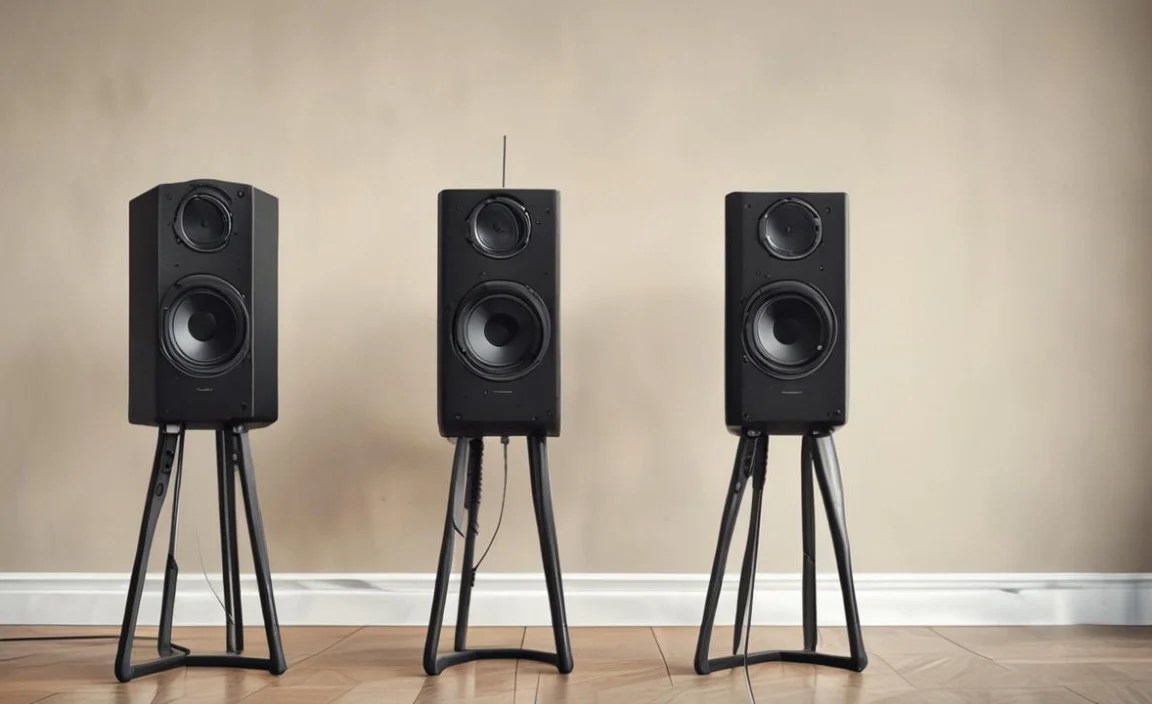
To help you visualize the differences, here’s a comparison of common speaker stand types:
| Stand Type | Typical Use | Pros | Cons | Price Range (Approximate) |
|---|---|---|---|---|
| Bookshelf Speaker Stands | Home studios, living rooms, surround sound | Versatile, available in many styles, good for ear-level positioning | May not be robust enough for very large/heavy speakers | $30 – $200+ |
| Studio Monitor Stands | Recording studios, critical listening | Excellent isolation, high stability, precise adjustability | Can be more expensive, often utilitarian in design | $50 – $300+ |
| Floorstanding (Tower) Speaker Stands | Large home theater, hi-fi systems with tower speakers | Support for heavy speakers, aesthetic enhancement | Limited adjustability, less about sound optimization | $50 – $250+ |
| Satellite/Surround Speaker Mounts | Home theater surround sound | Compact, versatile mounting options, discreet | Not for primary stereo speakers, limited sound optimization | $20 – $100+ per pair |
| DIY Solutions | Budget-conscious, unique needs | Cost-effective, customizable | Requires effort, potential stability/aesthetic issues if not done well | $10 – $100+ (depending on materials) |
Choosing the Right Stand for Your Needs

Now that you understand the types and features, how do you pick the perfect stand? It’s all about your specific situation.
1. Identify Your Speakers
What kind of speakers do you have? Are they small bookshelf speakers, large floorstanders, or tiny satellite speakers for surround sound? The size, weight, and type of your speakers are the primary determinants of what kind of stand you need. Check your speaker’s manual or manufacturer’s website for their dimensions and weight.
2. Determine Your Listening Position
Where will you be sitting when you listen to your audio? In most cases, you want the tweeters of your main left and right speakers to be at your ear height. Measure the distance from the floor to your ears when you’re sitting. Then, measure the height of your speakers, and choose stands (or consider the total height with speakers on them) that get you close to that ear-level mark. This is crucial for what audio professionals call the “sweet spot”—the ideal listening position where stereo imaging is at its best.
3. Consider Your Room and Space
How much space do you have? If you’re tight on room, wall-mount stands or desk-clamp stands for studio monitors might be ideal. If you have a dedicated listening room, you might prioritize aesthetics and be able to use larger floor stands. Think about the overall decor of your room and choose stands that complement it. For example, sleek metal stands might look great in a modern setup, while wood stands could fit better in a traditional living room.
4. Think About Your Budget
Speaker stands range from very affordable options to quite expensive investments. Set a budget before you start shopping. Remember that investing a bit more in high-quality stands can significantly improve your listening experience, especially if you have decent speakers. Sometimes, a good pair of used stands can offer great value.
5. Prioritize Stability and Weight Capacity
Never skimp on stability. Ensure the stands you choose are rated to hold more weight than your speakers. A good rule of thumb is to choose stands with at least 25% more weight capacity than your speakers. If you’re filling hollow columns, consider what material is densest and safest (e.g., play sand is common and safe). For more information on safe material choices, sources like the OSHA general industry standards for housekeeping and materials handling can offer insights into safe use of filling materials, although this is more for general workplace safety than specific DIY speaker stand advice.
6. Look for Acoustic Features (Optional but Recommended)
If sound quality is your top priority, look for stands with built-in isolation pads, those that are fillable, or those made from materials known for good acoustic dampening. Even simple decoupling pads can make a noticeable difference.
DIY Speaker Stand Ideas: Get Creative and Save Money
Don’t want to spend a lot or can’t find exactly what you need? DIY speaker stands are a fantastic way to get custom solutions without breaking the bank. Here are a few ideas:
Simple Wooden Pedestal Stands
Materials: Plywood or MDF for the base and top, a sturdy wooden post or a set of 4×4 posts for the support, screws, wood glue, sandpaper, finish (paint or stain).
Process: Cut your base and top to size (ensure the top is large enough for your speakers). Cut your post to the desired height. Assemble by screwing and gluing the post to the center of the base, then attach the top to the post. Sand smooth and apply your chosen finish. You can even hollow out the center if you want to fill it with sand for extra mass.
Repurposed Furniture
A sturdy, solid end table or small, robust stool can work surprisingly well as a speaker stand, especially for larger bookshelf speakers. The key is that the furniture itself doesn’t vibrate or wobble. Ensure the height is appropriate, or consider adding a small riser on top.
Concrete Blocks (with a twist)
While plain concrete blocks might look industrial, they are incredibly dense and stable. To make them more aesthetically pleasing, you can paint them, cover them with wood veneer, or even use them as a base for a more refined top plate. Always ensure they are level and stable. You might place a piece of dense rubber matting or firm foam between the block and the speaker for some isolation.
Metal Pipe Stands
For a more industrial or modern look, you can construct stands using metal pipes and flanges. These can be very strong and are often fillable.