
Finding great speaker stands under $50 is totally doable! We’ve uncovered clever and affordable solutions that elevate your sound without breaking the bank. Get ready to discover budget-friendly speaker stand ideas that boost audio performance and look good doing it.
There’s often a sweet spot for sound quality that many enthusiasts miss: speaker placement. Simply putting your speakers on any old surface can really mess with how they sound. They might vibrate against furniture, get muffled, or just be aimed all wrong. But buying proper speaker stands can feel like a big expense, especially when you’re just starting out or on a tight budget. Don’t worry! It’s absolutely possible to find fantastic speaker stand ideas for under $50 that will make a noticeable difference in your audio experience. We’ve done the digging to find some smart, wallet-friendly options. Stick around, and we’ll show you how to get your speakers singing their best tune without spending a fortune.
The right speaker stands don’t just hold your speakers; they can drastically improve your listening experience. By elevating your speakers to ear level and decoupling them from surfaces that can cause unwanted vibrations, you can hear more detail, a clearer stereo image, and a more robust bass response. This makes music more immersive, movie soundtracks more impactful, and gaming audio more precise. The good news is that you don’t need to spend a lot of money to achieve these sonic benefits. With a little creativity and knowledge, you can find excellent speaker stand solutions that fit your budget.
Why Speaker Stands Matter for Sound Quality
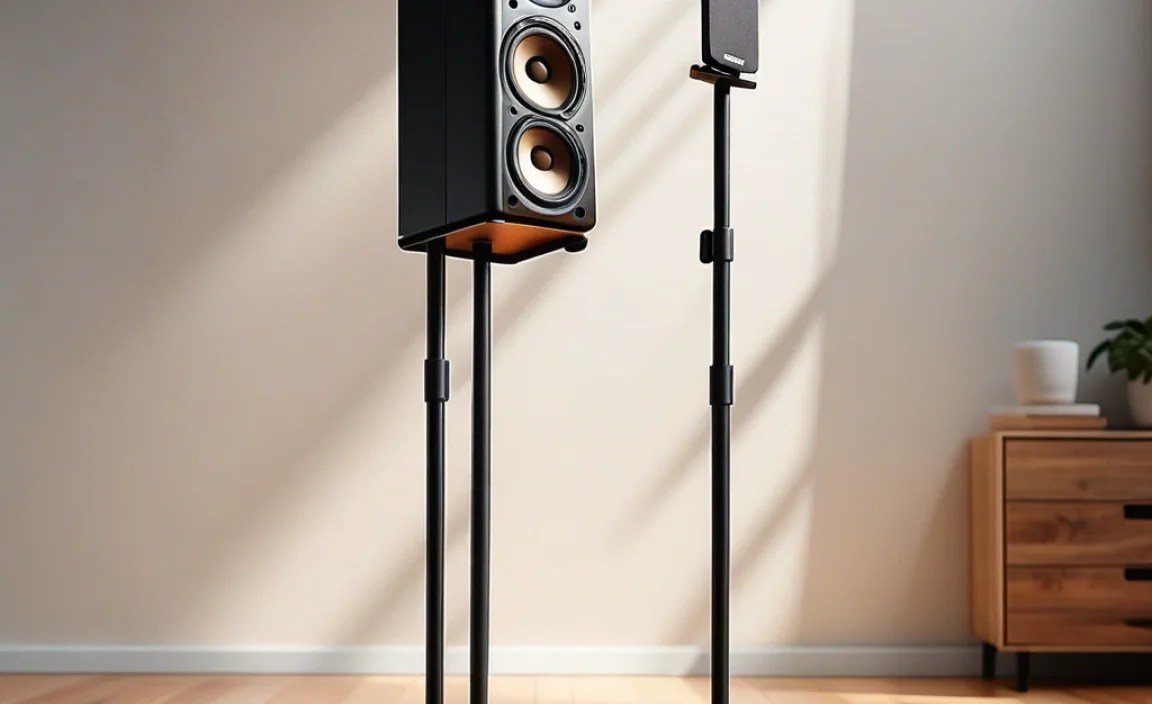
It might sound simple, but where your speakers sit has a huge impact on how they sound. Think of it like this: your speakers are trying to produce pure sound waves, but if they’re sitting on a wobbly table or crammed against a wall, those sound waves get bounced around and distorted.
Vibrations: Speakers vibrate when they work. If they’re on a hard, resonant surface like a bookshelf or desk, that surface will vibrate too, adding a muddy or boomy quality to your audio. This is often called “bass” or “resonating.”
Height and Angle: Ear level is usually the best place for speakers. If your speakers are too low, the sound can be directed towards your knees instead of your ears, leading to a less clear listening experience. Stands allow you to point the sound precisely where you want it.
Soundstage and Imaging: Proper placement with stands helps create a wider and deeper “soundstage,” which is the sense of space and placement of instruments in the music. This stereo imaging makes it sound like the music is happening all around you, not just coming from two boxes.
Bass Response: When speakers are too close to walls or corners, the bass frequencies can become exaggerated and boomy. Stands can help pull your speakers away from these problematic areas, resulting in tighter, more controlled bass.
Genius Speaker Stand Ideas Under $50
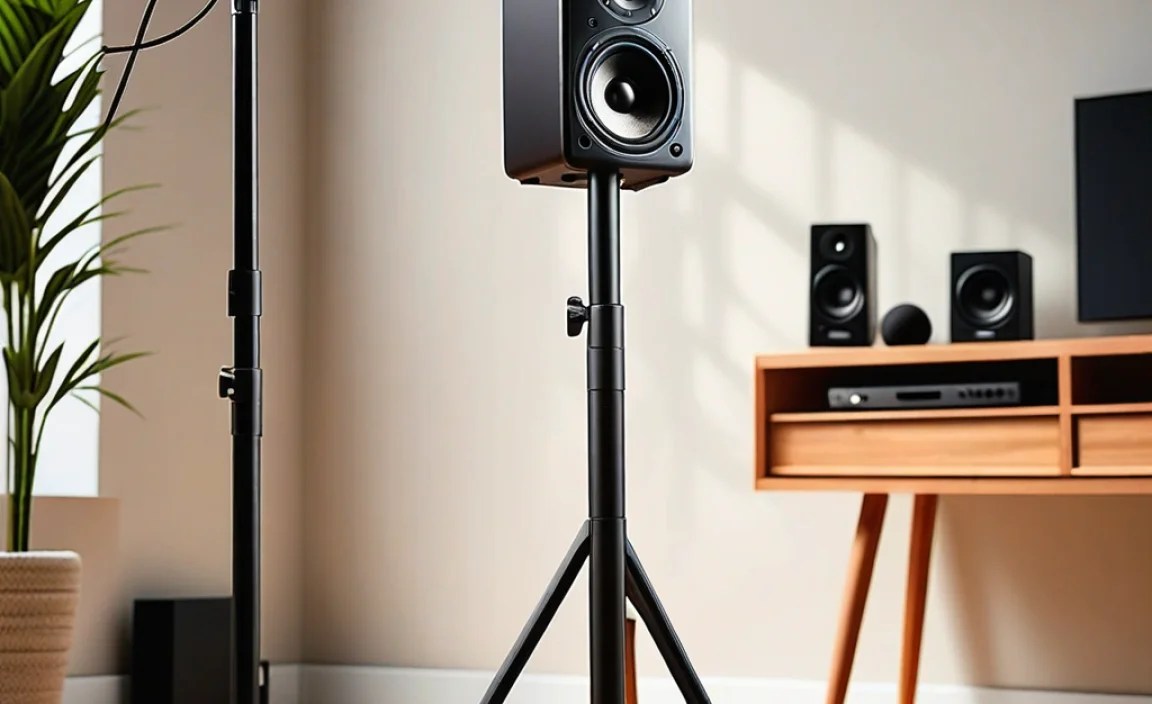
Finding affordable speaker stands that punch above their weight is all about knowing where to look and what to look for. We’ve scoured the market for clever solutions that offer stability, adjustability, and a clean look, all while keeping our budget firmly under $50.
1. Adjustable Bookshelf/Desktop Speaker Stands
These are incredibly popular for a reason. They’re designed to sit on existing furniture like desks or bookshelves and offer a way to angle your speakers up or down, getting them closer to ear level. They’re perfect for studio monitors, computer speakers, or even smaller Hi-Fi speakers.
What to Look For:
Adjustable Tilt Angle: Crucial for directing sound.
Sturdy Construction: Look for metal or dense wood.
Non-Slip Pads: Both on the bottom of the stand and for the speaker to rest on.
Weight Capacity: Make sure they can support your speakers.
Typical Price Range: $20 – $45 for a pair.
Pros: Excellent adjustability, improves clarity, good for small to medium speakers, takes up minimal space.
Cons: Not ideal for very large or heavy speakers, might not integrate seamlessly with all decor.
Example Found: Many brands offer these, often listed as “studio monitor isolation pads” combined with tilt stands under $50. Brands like Neo, Pyle, and generic offerings on Amazon and eBay frequently have pairs in this price range. Always check reviews for stability and build quality.
2. Compact Tripod Speaker Stands
If you need to place your speakers away from your desk or shelves, compact tripod stands are fantastic. They offer more flexibility in placement and can often be adjusted for height. While full-sized PA tripod stands can be expensive, smaller versions suitable for home audio are very budget-friendly.
What to Look For:
Height Adjustability: How high do your speakers need to be?
Sturdy Legs: A stable base is key to prevent tipping.
Mounting Plate/Adapter: Ensure it’s compatible with how your speakers connect (if they have a mounting hole). If not, they can often just rest on a flat top plate.
Portability: Great if you move your setup around.
Typical Price Range: $30 – $50 for a pair.
Pros: Good height adjustability, liberates speaker placement, generally stable, portable.
Cons: Legs can take up floor space, not as discreet as desktop stands.
Example Found: Search for “mini tripod speaker stands” or “DJ speaker stands compact.” Brands like On-Stage, AmazonBasics, and various unbranded options can be found within the budget.
3. DIY Speaker Dowels or Wedges
For the truly budget-conscious and DIY inclined, creating your own simple speaker stands is an option. This often involves using dense wood, foam, or even repurposed items.
DIY Dowels/Wedges:
Materials: Dense plywood or MDF (can often be found as scrap from hardware stores or lumber yards), wood screws, sandpaper, and optional paint or wood stain. High-density foam can also be cut to shape.
Tools: Saw, drill, screwdriver, sandpaper.
Process: Cut two identical angled pieces of wood to create a wedge shape. Sand smooth. For more stability, you can add a small base. Alternatively, cut thick dowels and drill holes to create small risers.
Cost: Materials can often be sourced for under $20 if you have some basic tools.
What to Look For (if buying materials):
Density: The heavier and denser the material, the better it will absorb vibrations.
Stability: Ensure your DIY design is stable and won’t tip over.
Pros: Extremely cheap, customizable to your exact needs and aesthetic, a rewarding project.
Cons: Requires some crafting skill and tools, might not look as polished as commercial options, careful design is needed for stability.
External Resource: For inspiration and tips on material choices, resources like Woodworker’s Journal offer great insights into working with wood and choosing the right materials for projects.
4. PVC Pipe Speaker Stands
PVC pipe is a surprisingly versatile and affordable material for building simple, sturdy speaker stands. It’s lightweight, easy to cut, and can be assembled with basic fittings.
Materials: PVC pipes (various diameters depending on speaker size), PVC fittings (elbows, tees, caps), PVC cement, screws (optional, for stability), paint (optional).
Tools: PVC pipe cutter or saw, measuring tape, sandpaper.
Process: Design a simple frame using pipes and fittings. You can create a basic box shape, a tripod base, or a taller riser. Cut pipes to desired lengths, assemble with fittings, and secure with PVC cement for permanent attachment. For added stability, you can fill the pipe with sand or add a wider base.
Cost: A pair of stands can often be built for $20 – $40 depending on size and complexity.
Pros: Very affordable, highly customizable, durable, lightweight, readily available materials.
Cons: Can look utilitarian unless painted or finished nicely, requires some planning and assembly.
Pro Tip: For a more aesthetically pleasing look, you can spray paint the PVC pipe in a color that matches your room or audio equipment.
5. Repurposed Furniture & Objects
Don’t underestimate the power of everyday items! You might already have things around your home that can serve as speaker stands.
What to Look For:
Sturdy Stools: Small wooden or metal stools can be perfect.
Old Side Tables: A small, sturdy side table can be repurposed.
Heavy Books or Blocks: For desktop speakers, a few large, hardcover books or concrete blocks (painted) can elevate and isolate speakers.
Wooden Crates/Boxes: These can offer a rustic or industrial look and provide a stable platform.
Cost: Potentially free if you use existing items! Buying second-hand items can still be very cheap.
Pros: Inexpensive or free, environmentally friendly (upcycling), unique aesthetic.
Cons: May require some minor modifications (e.g., adding felt pads), finding the perfect height and stability can be hit or miss.
Example: A sturdy wooden stool from a thrift store, flipped upside down and with speaker pads added, can function as an effective stand. Alternatively, a well-placed stack of large, old encyclopedias can work wonders for desktop monitors.
6. Adjustable Laptop Stands
While designed for laptops, many adjustable laptop stands offer sufficient sturdiness and adjustability to work well as speaker stands for smaller or lighter speakers. Look for those with a solid platform and robust construction.
What to Look For:
Platform Size: Ensure it’s large enough for your speakers.
Weight Capacity: Check that it can handle the speaker’s weight.
Angle/Height Adjustment: Crucial for proper sound direction.
Stability: Look for sturdy joints and a wide base.
Typical Price Range: $25 – $45 for a single stand, sometimes sold in pairs.
Pros: Highly adjustable, can be very sturdy, versatile.
Cons: May not be aesthetically ideal for all setups, ensure it’s strong enough for your specific speakers.
Example Found: Many ergonomic laptop stands can be found with these features. Companies focused on office ergonomics or generic tech accessory brands are good places to start.
7. Isolation Pads with Built-in Risers
Some speaker isolation pads are designed with a built-in angled riser. These are excellent for desktop or bookshelf placement, offering both vibration dampening and the crucial angle to point speakers towards your ears.
What to Look For:
Foam Density: High-density acoustic foam is best for dampening.
Angle: A good upward tilt is essential.
Size: Ensure it’s large enough to fit your speakers securely.
Non-Slip Top/Bottom: For speaker and surface grip.
Typical Price Range: $15 – $35 for a pair.
Pros: Excellent vibration isolation, improves sound clarity, affordable, compact.
Cons: Limited height adjustment, not suitable for floor standing, only good for smaller speakers.
Example Found: Brands like Sound Addvance, Gik Acoustics (sometimes have budget options), and numerous generic brands on online marketplaces specialize in these.
Choosing the Right Stand for Your Speakers
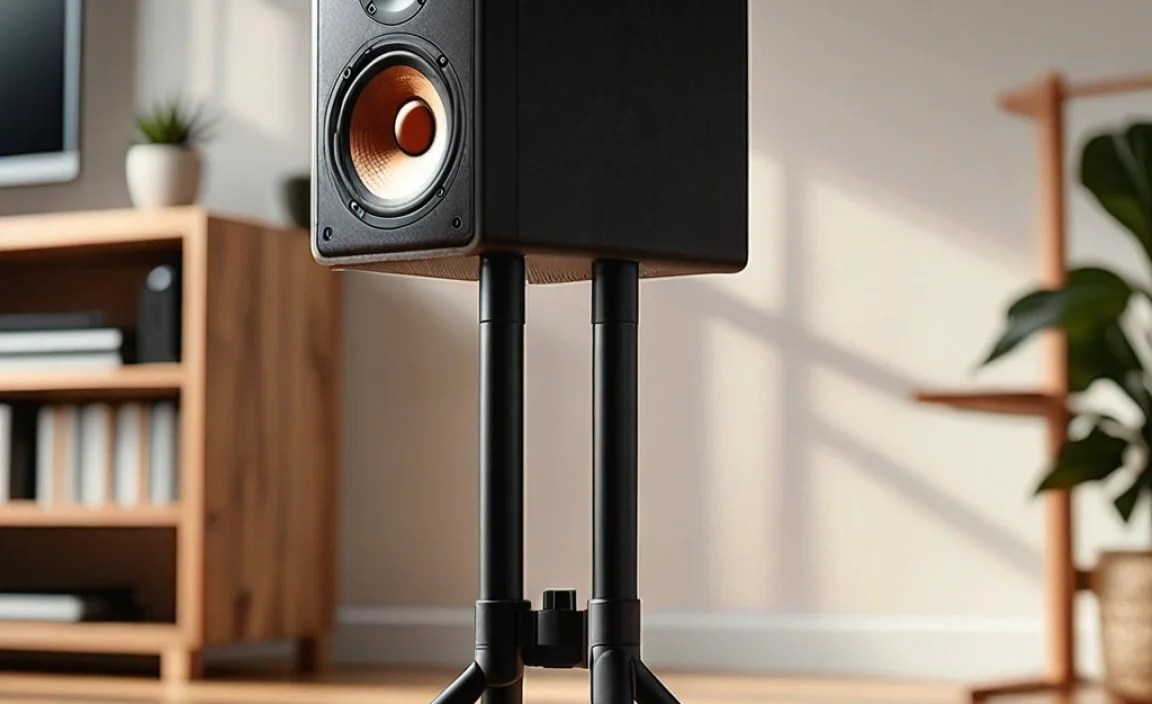
When you’re on the hunt for speaker stands under $50, a few key factors will help you make the best choice for your specific needs.
Speaker Size and Weight
This is the most critical consideration. Small desktop speakers (like computer speakers or mini-monitors) can usually get away with lighter weight stands or even isolation pads. Larger bookshelf speakers or studio monitors will require stands that are more robust, with higher weight capacities and wider bases. Always check the manufacturer’s recommended weight limit for any stand you consider.
Placement Location
Where will your speakers be?
Desktop/Shelf: If you’re using speakers on a desk or shelf, desktop stands, isolation pads with risers, or small adjustable stands are ideal. They help lift the speakers past your monitor and angle them up.
Floor Standing: For larger bookshelf speakers you want to place on the floor but elevate, you’ll need more substantial tripod or DIY stands that offer significant height adjustment.
Desired Height and Angle
Ear Level: The goal is typically to get the tweeters (the small drivers, usually at the top) of your speakers as close to ear level as possible when you’re in your primary listening position.
Tilting: A slight upward tilt is often beneficial to direct sound effectively.
Stability
No matter how good your speakers sound, if the stands are wobbly, you risk them tipping over – potentially damaging your speakers and your floor. Look for wide bases, sturdy joint construction, and some form of non-slip footing.
Aesthetics
While function is key, you also want your speaker stands to look good in your space! DIY options and repurposed items can offer unique charm. For commercial stands, consider their material (metal, wood, plastic) and finish to see if they complement your room’s decor.
Top Tips for Maximizing Sound Quality

Buying affordable stands is a great first step, but a few extra tricks can elevate your audio even further without costing much.
1. Vibration Damping
Isolation Pads: Even if your stand has some isolation, adding a dedicated isolation pad can make a big difference. These are typically made of dense foam designed to absorb vibrations.
DIY Damping: You can place sorbothane dots or small rubber feet on top of your stand where the speaker sits to further decouple it.
2. Speaker Placement Experimentation
The “Stereo Triangle”: Position your speakers so they form an equilateral triangle with your listening position. This is a classic rule for achieving the best stereo imaging.
Distance from Walls:
Rear Wall: Pulling speakers away from the wall behind them (typically 1-3 feet depending on speaker size) helps reduce bass boom.
Side Walls: Similarly, avoid placing speakers too close to side walls, as this can affect clarity.
Check out this guide from the Audio Engineering Society for deeper insights into acoustic principles, though much of it can be simplified for home use.
3. Toe-In Adjustment
Aiming: Experiment with “toeing in” your speakers – angling them slightly inward towards your listening position. A common starting point is to aim them so they cross just in front of your head.
* Subtle Adjustments: Even small adjustments can significantly alter the stereo image and focus. Listen critically as you make small movements.
4. Cable Management
While not directly affecting sound quality in terms of accuracy, tidy cables reduce visual clutter and prevent accidental tugs that could dislodge speakers or stands. Use zip ties, Velcro straps, or inexpensive cable sleeves.
Frequently Asked Questions About Speaker Stands Under $50
This section aims to answer common beginner questions about affordable speaker stands.
Q1: Will cheap speaker stands really improve my sound?
A1: Yes, absolutely! Even inexpensive stands that get your speakers to ear level and away from resonating surfaces will make a noticeable difference in clarity and stereo imaging. It’s more about intelligent placement than expensive hardware.
Q2: How do I know what weight capacity I need for my speakers?
A2: Check your speaker’s manual or the manufacturer’s website for its weight. Then, look for stands that specify a weight capacity significantly higher than your speaker’s weight (e.g., for a 10lb speaker, look for a stand that holds at least 15-20lbs or more for safety and stability).
Q3: Can I just use books as speaker stands?
A3: For desktop speakers, a carefully stacked pile of dense books (like hardcover textbooks) can work as a temporary or budget solution to elevate them. Ensure they are stacked securely. For better long-term solutions, consider dedicated desktop stands or isolation pads.
Q4: Are DIY speaker stands a good idea?
A4: Yes, especially if you’re on a tight budget or want custom dimensions! Many materials like wood, PVC, or even repurposed furniture can be turned into effective speaker stands with basic tools and a bit of creativity. Stability and a non-slip surface are key.
Q5: What’s the difference between speaker stands and isolation pads?
A5: Stands primarily focus on elevating speakers to the correct height and position. Isolation pads are typically made of dense foam and focus on absorbing vibrations that can transfer from the speaker to the surface it rests on, thus “isolating” the sound. Many affordable solutions combine both functions.
Q6: How far should my speakers be from the wall?
A6: This varies greatly depending on the speaker design, but as a general guideline, pull them at least 1-2 feet away from the rear wall to prevent excessive bass build-up. Moving them away from side walls also improves clarity. Experimentation is key!
Q7: Where are the best places to find affordable speaker stands?
A7: Online retailers like Amazon, eBay, and Walmart are great for a wide selection and competitive pricing. Specialty audio equipment sites may also have budget-friendly options or sales. Don’t overlook local classifieds or thrift stores for potential DIY repurposing.
A World of Better Sound Awaits
Investing in speaker stands, even on a modest budget of under $50, can feel like a significant upgrade to your audio setup. We’ve explored a variety of smart, budget-friendly ideas, from adjustable desktop stands and compact tripods to creative DIY solutions and clever repurposing. Each of these options aims to address the crucial elements of speaker placement: getting them to ear level, reducing unwanted vibrations, and freeing.