
Having trouble with your car speakers? This guide offers easy, proven fixes for common car speaker issues. We’ll help you get your music sounding great again with simple troubleshooting steps you can do yourself.
Speaker for Car Music Troubleshooting: Proven Fixes for Sound Issues

Is your car’s sound system silent, fuzzy, or just plain wrong? A quiet or distorted speaker can really dampen your drive. It’s a frustrating problem, especially when you crave your favorite tunes on the road. But don’t worry! Many car speaker issues are surprisingly simple to fix, and you don’t need to be a car audio expert to do it. This guide breaks down common problems and offers clear, step-by-step solutions to get your car music sounding its best again.
We’ll walk through everything from checking basic connections to diving a bit deeper into your car’s audio system. You’ll learn how to diagnose the problem and find the right fix, so you can enjoy clear, powerful sound on every journey. Let’s get your music back in full swing!
Common Car Speaker Problems and How to Solve Them
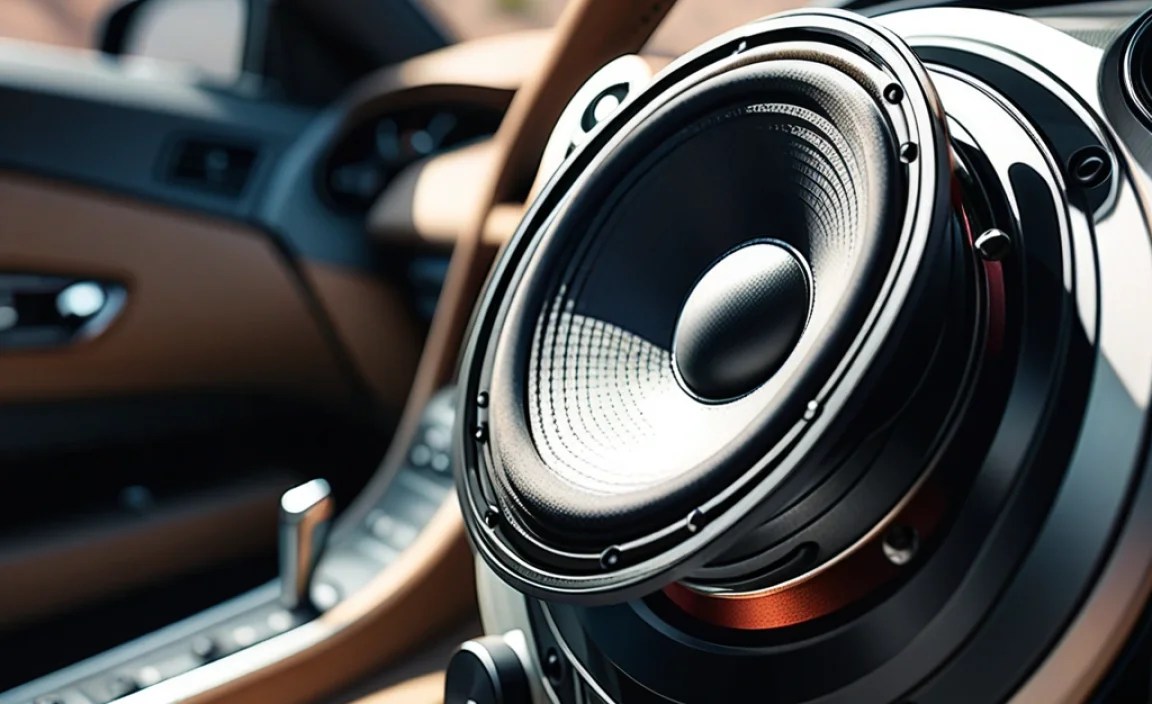
Car speakers can face a variety of issues, from a complete lack of sound to distorted audio or a speaker that only works sometimes. Understanding the potential causes is the first step to finding a solution. We’ll cover the most frequent culprits and their fixes.
1. No Sound from One or More Speakers
This is perhaps the most common complaint. You turn on your radio, and only some speakers are playing, or none at all. Several things could be causing this.
Possible Causes and Fixes:
- Loose or Disconnected Wiring: Over time, vibrations can cause speaker wires to loosen or even detach from the speaker terminal or the back of the car stereo.
- Fix: Access the back of the speaker or the stereo unit (consult your car’s manual or online resources for how to safely remove panels). Check if all wires are securely connected. If a wire has come off, you might need to re-crimp it or use a wire connector to reattach it. Ensure the positive (+) wire connects to the positive terminal and the negative (-) wire to the negative terminal.
- Damaged Speaker Wire: The wire passing through doors or other moving parts can get pinched or frayed, breaking the connection.
- Fix: Visually inspect accessible sections of the speaker wire for any signs of damage. If you find a break, you’ll need to splice in a new section of wire or replace the entire wire run. This can be a bit more involved, but a local car audio shop can help if you’re not comfortable doing it yourself.
- Blown Fuse: While unlikely to affect just one speaker unless it’s causing a short, a blown fuse in the car’s electrical system can silence parts of the audio unit.
- Fix: Locate your car’s fuse box (typically under the dashboard or in the engine bay – check your owner’s manual). Identify the fuse for the audio system or radio and check if it’s blown. If it is, replace it with a new fuse of the exact same amperage. Never use a higher amperage fuse.
- Faulty Head Unit (Car Stereo): The stereo itself might have an internal issue, such as a bad output channel.
- Fix: To test this, try swapping speaker wires. If the problem speaker’s wiring is connected to a known working channel on the stereo, and the speaker still doesn’t work, the issue is likely with the speaker itself. If another speaker then stops working when connected to that channel, the stereo is likely the problem. You might need to repair or replace the head unit.
- Bad Speaker: The speaker cone or voice coil could be damaged or burnt out.
- Fix: The easiest way to test this is to temporarily swap the suspect speaker with a known working speaker from another location in your car (e.g., swap a front speaker with a rear speaker). If the problem follows the speaker, then the speaker itself needs replacing. You can find replacement car speakers at most auto parts stores or online retailers.
2. Distorted or Fuzzy Sound
When your music sounds like it’s coming through a broken radio, or there’s a persistent crackle, it’s usually a sign of problems with the speaker’s components, power, or signal.
Possible Causes and Fixes:
- Overpowering the Speaker: Turning the volume up too high can send too much power to the speaker, causing the voice coil to overdrive and produce distortion.
- Fix: Lower the volume. If the distortion disappears at lower volumes, your stereo might not be powerful enough for your speakers, or your speakers might be too “sensitive” (require less power). Consider a speaker with a lower RMS (Root Mean Square) power rating or a more powerful head unit/amplifier.
- Damaged Speaker Cone or Surround: A tear or puncture in the speaker cone or a torn surround can cause rattling and distortion.
- Fix: Carefully inspect the speaker cone and its flexible surround (the rubber or foam ring that connects the cone to the basket). If you see any rips, tears, or significant damage, the speaker needs to be replaced. Minor tears (especially on foam surrounds) can sometimes be repaired with specialized kits, but replacement is usually more reliable.
- Loose Mounting Hardware: If the speaker isn’t mounted securely, it can vibrate against its mounting surface, causing rattling and distortion.
- Fix: Ensure the speaker is mounted tightly to the door panel or speaker housing. Check that all mounting screws are snug. Be careful not to overtighten – just make sure it’s secure.
- Wiring Issues: A loose connection or a frayed wire can also cause intermittent crackling or distortion.
- Fix: As with no sound, re-inspect all wiring and connections for looseness or damage. A poor ground connection can also introduce noise.
- Interference: Sometimes, other electronic devices in the car can cause interference, leading to crackling.
- Fix: Try turning off any aftermarket electronic accessories (like phone chargers, dashcams, or LED lights) one by one to see if the distortion stops. If it does, you might need to reroute wiring or use shielded cables for those accessories.
3. Weak or Muffled Sound
The sound is there, but it lacks punch, clarity, or volume. This often points to issues with how the sound is being produced or how it’s reaching your ears.
Possible Causes and Fixes:
- Incorrect Speaker Phasing: If the positive and negative wires are reversed on one speaker, the sound waves from that speaker will push out when other speakers are pulling in, cancelling out bass frequencies and resulting in poor sound quality.
- Fix: Check the wiring at the speaker terminals and the stereo. Ensure positive (+) wires are connected to positive terminals and negative (-) wires to negative terminals on all speakers. If you’re unsure, re-check the connections and test.
- Speaker Obstruction: Anything blocking the speaker grille or the path of the sound can muffle it.
- Fix: Check for any objects (floor mats, debris, etc.) that might be blocking door speaker grilles. Ensure door panels and speaker covers are fitted correctly and not loose.
- Internal Speaker Damage: The speaker’s components might be degrading, leading to weaker output.
- Fix: If swapping speakers or checking wiring doesn’t help, the speaker might be aging or damaged internally. Replacement is the most effective solution.
- Issues with the Head Unit Settings: EQ settings, fader, and balance controls can drastically affect sound quality.
- Fix: Reset your car stereo’s audio settings to default. Then, experiment with the equalizer (EQ), fader (front/rear balance), and balance (left/right balance) controls to find a setting that sounds good to you. Ensure the fader isn’t set too far to one end, and the balance is centered if you want sound from all speakers.
4. Speaker Rattling
An annoying rattle can be more than just a nuisance; it can indicate damage or looser connections.
Possible Causes and Fixes:
- Loose Speaker Mounting: As mentioned, a speaker not bolted down tightly can vibrate against its housing.
- Fix: Tighten the speaker mounting screws. If the speaker is in a plastic housing, ensure the housing itself is also secure and not rattling.
- Damaged Speaker Cone or Surround: Physical damage to the speaker’s moving parts can cause them to flap or buzz.
- Fix: Inspect the speaker cone and surround for any tears or warping. Replace the speaker if damaged.
- Loose Door Panel or Grille: The rattle might not be the speaker itself, but the panel or grille it’s mounted in.
- Fix: Check the door panel for loose clips or screws. Ensure the speaker grille is firmly attached and not vibrating against the panel or speaker frame.
- Something in the Door Cavity: Sometimes, a loose object (like a screw, or even a piece of the door’s inner workings) can fall into the door cavity and rattle against the speaker or door panel.
- Fix: This is harder to fix without partial disassembly. You may need to remove the door panel to investigate and remove the offending object.
Tools and Supplies You Might Need

Before you start troubleshooting, gather a few basic tools. Having them ready will make the process smoother.
| Tool/Supply | Purpose |
|---|---|
| Owner’s Manual or Online Car Manual | Locating fuse box, door panel removal guides, wiring diagrams. |
| Phillips Head Screwdriver | Removing screws for door panels, speaker grilles, and stereos. |
| Trim Removal Tools (Plastic Pry Tools) | Safely prying off door panels and trim pieces without scratching. |
| Wire Strippers/Crimpers | For repairing or connecting speaker wires. |
| Electrical Tape or Wire Connectors | Securing wire splices. |