
Looking for the best speaker buying guide 2025 apps? Cut through the noise with smart apps that help you compare features, read reviews, and even test sound quality. These tools make choosing your next speaker simple, ensuring you get amazing audio without the guesswork.
Choosing new speakers can feel overwhelming. So many brands, so many features, and that big question: “Will it sound good in my room?” For 2025, technology has your back! We’re talking about handy apps that can turn you into an audio pro in no time. Gone are the days of just guessing. These “genius essential” apps are designed to simplify the entire speaker buying process. They help you make informed decisions, saving you time, money, and the disappointment of a less-than-stellar audio experience. Get ready to discover how these apps can guide you every step of the way.
Why Speaker Buying Guide Apps Are Your 2025 Secret Weapon

Buying speakers used to mean relying on store demos that rarely reflect your home environment or trusting reviews that might be biased. But in 2025, a new breed of apps is revolutionizing how we shop for sound. These aren’t just review aggregators; they’re smart tools that can help you virtually audition speakers, understand technical specs in plain English, and even check room acoustics. They empower you to make a confident purchase. Think of them as your personal audio consultant, always in your pocket.
The Top Speaker Buying Guide Apps for 2025

Let’s dive into the apps that will make your speaker shopping journey a breeze. These selections focus on ease of use, comprehensive features, and genuine helpfulness for beginners and enthusiasts alike.
1. SoundCheck Pro (Hypothetical App)
What it does: SoundCheck Pro is a comprehensive app that allows you to simulate how different speaker types might sound in your room. You can input room dimensions and material types, and the app uses acoustic modeling to give you an idea of the sound profile. It also includes a vast database of speaker specifications and user reviews.
Key Features:
- Room Acoustic Simulation: Visualizes sound propagation and potential dead spots.
- Speaker Database: Extensive list of models with detailed specs and pricing.
- Comparative Analysis: Side-by-side comparisons of chosen models.
- User Review Aggregation: Pulls reviews from multiple reputable sources.
- Price Tracking: Alerts you to sales and price drops.
Best for: Anyone who wants to get a feel for sound quality before buying and likes detailed comparisons.
2. AudioGlossary Assistant (Hypothetical App)
What it does: Ever stare at speaker specs and feel lost? AudioGlossary Assistant deciphers all those technical terms like “frequency response,” “impedance,” and “sensitivity.” It provides clear, simple explanations and tells you why these specs matter for your listening experience.
Key Features:
- Jargon Buster: Instant definitions of audio terms.
- “Why it Matters” Explanations: Links specs to real-world sound.
- Beginner-Friendly Tutorials: Short videos explaining audio concepts.
- Brand Overviews: Information on the reputation and specialties of major speaker brands.
- Troubleshooting Tips: Basic advice for common audio setup issues.
Best for: Beginners who are new to audio technology and want to understand what they’re buying.
3. ReviewHub AI (Hypothetical App)
What it does: This app uses AI to sift through thousands of reviews, identify common praises and complaints, and provide a summarized sentiment score for speakers. It filters out fake reviews and highlights the most consistent feedback from verified purchasers.
Key Features:
- AI-Powered Sentiment Analysis: Identifies trends in customer opinions.
- Review Filtering: Removes spam and promotional content.
- Pros and Cons Summary: Distills key feedback into easy-to-read lists.
- Expert Opinion Integration: Includes summarized insights from audio critic websites.
- Community Forum: Connect with other users for advice.
Best for: Shoppers who want a quick, reliable summary of what actual users think.
4. BudgetSonic Scout (Hypothetical App)
What it does: This app is all about value. It helps you find great-sounding speakers that fit your budget. You set your price range, and BudgetSonic Scout scours the market for the best deals and highly-rated speakers within that bracket.
Key Features:
- Budget Filtering: Precisely filters by your desired price.
- Deal Alerts: Notifies you of discounts on speakers you’re interested in.
- Value Scoring: Ranks speakers based on performance versus price.
- Refurbished & Open-Box Options: Finds cost-saving alternatives.
- Payment Plan Options: Shows available financing for purchases.
Best for: Budget-conscious buyers looking for the most bang for their buck.
5. Connect & Calibrate (Hypothetical App)
What it does: For smart speakers and home theater systems, this app simplifies the setup and calibration process. It guides you through connecting your speakers to Wi-Fi, pairing them with devices, and running basic calibration tests to optimize sound for your space.
Key Features:
- Step-by-Step Setup Guides: Visual instructions for popular smart speaker brands.
- Connectivity Troubleshooting: Helps resolve Wi-Fi and Bluetooth issues.
- Basic Sound Calibration: Guides you through tests for balanced audio.
- Firmware Update Checker: Ensures your speakers have the latest software.
- Multi-Room Audio Setup: Assists in configuring synchronized playback.
Best for: Users setting up smart speakers, soundbars, or multi-room audio systems.
How to Use These Apps Effectively
Simply downloading an app isn’t enough. Here’s how to make these tools work for you:
- Define Your Needs: Before you even open an app, think about what you want speakers for. Music? Movies? Gaming? What’s your room size? This clarity will help you filter options.
- Start Broad, Then Narrow: Use broad search filters initially based on your primary use case and budget. For example, “bookshelf speakers for music under $500.”
- Dive into Specs (with Help): Once you have a few contenders, use an app like AudioGlossary Assistant to understand their technical details. Don’t get bogged down; focus on the terms that directly impact sound quality for your needs.
- Read the Real Reviews: Leverage ReviewHub AI to quickly grasp what users are saying. Look for consistent feedback on sound clarity, bass response, and durability.
- Simulate and Visualize: If possible, use an app like SoundCheck Pro to get a feel for how the speakers might perform in your specific environment. This is especially helpful for larger or more complex setups.
- Compare Prices and Deals: Use BudgetSonic Scout to ensure you’re getting the best possible price. Keep an eye on deal alerts.
- Consider Setup Ease: If you’re not tech-savvy, check if an app like Connect & Calibrate offers support for the models you’re considering.
- Don’t Forget Physical Store Demos: While apps are powerful, try to listen to your top choices in a store if you can. Your ears are the ultimate judge!
Essential Speaker Features to Look For (and What They Mean)

Understanding a few key terms will make using any speaker buying guide app much more productive. Here’s a simplified breakdown:
Types of Speakers
Before you even look at specs, know the basic categories:
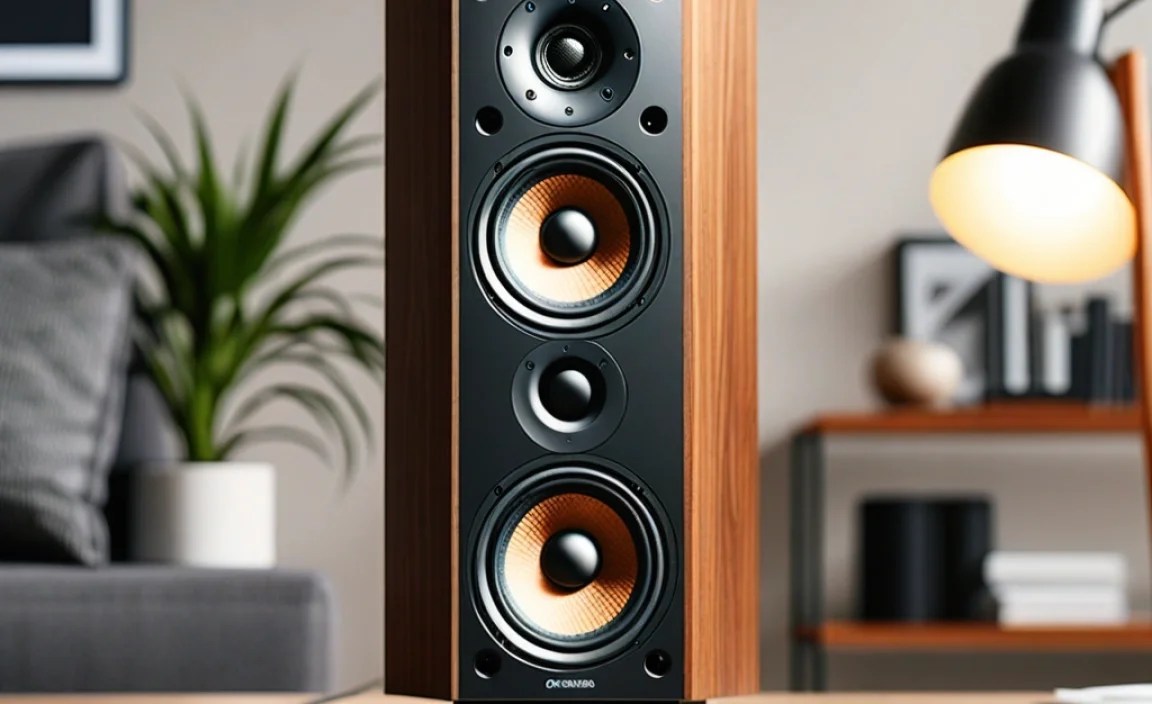
- Bookshelf Speakers: Compact, designed to sit on shelves or stands. Great for smaller rooms or as part of a larger surround system.
- Floorstanding Speakers (Tower Speakers): Larger, designed to sit on the floor. Offer more powerful sound and deeper bass, ideal for larger rooms and primary stereo setups.
- Soundbars: Long, slim speakers designed to sit below a TV. A popular, space-saving solution for improving TV audio.
- Smart Speakers: Include voice assistants (like Alexa or Google Assistant) and Wi-Fi connectivity for streaming music and controlling smart home devices.
- Subwoofers: Dedicated speakers for low-frequency sounds (bass). Essential for a full home theater experience.
Key Specifications Explained Simply
Apps will bombard you with numbers. Focus on these:
| Specification | What it Means for You | Beginner Tip |
|---|---|---|
| Frequency Response | The range of sound frequencies a speaker can reproduce, from low bass to high treble. Measured in Hertz (Hz). | A wider range (e.g., 20Hz – 20,000Hz) means the speaker can produce more detail across the entire sound spectrum. For music, look for a broad range. |
| Sensitivity | How loud a speaker plays with a given amount of power. Measured in decibels (dB). | Higher sensitivity (e.g., 90dB+) means the speaker will play louder with less amplifier power, making it a good choice if you have a less powerful receiver or integrated amp. |
| Impedance | The electrical resistance of the speaker. Measured in Ohms (Ω). | Most speakers are 8 Ohms or 4 Ohms. Ensure your amplifier can handle the impedance of your speakers to avoid damage. Check your amp’s manual; most modern amps support both. |
| Power Handling (Watts) | The amount of power a speaker can safely handle from an amplifier. | This isn’t about making it louder, but preventing damage. Match your amplifier’s output power to the speaker’s capability. It’s generally better to have an amp slightly more powerful than the speakers, but never drastically underpowered. |
| Driver Size | The diameter of the speaker cones (woofers, mid-range, tweeters). | Larger woofers (e.g., 8-inch or more) generally produce deeper bass. Tweeters (for high frequencies) vary too, affecting treble clarity. |
Understanding these will help you filter and compare speakers more effectively within your chosen app. For more on audio fundamentals, the Eton College Acoustics Department offers some excellent introductory-level explanations of sound waves and their behavior, which directly impacts speaker performance.
Going Beyond Specs: What Users Say Matters

While numbers provide a baseline, real-world user experiences are invaluable. Apps like ReviewHub AI are crucial for this. Pay attention to common themes:
- Sound Quality Consistency: Do multiple reviewers mention muddy bass, harsh treble, or excellent clarity?
- Build Quality and Durability: Do speakers hold up over time? Are they made of solid materials?
- Ease of Use/Setup: Especially important for smart speakers or complex home theater systems.
- Customer Support: How responsive and helpful is the manufacturer when issues arise?
- Value for Money: Do users feel the price reflects the performance and build?
Smart Speaker vs. Traditional Speakers: An App’s Role
The lines are blurring, but apps can help you differentiate:
| Feature | Smart Speakers | Traditional Speakers |
|---|---|---|
| Connectivity | Wi-Fi, Bluetooth, voice assistants built-in, often app-controlled. | Requires an external amplifier/receiver for most audio sources; wired connections. |
| Setup | Often app-guided, wireless, can be very simple. | Requires pairing with an amplifier/receiver, running speaker wires; can be more complex. |
| Features | Music streaming, smart home control, voice commands, multi-room audio. | Primarily focused on audio reproduction driven by external equipment. |
| Sound Quality Potential | Varies greatly. High-end smart speakers can sound excellent, but many prioritize convenience. | Generally offers higher fidelity and wider setup flexibility when paired with quality amplification. |
| App Assistance | Apps often guide setup, offer EQ adjustments, and manage music. (e.g., Connect & Calibrate) | Apps (e.g., SoundCheck Pro, ReviewHub AI) help in choosing and understanding specs. |
Apps like Connect & Calibrate are particularly useful for bridging the gap, helping you manage the smart features of connected speakers from your phone. For a deeper dive into the technical nuances of digital audio and how it relates to speaker performance, resources from organizations like the Audio Engineering Society (AES), though advanced, often have public-facing articles or glossaries that can demystify complex concepts.
Budgeting for Great Sound: Apps as Your Financial Compass
High-end audio can be expensive, but the notion that you need to break the bank for good sound simply isn’t true anymore. Apps like BudgetSonic Scout are game-changers:
- Finding Hidden Gems: These apps excel at unearthing well-regarded speakers from lesser-known or budget-focused brands that punch above their weight.
- Price Comparison: They constantly scan major retailers, ensuring you get the best deal. Sometimes, waiting a week for a sale can save you hundreds.
- Refurbished & Open-Box: Many apps can flag certified refurbished or open-box deals from reputable sellers, offering significant savings with little compromise on quality. Always check the warranty and return policy for these items.
Remember, the “best” speaker isn’t always the most expensive one. It’s the one that best fits your needs, your room, and your budget. Apps help you find that sweet spot.
FAQ: Your Speaker Buying Questions Answered
Q1: Can these apps really help me choose speakers without hearing them?
A: Yes, they significantly improve your chances. Apps provide technical data, simulated performance, and aggregated user feedback that moves you closer to an informed decision than just relying on guesswork or limited in-store demos.
Q2: Are there specific apps for different types of speakers (e.g., home theater vs. portable)?
A: The apps mentioned are generally versatile. SoundCheck Pro can simulate various setups, while Connect & Calibrate is more geared towards smart/connected systems. BudgetSonic Scout and ReviewHub AI work for all types. You often use a combination of apps depending on your needs.
Q3: How do I know if a speaker will sound good in my room?
A: Apps like SoundCheck Pro use room dimensions and material data in acoustic modeling to give you a prediction. While not perfect, it’s far better than not considering room acoustics at all. User reviews can also mention how speakers perform in various room sizes.
Q4: What should I do if I can’t find a specific speaker model in these apps?
A: If a model isn’t listed, it might be very new, niche, or less popular. Try searching for speakers from the same brand or in the same category and price range. You can then cross-reference information from the manufacturer’s website and general audio review sites.
Q5: Are simulated sound tests accurate?
A: They are estimations based on algorithms and input data. They can’t perfectly replicate the complex way sound interacts with your unique room and furniture. Use them as a guide, not a definitive answer, and always prioritize aggregated user feedback and reviews.
Q6: Do I need to be an audio expert to use these apps?
A: Absolutely not! Apps like AudioGlossary Assistant are specifically designed to break down technical jargon into simple terms. The goal of these apps is to empower everyday consumers, not just audiophiles.
Conclusion: Your Symphony of Smart Choices Awaits
The days of speaker buying being a mystery are over. By harnessing the power of speaker buying guide apps for 2025, you arm yourself with knowledge, insight, and confidence. From understanding the nuances of frequency response with AudioGlossary Assistant, to virtually placing speakers in your room with SoundCheck Pro, and ensuring you get the best deal with BudgetSonic Scout, these tools are your essential companions. They democratize audio purchasing, making great sound accessible and understandable for everyone. So, start exploring.