
The main difference between LED and OLED TVs lies in how they produce light. OLED pixels are self-lit, offering perfect blacks and infinite contrast for stunning picture quality. LED TVs use a backlight, making them generally more affordable and brighter but with less contrast. For the best visuals, OLED excels; for budget-friendly brightness, LED is a solid choice.
Hey everyone, Bob E Riley here from Aimguider! Choosing a new TV can feel like navigating a maze, especially when you start hearing terms like LED and OLED. What’s the big deal? Do you really need to know the difference? I get it – it’s enough to make anyone scratch their head. But don’t worry, that’s exactly why I’m here. We’ll break down LED and OLED in a way that makes perfect sense, so you can pick the TV that’s just right for your living room and your wallet.
We’ll cover the nitty-gritty of how each technology works, what benefits they offer, and where they might fall a little short. By the time we’re done, you’ll feel confident understanding the difference between LED and OLED like a pro. Ready to dive in and upgrade your viewing experience?
LED vs. OLED TVs: What’s the Real Difference?

At its core, a television’s job is to display images. How it achieves this is where LED and OLED technologies diverge, leading to vastly different viewing experiences. Think of it like this: both are fantastic ways to see your favorite shows, but they go about it in unique ways. Understanding these differences will help you decide which one is the best fit for your needs and budget.
Let’s start with what most people are familiar with, or at least, have seen around: LED. Then, we’ll explore the newer, premium technology, OLED. We’ll look at the pros and cons of each, so you can make an informed decision.
Understanding LED TV Technology
LED stands for Light Emitting Diode. In an LED TV, these diodes are used as the light source for the screen. However, it’s a bit more nuanced than just that. Most LED TVs are actually a type of LCD (Liquid Crystal Display) TV that uses an LED backlight. This backlight is what illuminates the pixels that create the image you see.
There are different types of LED backlighting, which can affect picture quality:
- Edge-Lit LED: The LEDs are placed along the edges of the screen. This allows for very thin TVs but can sometimes lead to uneven brightness or “clouding” on screen.
- Direct-Lit LED: The LEDs are spread out behind the entire screen. This offers more uniform brightness than edge-lit but may not be as thin.
- Full-Array LED with Local Dimming (FALD): This is a more advanced type where the LEDs are arranged in a grid across the entire back panel. “Local dimming” means that zones of these LEDs can be individually dimmed or turned off. This significantly improves contrast and black levels by allowing darker parts of the image to be displayed more accurately.
The liquid crystals in an LCD panel then control how much light passes through each pixel to create the final image. This layered approach is what makes LED TVs so prevalent and generally more affordable.
Pros of LED TVs
LED TVs have become the standard for a reason. They offer a great balance of performance and price, making them an accessible option for most households. Here are some of their key advantages:
- Brightness: LED TVs can get very bright. This is a huge advantage in well-lit rooms where sunlight or other ambient light can wash out dimmer screens. They handle reflections better than many OLEDs.
- Affordability: Generally, LED TVs cost less than comparable OLED models. You can get a large, high-quality LED TV for a significantly lower price point.
- Variety of Sizes: You can find LED TVs in almost any size imaginable, from small secondary displays to massive screen sizes suitable for a home theater.
- Durability: While modern TVs are generally robust, OLED screens can be more susceptible to burn-in if static images are displayed for very long periods (more on this later). LED screens don’t have this particular concern.
- Energy Efficiency (Often): While brightness can impact energy use, many modern LED TVs are designed to be quite efficient, especially at typical viewing brightness levels.
Cons of LED TVs
Despite their strengths, LED TVs do have some limitations, mostly related to how they produce light:
- Contrast Ratio: Because they rely on a backlight that’s always on (even if dimmed in zones), LEDs can’t achieve true black. This means blacks can appear more grayish, especially in dark scenes compared to OLED.
- Black Uniformity: In some cases, especially with edge-lit models, you might notice light “blooming” or unevenness around bright objects on a dark background, sometimes called a “flashlight effect.”
- Viewing Angles: Picture quality, color, and contrast can degrade when viewed from off-angles. This means the best picture is typically enjoyed when sitting directly in front of the TV.
- Motion Handling (Varies): While many high-end LED TVs have excellent motion handling, cheaper models can sometimes exhibit motion blur or judder in fast-paced scenes.
Understanding OLED TV Technology
OLED stands for Organic Light Emitting Diode. This is where things get really interesting and a bit mind-blowing for picture quality enthusiasts. In an OLED TV, each individual pixel is capable of emitting its own light.
Imagine tiny, self-powered light bulbs for every single dot on your screen. When a pixel needs to display black, it simply turns completely off. There’s no backlight to leak light through. This fundamental difference is what gives OLED its legendary picture quality.
Because each pixel controls its own light, OLED technology allows for pixel-level precision. This means incredible detail, stunning contrast, and vibrant colors no matter the scene. The “organic” part refers to the carbon-based compounds used in the diodes that light up when an electric current is applied.
Pros of OLED TVs
OLED technology represents the pinnacle of current display technology for many, offering a viewing experience that’s hard to beat. Here’s why:
- Perfect Black Levels: With pixels that can turn off completely, OLEDs achieve true black. This results in an infinite contrast ratio, making images incredibly lifelike and dimensional. Dark scenes in movies look phenomenal.
- Infinite Contrast Ratio: This is the direct result of perfect blacks. The difference between the brightest white and the darkest black is essentially limitless, providing unparalleled depth and realism.
- Exceptional Viewing Angles: Unlike LED TVs, OLEDs maintain their color, contrast, and brightness even when viewed from extreme side angles. Everyone in the room gets a great view.
- Incredible Color Accuracy and Vibrancy: OLEDs can produce a wider range of colors with greater accuracy and saturation, contributing to a more immersive and lifelike picture.
- Fast Response Times & Smooth Motion: Because pixels can switch on and off so quickly, OLEDs have near-instantaneous response times. This virtually eliminates motion blur, making them fantastic for fast-action sports and gaming.
- Extremely Thin Designs: Without the need for a separate backlight layer, OLED TVs can be made incredibly thin, often with sections of the panel being only a few millimeters thick.
Cons of OLED TVs
While OLEDs are amazing, they do come with their own set of considerations:
- Price: OLED TVs are generally more expensive than their LED counterparts, especially when comparing similar screen sizes.
- Brightness Limitations: While excellent for contrast and black levels, OLEDs typically don’t get as uniformly bright as the brightest LED TVs, especially FALD models. This can be a factor in very sunny rooms.
- Risk of Burn-In: Although manufacturers have made significant strides in mitigating this, OLED panels can suffer from “burn-in” if static images (like channel logos, news tickers, or game HUDs) are displayed for extended periods at high brightness. This is less of a concern for typical varied content viewing but something to be aware of.
- Longevity Concerns (Historically): Organic compounds can degrade over time. While modern OLEDs have greatly improved lifespan, there’s still a perception (and some historical data) that they might not last as long as LED panels under very heavy, long-term use. Reputable sources like Rtings.com provide detailed insights into this.
- Limited Availability in Smaller Sizes: While improving, OLED TVs are less commonly found in very small screen sizes compared to LED.
Key Differences at a Glance: LED vs. OLED
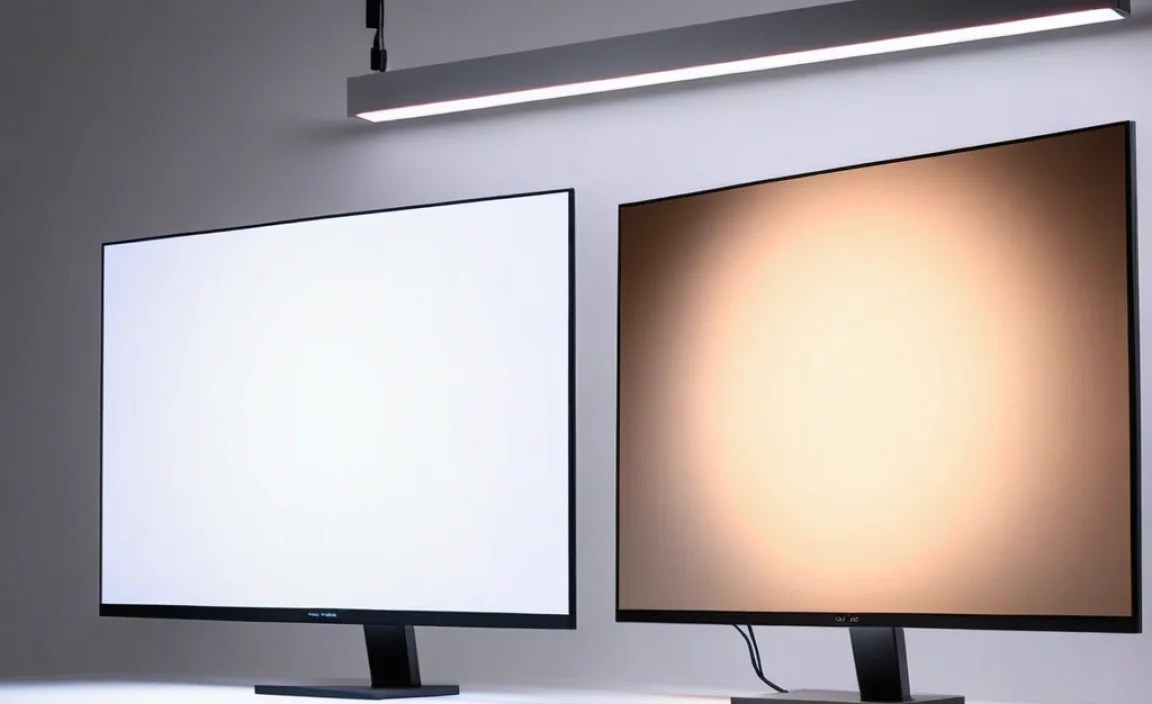
To help you visualize the core distinctions, here’s a breakdown of the main differences. Think of this as your quick reference guide when you’re weighing your options.
| Feature | LED TV | OLED TV |
|---|---|---|
| Pixel Illumination | Uses an LED backlight to illuminate LCD pixels. | Each pixel is self-emissive and lights up individually. |
| Black Levels | Good to very good (depending on backlighting tech), but not true black. | Perfect, true black as pixels can turn off completely. |
| Contrast Ratio | High, but limited by backlight. | Infinite, due to perfect black levels. |
| Brightness | Can achieve very high peak brightness, excellent for bright rooms. | Good, but generally not as bright as top-tier LEDs. |
| Viewing Angles | Can degrade in color and contrast from off-angles. | Excellent; consistent picture quality from almost any angle. |
| Motion Handling | Good to excellent, but can vary by model. | Near-instantaneous response time, virtually no motion blur. |
| Burn-In Risk | Extremely low to non-existent. | Low, but possible with prolonged static image display. |
| Price | Generally more affordable. | Generally more expensive. |
| Screen Thickness | Standard to slim. | Extremely thin. |
Which Technology is Right for You?
Now that we’ve unpacked the technical details, let’s talk about who each technology serves best. It’s not about one being definitively “better” than the other, but rather, which one aligns better with your viewing habits, environment, and budget.
Who Should Consider an LED TV?
LED TVs remain a fantastic choice for a wide range of users. If any of these descriptions sound like you, an LED TV is likely a great fit:
- Budget-Conscious Shoppers: If price is a major factor, LED offers excellent value. You can get a larger screen or more advanced features (like higher refresh rates or better HDR) for the same money compared to OLED.
- People with Bright Living Rooms: If your TV is in a room with a lot of natural light or bright overhead lights, the superior peak brightness of many LED TVs will help combat glare and maintain a vibrant picture throughout the day.
- Gamers (Who Play for Long Sessions with Static Elements): While OLED has great motion, the risk of burn-in from static HUDs (Heads-Up Displays) in games might be a concern for those who play the same game for many hours daily. LED TVs don’t have this worry.
- Those Who Want the Biggest Screen for Their Buck: If your priority is simply getting the largest diagonal display size for your budget, LED TVs are unparalleled.
- Anyone Who Prefers Simplicity and Less Worry: If you want a TV you can essentially set and forget without worrying about image retention on your favorite news channel, LED is a worry-free choice.
Who Should Consider an OLED TV?
OLED technology is truly special and shines brightest for users who prioritize the absolute best picture quality for specific types of content. Consider an OLED if:
- Picture Quality is Your Top Priority: If you crave the most cinematic experience with stunning contrast, perfect blacks, and vibrant colors, especially for movies and dark-room viewing, OLED is hard to beat.
- You Watch Movies and TV Shows in a Dark Room: This is where OLED truly comes alive. The ability to display deep blacks makes dark scenes incredibly immersive and detailed.
- You’re a Cinephile or Home Theater Enthusiast: For those who appreciate the nuances of filmmaking and want to see content as the director intended, OLED’s accuracy and contrast are invaluable.
- You Want the Best Viewing Angles for a Group Setting: If you often have friends or family over and people will be watching from different spots in the room, OLED’s wide viewing angles ensure everyone gets a great picture.
- Gamers Who Appreciate Visual Fidelity and Responsiveness: For many gamers, the perfect blacks, infinite contrast, and incredibly fast response times of OLED offer an unparalleled gaming experience, especially in darker game environments. Even with burn-in concerns, many gamers opt for OLED due to its visual prowess.
- You Have the Budget for Premium Technology: If you’re willing to invest more for the absolute best visual performance currently available in consumer displays.
Understanding “Burn-In” and Image Retention
This is a topic that frequently comes up when discussing OLED technology. It’s important to understand what it is and how it differs from temporary image retention.
- Image Retention: This is a temporary effect where ghosting of a previously displayed image can be seen. It’s usually short-lived and disappears after displaying varied content or running a screen refresh cycle. Most modern TVs, including OLEDs, have built-in tools to combat this.
- Burn-In: This is a permanent degradation of the screen where a static image, displayed consistently for very long periods at high brightness, etches itself into the pixels. The organic compounds in OLED pixels can wear out unevenly in these areas.
Manufacturers have implemented several technologies to mitigate burn-in:
- Pixel Shifting: The entire image is subtly moved by a few pixels periodically, so static elements don’t stay in the exact same position for too long.
- Logo Luminance Adjustment: The TV detects static logos (like news channels or sports team logos) and automatically dims them to reduce stress on the pixels.
- Screen Savers and Pixel Refresher: OLED TVs often have automatic screen savers and background “pixel refresher” cycles that help maintain image uniformity and longevity.
For the vast majority of users who watch varied content like movies, TV shows, and sports, and don’t leave the same image on screen for 8+ hours a day at maximum brightness, the risk of permanent burn-in on modern OLED TVs is very low. For more in-depth information, resources like Consumer Reports also offer valuable perspectives.
The Future of Display Technology
The world of displays is constantly evolving. While LED and OLED are the current giants, research continues.
- Mini-LED: This is an advancement in LED technology, using thousands of tiny LEDs for backlighting, allowing for many more dimming zones than traditional FALD. This bridges some of the gap between standard LED and OLED in terms of contrast and black levels, often at a price point between the two.
- QD-OLED: Developed by Samsung Display, QD-OLED combines the benefits of OLED’s perfect blacks with Quantum Dots (which are also used in some high-end LED TVs) to potentially offer even wider color gamuts and higher brightness. Brands like Sony and Samsung are starting to use this technology.
- MicroLED: This is considered by many to be the next big thing. It uses microscopic LEDs for each pixel, offering perfect blacks like OLED and incredible brightness like LED, with no burn-in risk. However, it’s currently extremely expensive and mostly found in very large, modular displays.
The competition between these technologies pushes innovation, meaning better pictures and more options for consumers in the years to come.
Frequently Asked Questions about LED vs. OLED
Q1: Is OLED really worth the extra cost over LED?
For many people who prioritize picture quality, especially for movies and dark-room viewing, yes, OLED is often considered worth the premium. The perfect blacks and infinite contrast offer a truly superior visual experience. However, if budget is a significant concern or you watch a lot of TV in a very bright room, a high-quality LED TV can be a better value.