
Imagine sitting down for movie night, but the sound is flat and dull. You just can’t feel the action. This problem is all too familiar for many people who have wall-mounted their TVs. Finding the best TV sound settings can transform your viewing experience.
Did you know that the right sound settings can make even the simplest scenes exciting? For instance, a quiet moment can suddenly feel tense with the proper audio adjustments. It’s all about tuning your sound.
What if you could turn your living room into a movie theater? You can! By exploring the best TV sound settings for your wall mount, you can enjoy crisp dialogues and booming explosions. Let’s dive in and discover how to make your TV sound great.
Best Tv Sound Settings For Wall Mount Installation Explained
Finding the best TV sound settings for a wall mount can transform your viewing experience. Did you know that sound quality can be just as important as picture quality? With the right settings, you can create an enveloping sound environment. Adjusting equalizer settings, exploring surround sound options, and fine-tuning bass can make a big difference. Imagine feeling like you’re in the middle of the action. Simple tweaks can lead to a richer sound that enhances every show you watch!
Understanding TV Sound Dynamics

Explanation of sound waves and acoustics in relation to wallmounted TVs. Importance of speaker placement and room acoustics.
Sound waves travel through the air, creating the sounds we hear. With wall-mounted TVs, good sound matters. Speaker placement is key. Sound bounces off walls and affects what you hear. If speakers are in a corner, some sounds may get lost. Room acoustics also play a big role. A carpet can soften echoes, making everything clearer. Place your speakers where they can shine. This helps you enjoy movies and shows more!
Why is sound placement important?
Sound placement affects your listening experience. Proper speaker setup improves audio quality, making sounds more enjoyable.
Tips for speaker placement:
- Keep speakers at ear level for clear sound.
- Avoid corners to reduce echo.
- Test different spots until you find the best sound.
Using External Audio Equipment
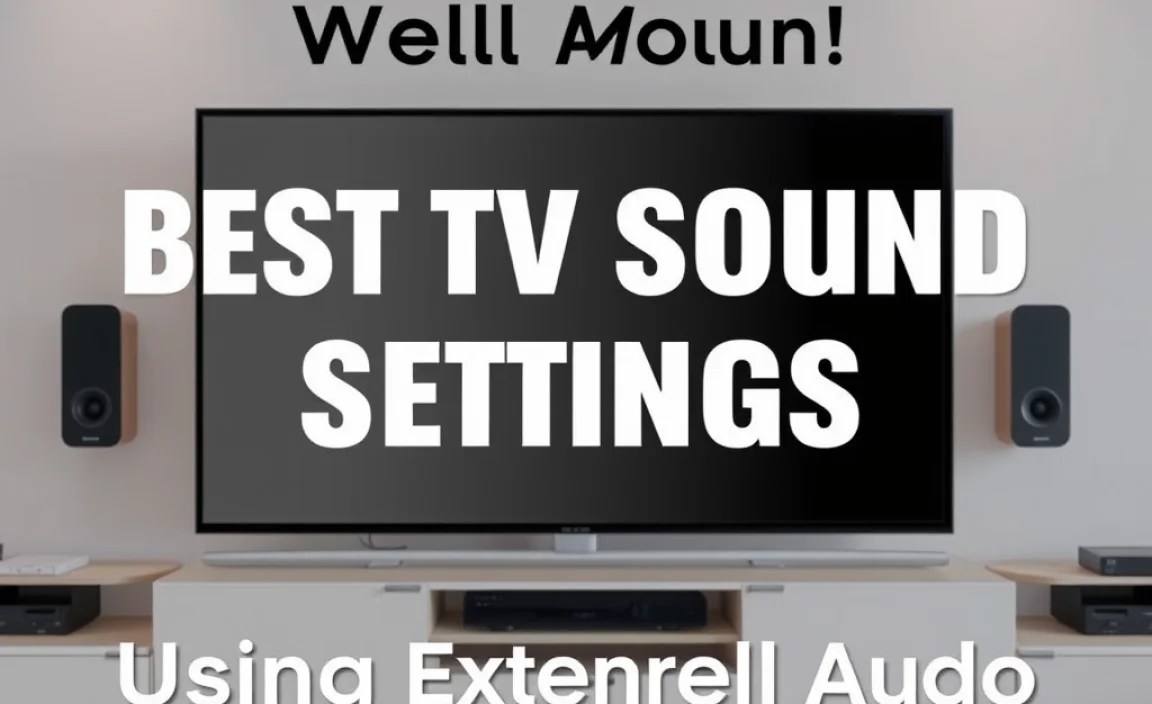
Benefits of soundbars over builtin TV speakers. Options for connecting surround sound systems for wallmounted TVs.
Using a soundbar can make your TV sound 10 times better than those tiny built-in speakers. Imagine watching a movie and actually feeling like you’re there! Soundbars are slim and easy to set up, making them perfect for wall-mounted TVs. If you want to go big, consider a surround sound system for an ultimate experience. You can connect it using HDMI or even Bluetooth! Here’s a quick overview:
| Option | Connection Type |
|---|---|
| Soundbar | HDMI ARC / Optical / Bluetooth |
| Surround Sound System | HDMI / Coaxial / Wireless |
With the right setup, your living room can transform into a mini cinema. Who doesn’t love the idea of feeling like a superhero during an epic movie scene?
Optimizing Sound Based on Room Size

Tips for sound settings based on small vs. large rooms. Adjustments needed for different wall materials and furnishings.
Sound can be tricky, especially with room size! In small spaces, keep your TV’s volume lower. Too much sound can really bounce off the walls and feel loud—like you’re at a rock concert you didn’t want to attend! Larger rooms need more volume to fill the space. If your walls are thick, they’ll soak up sound. Choose settings that match your walls and furniture to get the best sound experience. Here’s a quick guide:
| Room Size | Sound Setting | Wall Material |
|---|---|---|
| Small | Low Volume | Drywall: Standard settings |
| Large | Higher Volume | Brick: Boost treble |
Remember, too much sound can lead to a headache! Adjust wisely, and enjoy your show.
Common Mistakes to Avoid
Common errors in sound settings for wallmounted TVs. How to avoid echo and distortion issues.
Setting up sound for your wall-mounted TV can be tricky. Many people make simple mistakes that can ruin their viewing experience. One big error is not adjusting the audio delay. If the sound doesn’t match the picture, it’s like watching a bad dubbed movie—no fun at all! Another common mistake is leaving the TV’s speakers on while using a soundbar. This can create an echo that sounds like a bad karaoke night!
| Common Mistakes | How to Avoid |
|---|---|
| Not adjusting audio settings | Check sound options in your TV menu |
| Using TV speakers with a soundbar | Turn off TV speakers for clearer sound |
| Ignoring room acoustics | Use soft furnishings to reduce echo |
By avoiding these mistakes, you can enjoy fantastic sound that makes you feel like you’re in a movie theater—without those sticky floors!
Comparing Audio Formats and Sources
Explanation of different audio formats (Dolby Digital, DTS, etc.). How to choose the best audio sources for optimal sound quality.
Sounds can be tricky, like a cat trying to catch its tail! Different audio formats, like Dolby Digital and DTS, make a big difference. Dolby Digital gives you rich, clear sound, while DTS offers more detail but requires more space. It’s like choosing between a comfy chair and a fancy couch – both are great, but it depends on your taste!
To hear the best audio, pick top-quality sources, like Blu-ray or high-res streaming. These formats bring out the happy notes in your movies! Remember, a great sound system needs great sources. Don’t let your sound go flat like a pancake!
| Audio Format | Features |
|---|---|
| Dolby Digital | Rich sound; works well with surround systems |
| DTS | High detail and clarity; needs more storage |
Testing and Calibration Techniques
Use of calibration tools and apps for sound settings. Stepbystep guide to finetuning your audio setup.
Getting your TV sound just right makes a big difference! You can use special tools and apps to help set up the best sound. Follow this step-by-step guide to fine-tune your audio:
- Start by downloading a calibration app on your smartphone.
- Place the microphone at your listening spot.
- Run the app to measure the sound.
- Adjust the settings based on its suggestions.
- Test different sound modes to find your favorite.
Practicing these steps will make your audio setup sound amazing! You’ll hear every detail in movies and games.
How do I calibrate my TV sound settings?
You calibrate your TV sound settings by using a calibration app, measuring sound levels, and adjusting the settings according to the app’s recommendations.
Maintaining Your Audio Setup
Regular maintenance tips for TV and audio equipment. When to consider upgrades for sound quality improvements.
Taking care of your audio setup is easy and can be fun! Regularly clean your speakers and cables to keep them dust-free. It’s like giving your sound system a spa day! If your sound feels flat, it might be time to upgrade. Consider adding a subwoofer for deeper bass—your neighbors will thank you (not). Remember, a great sound system is key to enjoying your favorite shows.
| Maintenance Tip | Frequency |
|---|---|
| Dust speakers and cables | Monthly |
| Check connections | Every 3 months |
| Upgrade for better sound | When quality dips |
Conclusion
In conclusion, finding the best TV sound settings for wall mounts can enhance your viewing experience. Start by adjusting the audio settings on your TV. Consider using soundbars for better sound quality. Experiment with placement for optimal performance. You can also check online guides for in-depth tips. Enjoy your movies with amazing sound—let’s make your setup great!
FAQs
Here Are Five Related Questions On The Topic Of The Best Tv Sound Settings For A Wall-Mounted Setup:
To get the best sound from your wall-mounted TV, start by turning off any extra features like virtual surround sound. This helps the sound stay clear. Next, adjust the bass and treble to fit what you like. You can also turn on the clear voice setting to make voices easier to hear. Lastly, make sure the TV is at a good height so you can hear everything well.