
To find the best TV for outdoor use settings, prioritize sunlight readability, weather resistance, and screen brightness. Look for TVs specifically designed for outdoor environments or high-brightness models that can combat glare and protect against the elements for an enjoyable viewing experience.
Dreaming of catching the big game or enjoying a movie under the stars? Setting up a TV outdoors can be fantastic, but it’s not as simple as just dragging your indoor TV outside. Direct sunlight, rain, and even bugs can be tough on electronics. Don’t worry, though! With the right approach, creating your perfect outdoor entertainment space is totally achievable. We’ll walk you through everything you need to know to pick the right TV and set it up for success, ensuring you get the best picture and a long-lasting setup. Let’s get your backyard cinema started!
Why You Can’t Just Use Your Indoor TV Outside

It’s tempting, right? You’ve got a great TV inside, and your patio or deck is just begging for one. However, your standard indoor TV isn’t built for the great outdoors. Think about it: the sun is incredibly bright, and indoor TVs just don’t have the power to compete with that glare. Plus, can your couch-potato companion handle a sudden shower or a humid afternoon? Probably not. Outdoor TVs are specially engineered to handle these challenges.
They feature much brighter screens, coatings to reduce glare, and durable casings to protect them from moisture, dust, and temperature changes. Using an indoor TV outside is a recipe for poor picture quality and a very, very short lifespan for your expensive electronics. You wouldn’t use your indoor speakers at a construction site, and similarly, your indoor TV needs protection from the elements.
Key features to look for in an outdoor TV

When you’re shopping for the best TV for outdoor use settings, there are a few crucial features that make all the difference. These aren’t just fancy extras; they are essential for a good, reliable outdoor viewing experience.
1. Screen Brightness (Nits)
This is arguably the most important factor. Outdoor TVs need to be significantly brighter than indoor TVs to combat sunlight. Indoor TVs typically range from 200-400 nits. For outdoor use, you’ll want something much higher, ideally 700 nits or more, with premium models pushing 1000 nits and beyond.
- Nits: A measurement of luminance or brightness.
- Why it matters: Higher nits mean the screen can overcome ambient light (like the sun) and deliver a clear, visible picture.
- Recommendation: Aim for at least 700 nits, but the brighter, the better for direct sunlight.
2. Glare and Reflection Management
Even a super bright screen can be hard to see if it’s reflecting everything around it. Outdoor TVs often have anti-glare coatings or matte finishes to diffuse light and reduce reflections from the sun, trees, or patio furniture. This makes a huge difference in picture clarity and viewing comfort.
- Anti-glare coating: A special layer on the screen surface that breaks up direct reflections.
- Matte finish: The screen surface itself has a textured look that diffuses light rather than reflecting it sharply.
- What to look for: Check product descriptions for terms like “anti-glare,” “anti-reflection,” or “matte display.”
3. Weather Resistance (IP Rating)
This tells you how well the TV is protected against dust and water. You’ll see ratings like “IP65” or “IP57.” The first number is for solids (dust), and the second is for liquids (water). For outdoor use, you want a good rating for both.
- Understanding IP Ratings:
- The first digit indicates protection against solid objects (like dust). A ‘6’ means it’s dust-tight.
- The second digit indicates protection against water. A ‘5’ means it’s protected against water jets from any direction. A ‘7’ means it can withstand immersion in water up to 1 meter for 30 minutes.
- For outdoor TVs: Look for at least IP55 for protection against dust and low-pressure water jets. Models designed strictly for outdoor use will often have higher ratings. Learn more about IP rating standards on the IEC website.
4. Temperature Range
Outdoor environments experience temperature swings that indoor electronics can’t handle. Outdoor TVs are built with components and cooling systems that can operate reliably in a wider range of temperatures, from scorching summer heat to cooler evenings.
- Operating Temperature: The temperature range within which the TV is designed to function correctly.
- Consider your climate: If you live somewhere with extreme heat or cold, pay close attention to the TV’s specified operating temperature range.
5. Smart TV Features and Connectivity
Just like indoor TVs, outdoor models come with smart capabilities. Ensure it has the apps you need (Netflix, Hulu, etc.) and that it offers robust connectivity options. You’ll need to consider how to connect it to your Wi-Fi and any other devices. Some outdoor TVs are designed to be permanently mounted and hardwired, while others offer more flexibility.
- Wi-Fi & Ethernet: For streaming and software updates.
- HDMI Ports: To connect gaming consoles, Blu-ray players, or soundbars.
- Bluetooth: For wireless audio streaming or connecting accessories.
Types of Outdoor TVs
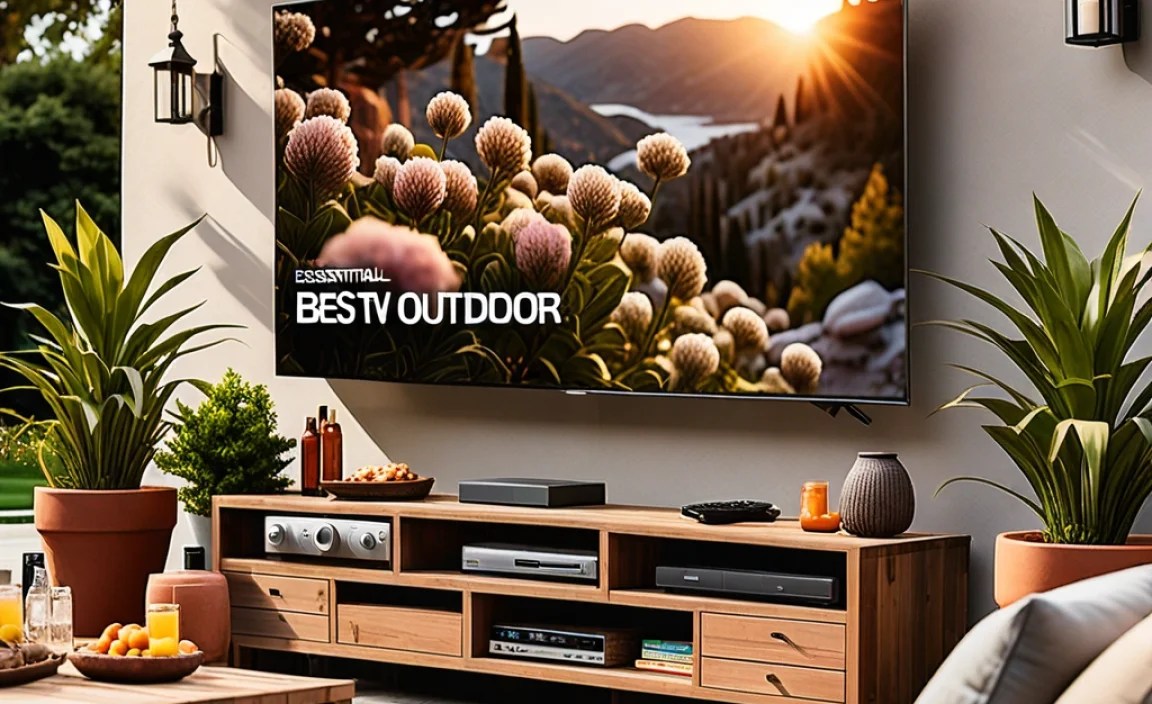
When you’re looking for the best TV for outdoor use settings, you’ll generally find a few main categories. Each has its pros and cons, and the best choice depends on your specific needs and how much you want to spend.
1. Full-Sun Outdoor TVs
These are the heavy hitters designed for locations where the TV will be in direct sunlight for most of the day. They boast incredibly high brightness levels (often 1000 nits or more) and are built with robust weatherproofing and cooling systems. They are typically the most expensive option.
- Pros: Excellent visibility in direct sunlight, durable, fully weather-resistant.
- Cons: Most expensive, can be overkill for shaded areas.
- Ideal for: Patios, decks, or backyards that get a lot of sun exposure.
2. Partial-Sun (Shaded) Outdoor TVs
These TVs are designed for areas that receive some indirect sunlight or are largely covered by shade. They are brighter than indoor TVs (typically 700-1000 nits) and offer some level of weather resistance, but not to the extreme of full-sun models. They often strike a good balance between performance and price.
- Pros: Good brightness for shaded or partly sunny areas, good weather resistance, better value than full-sun models.
- Cons: May struggle in direct, harsh sunlight.
- Ideal for: Covered patios, gazebos, or areas with significant shade throughout the day.
3. All-Weather Entertainment Displays (Often No TV Tuner)
Some products marketed for outdoor use are technically not TVs but rather displays with built-in speakers and sometimes streaming capabilities, but they lack an integrated TV tuner. This means you’d need an external source like a streaming device (Roku, Apple TV) or a cable box to watch broadcast channels. They are built to withstand the elements thoroughly.
- Pros: Extremely durable, often designed for permanent installation, can be more versatile for digital signage.
- Cons: May require an external tuner or streaming device, potentially fewer “smart TV” features out-of-the-box than dedicated outdoor TVs.
- Ideal for: People who primarily stream content or use external tuners and want maximum durability.
4. Traditional Indoor TVs in Protective Enclosures
This is a budget-friendly approach where you use a regular indoor TV placed inside a specialized, weatherproof outdoor TV enclosure. These enclosures protect the TV from rain, dust, and extreme temperatures while allowing for ventilation. It’s important to choose a high-quality enclosure that is specifically designed for TVs.
- Pros: Can be significantly cheaper than a dedicated outdoor TV, allows you to use a TV you already own or a higher-end indoor model for less.
- Cons: Requires an extra purchase (the enclosure), can be bulky, brightness might still be an issue for direct sun, requires regular maintenance of the enclosure.
- Ideal for: Budget-conscious users, those with only occasional direct sun exposure, or users in milder climates who can ensure adequate protection.
Choosing the Right Size and Resolution
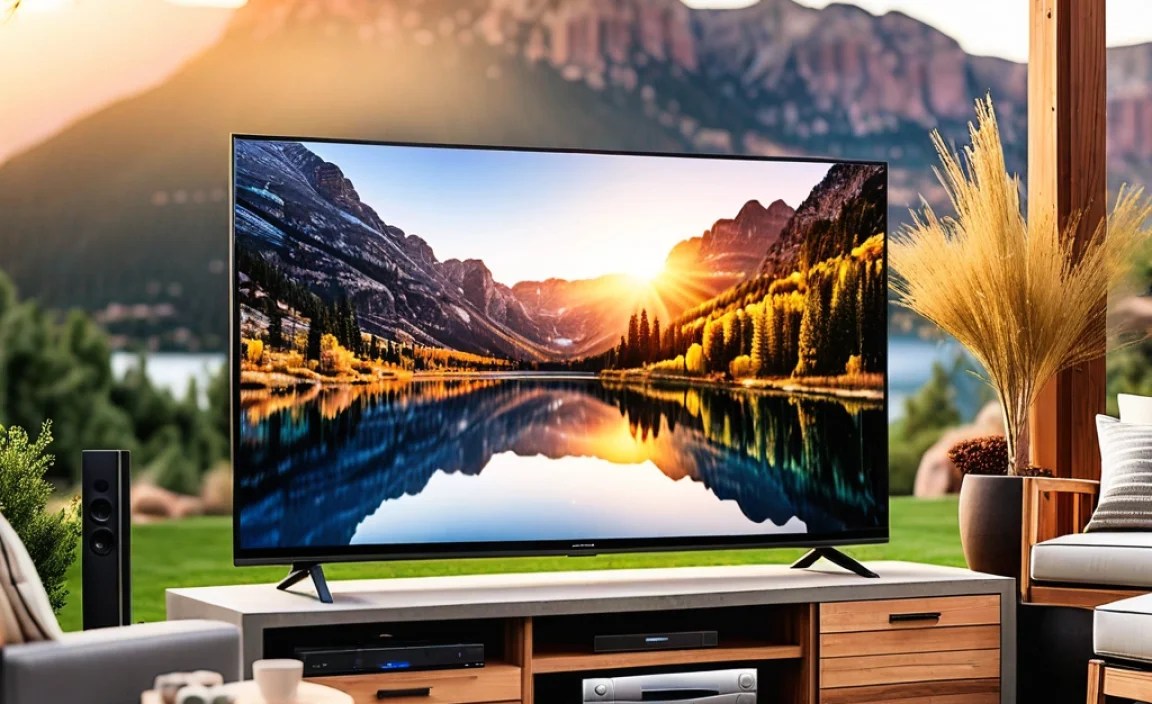
Just like with indoor TVs, size and resolution matter for your viewing experience. However, for outdoor TVs, consider the viewing distance carefully.
Screen Size
Outdoor viewing often involves longer distances than sitting on a couch. Measure the furthest point at which people will be sitting to watch the TV. A general rule of thumb for a comfortable viewing experience is a viewing distance of about 1.5 to 2.5 times the screen’s diagonal measurement for HD content. For 4K content, you can sit closer, about 1 to 1.5 times the screen diagonal.
- For Patios/Decks: 40-55 inches is common.
- For Larger Yards/Areas: 65 inches and up might be necessary to see details from afar.
Resolution (4K vs. 1080p)
Both 4K (UHD) and 1080p (Full HD) are available for outdoor TVs. 4K offers significantly more detail, which is especially beneficial on larger screens and when you might be sitting further away. Provided your content source is also 4K, you’ll get a sharper, more immersive picture.
- 4K (UHD): 3840 x 2160 pixels. Offers more detail and clarity, ideal for larger screens and longer viewing distances.
- 1080p (Full HD): 1920 x 1080 pixels. Still viable for smaller screens or shorter viewing distances, often more budget-friendly.
Most modern outdoor TVs come with 4K resolution, making it the standard choice for new purchases. Ensure your streaming device or media player can also output 4K content to take full advantage of the screen’s capabilities.
Installation and Mounting Considerations
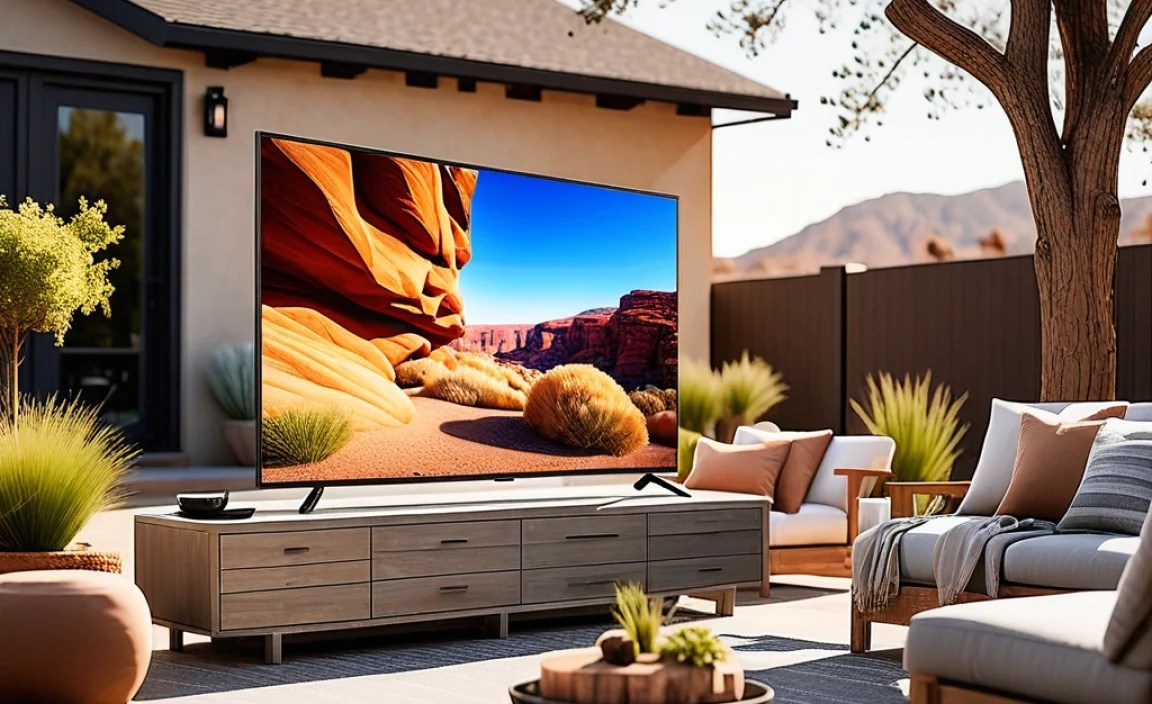
Getting your outdoor TV up and running safely and effectively involves more than just plugging it in. Proper installation is key to both performance and longevity.
Weatherproof Mounts
You’ll need a mount that can withstand the elements. Look for mounts made from durable, rust-resistant materials like powder-coated steel or aluminum. Ensure the mount is rated for the weight and size of your TV, and consider whether you need a fixed, tilting, or full-motion mount.
- Fixed Mounts: Cheapest and most secure, holds the TV flat against the wall.
- Tilting Mounts: Allow you to angle the TV up or down to reduce glare or improve viewing angles.
- Full-Motion Mounts: Offer the most flexibility, allowing you to swivel and extend the TV.
Power and Cable Management
This is where things get a bit more involved. You need to protect all electrical connections from moisture. Ideally, all wiring should be run through conduit or weatherproof junction boxes. Outdoor-rated extension cords and power strips are a must if you can’t directly hardwire the TV.
- Outdoor-Rated Cables: Use cables specifically designed for outdoor use to prevent damage from UV rays and moisture.
- Conduit: Protects cables from physical damage and weather.
- GFCI Outlets: Ensure your outdoor power sources are protected by Ground Fault Circuit Interrupter (GFCI) outlets for safety. You can learn more about electrical safety outdoors from the National Fire Protection Association (NFPA).
Ventilation
Even specially designed outdoor TVs can overheat if not properly ventilated. Ensure there’s adequate airflow around the TV and its mounting system. Avoid placing it in enclosed, unventilated spaces unless the enclosure is specifically designed for that purpose and has active cooling.
Sun Protection
If your TV isn’t a full-sun model or is mounted in an area that receives harsh direct light, consider adding a sunshade or awning above it. This simple addition can significantly improve picture quality by reducing glare and also help protect the TV from direct heat.
Audio Options for Your Outdoor TV
The speakers built into most outdoor TVs are generally not as robust as those in indoor models. To get the best audio experience, you’ll likely want to supplement them.
Outdoor Soundbars
These are designed to be weather-resistant and produce clearer, more powerful sound than TV speakers. They can be mounted below or beside the TV for an integrated look.
- Benefits: Improved volume, bass, and clarity; often designed to withstand the elements.
- Types: Wired and wireless options are available.
Landscape Speaker Systems
For a more immersive audio experience, consider a system of weather-resistant outdoor speakers strategically placed around your patio or yard. These can be wired into your TV’s audio output or a separate audio system.
- Benefits: Creates a truly enveloping sound experience.
- Considerations: Requires more complex installation and wiring.
Bluetooth Speakers
For a simpler solution, you can often pair a high-quality outdoor-rated Bluetooth speaker with your smart TV. This is a great option for casual viewing where booming sound isn’t the primary concern.
- Benefits: Easy setup, wireless convenience.
- Limitations: Can sometimes have a slight delay (latency), and the sound quality might not match wired systems.
When selecting an outdoor audio solution, always check its weather resistance rating just as you did for the TV itself to ensure it can handle the conditions.
Table: Outdoor TV Features Comparison
To help you visualize the differences, here’s a quick comparison of key features you might find across different outdoor TV types:
| Feature | Full-Sun Outdoor TV | Partial-Sun Outdoor TV | Indoor TV in Enclosure |
|---|---|---|---|
| Brightness (Nits) | 1000+ | 700-1000 | Varies (typically 250-500) |
| Anti-Glare | Excellent (often superior coatings) | Good | Depends on indoor TV, enclosure offers no anti-glare |
| Weather Resistance (IP Rating) | High (e.g., IP56, IP65) | Moderate (e.g., IP55) | Enclosure rated (TV inside is not) |
| Temperature Range | Wide operating and storage | Extended operating | Enclosure tested (TV typically limited) |
| Cost | Highest | Mid-High | Lowest (TV cost + enclosure cost) |
| Installation Complexity | Moderate to High | Moderate | Moderate (requires fitting TV into enclosure) |
| Best Use Case | Direct, prolonged sunlight | Shaded or indirectly lit areas | Budget-conscious, minimal direct sun |
Maintenance Tips for Your Outdoor TV
To ensure your outdoor TV continues to perform at its best and lasts for years, a little regular maintenance goes a long way.
- Regular Cleaning: Wipe down the screen, frame, and any external components regularly with a soft, damp microfiber cloth. Avoid harsh chemicals that can damage coatings. For stubborn marks, use a cleaner specifically approved for outdoor electronics or TV screens.
- Check Connections: Periodically inspect all external cables and connections to ensure they are secure, free from corrosion, and still adequately protected from the elements.
- Inspect the Enclosure (if used): If you’re using an indoor TV in an enclosure, check the seals for any signs of wear or damage. Ensure vents are clear of debris like leaves or spiderwebs.
- Keep it Covered (when not in use): If your TV isn’t permanently installed or doesn’t have a dedicated cover built-in, consider using a breathable, weather-resistant TV cover when it’s not in use. This adds an extra layer of protection against dust and moisture.