
Choosing the best TV for outdoor use means prioritizing bright screens, weather resistance, and glare reduction. Look for specific outdoor TV models or highly bright indoor TVs with protective enclosures. This guide simplifies the process to help you enjoy your backyard entertainment.
Thinking about transforming your patio into an entertainment hub? An outdoor TV can make movie nights and game days truly special. But picking the right one can feel like a puzzle. Sunlight, dust, and temperature changes are tough on electronics. Don’t worry! This guide breaks down everything you need to know to find the perfect outdoor TV that will shine, rain or shine.
We’ll walk through the key features to consider, like brightness and weatherproofing. You’ll learn how to protect your investment and make sure your outdoor viewing experience is top-notch. Let’s dive in!
Why Can’t I Just Use My Indoor TV Outside?

It’s a common question: why invest in a special outdoor TV when you already have a perfectly good one inside? The simple answer is that indoor TVs are not built for the harsh realities of the outdoors. They lack the necessary protection and brightness to perform well under direct sunlight or during various weather conditions. Leaving an indoor TV outside, even under a covered patio, can lead to:
- Screen Damage: Indoor TVs aren’t designed to handle temperature fluctuations. Extreme heat can warp the screen, and cold can make components brittle.
- Visibility Issues: Sunlight is incredibly bright. Most indoor TVs simply can’t compete, resulting in a washed-out picture where you can barely see what’s on screen.
- Moisture and Dust Problems: Rain, humidity, and even dust can easily get into the delicate electronics of an indoor TV, causing shorts, corrosion, and ultimately, failure.
- Shorter Lifespan: Without proper protection, an indoor TV used outdoors will likely have a much shorter operational life than it would inside.
Outdoor-specific TVs and enclosures are engineered to overcome these challenges, ensuring a safe and enjoyable viewing experience.
Key Features to Look For in an Outdoor TV

When you’re shopping for the best TV for outdoor use, several crucial features set them apart from their indoor counterparts. Focusing on these will help you make an informed decision.
1. Brightness (Measured in Nits)
This is arguably the most critical factor for outdoor TVs. Direct sunlight can easily overpower the picture on a less-bright screen. Look for TVs with a high brightness rating, typically measured in nits (candela per square meter, or cd/m²).
- 500-700 nits: Suitable for shaded or covered areas that get minimal direct sunlight.
- 700-1000 nits: A good balance for spots with some indirect sunlight or partial shade.
- 1000+ nits: Essential for areas with direct, full sun exposure. These screens can cut through glare and provide a vibrant picture.
Many dedicated outdoor TVs boast brightness levels of 1,000 nits or even up to 3,000 nits for maximum visibility.
2. Weather Resistance and Durability
Outdoor TVs are built to withstand the elements. They typically carry an Ingress Protection (IP) rating, which indicates their level of protection against solids (like dust) and liquids (like water). You’ll often see ratings like:
- IP55: Protected from dust ingress and low-pressure water jets from any direction. Good for most covered patios.
- IP65: Fully protected from dust and powerful water jets. Ideal for more exposed locations.
- IP66: Offers even greater protection against water, including high-pressure jets.
In addition to IP ratings, check for:
- Temperature Range: Ensure the TV can operate safely within the expected temperature extremes in your region.
- Corrosion Resistance: Materials used should resist rust and degradation from humidity and salt air (if you live near the coast).
- UV Protection: Some screens have coatings to prevent discoloration or damage from prolonged UV exposure.
3. Glare and Reflection Handling
Even with a bright screen, glare from the sun can ruin the viewing experience. Look for:
- Anti-glare Screens: These screens have a matte finish that diffuses light, reducing harsh reflections.
- High Contrast Ratios: A good contrast ratio helps distinguish between light and dark areas, making the picture clearer even with ambient light.
- Screen Finish: Semi-gloss or matte finishes tend to perform better outdoors than high-gloss indoor screens.
4. Sun Protection (Shading)
While the TV itself should be protected, using additional shade can significantly improve picture quality and prolong the life of your TV. Consider:
- Overhangs or Pergolas: Providing a structural roof over your TV.
- Retractable Awnings: Offer flexibility to adjust shade as needed.
- Outdoor TV Covers: When the TV is not in use, a cover protects it from dust, rain, and UV rays.
For more information on weatherproofing your outdoor electronics, resources from organizations like the Federal Emergency Management Agency (FEMA) offer insights into creating resilient structures that can protect valuable equipment.
5. Connectivity and Smart Features
Just like indoor TVs, outdoor models offer various connectivity options. Ensure it has enough HDMI ports for your devices (cable box, streaming stick, gaming console) and that it supports Wi-Fi for smart TV features. Many outdoor TVs are “smart,” meaning they have built-in operating systems like Android TV, Roku TV, or their own proprietary platform, allowing direct access to streaming apps.
6. Audio
Sound can be tricky outdoors due to ambient noise (wind, traffic, neighbors). Many outdoor TVs have built-in speakers, but they might not be powerful enough for a large open space. Consider:
- Built-in Speakers: Check their wattage and sound quality specifications.
- External Audio Solutions: For superior sound, plan to connect a soundbar or a set of outdoor speakers. Look for Bluetooth connectivity or weatherproof speaker systems.
Types of Outdoor TVs and Their Pros & Cons
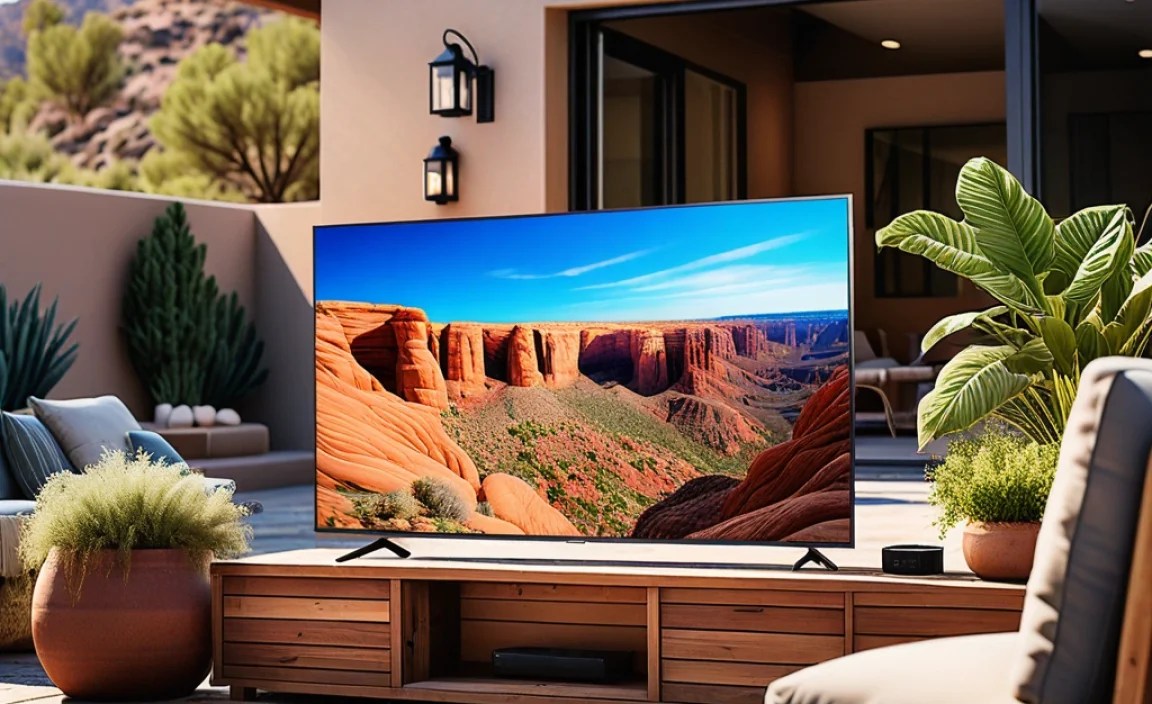
When you’re looking for that perfect outdoor screen, you’ll generally find a few main options. Each has its own strengths and weaknesses, making one a better fit for your specific setup.
1. True Outdoor TVs
These are televisions specifically designed and engineered from the ground up for outdoor use. They are built with ruggedized components, high brightness displays, and robust weatherproofing. Brands like SunBriteTV, SkyVue, and Sealoc specialize in these.
Pros:
- Highest brightness levels available (often 1000+ nits)
- Excellent weather resistance (high IP ratings)
- Built to withstand extreme temperatures
- Designed to combat glare effectively
- Durable construction
Cons:
- Significantly more expensive than indoor TVs
- Picture quality (color accuracy, contrast) might be slightly less refined than top-tier indoor models for dark room viewing.
- Limited model selection compared to indoor TVs
- Can be heavier and bulkier
2. Outdoor-Rated TV Enclosures
This approach involves using a weather-resistant cabinet or enclosure to protect a standard indoor TV. These enclosures are typically sealed and ventilated to keep out dust and moisture while allowing for some temperature regulation. Brands like The TV Shield offer these solutions.
Pros:
- More affordable than true outdoor TVs
- Allows you to use a high-quality indoor TV with advanced features
- Offers good protection against weather and dust
- Flexible installation options
Cons:
- Can create glare due to the protective screen (unless specified otherwise)
- Adds bulk and weight to the setup
- Requires regular maintenance (checking seals, cleaning the enclosure)
- Not as visually sleek as a dedicated outdoor TV
- Still exposes the TV to some temperature stress
3. High-Brightness Indoor TVs in Covered Areas
If your outdoor area is heavily covered, like a screened-in porch or a deep, shaded patio, you might be able to get away with a very bright indoor TV. Some higher-end indoor TVs can reach brightness levels and have anti-glare properties that might suffice in these limited conditions.
Pros:
- Can be the most cost-effective if you already own a suitable TV
- Access to the latest indoor TV technology and picture quality
- Sleeker design
Cons:
- Very limited outdoor suitability. Only for fully protected areas.
- Still vulnerable to humidity, extreme temperatures, and dust
- Picture quality will be significantly impacted if any direct sunlight creeps in
- Greatly reduced lifespan if exposed to conditions it’s not designed for
For most users aiming for true outdoor viewing, especially in areas with direct sun, a true outdoor TV or a robust enclosure is the recommended path.
Installation and Mounting Considerations

Getting your outdoor TV installed correctly is just as important as choosing the right model. Proper installation ensures safety, optimal viewing angles, and longevity.
Mounting Options
- Fixed Mounts: Simple and secure, holding the TV close to the wall. Best if you have a fixed viewing spot.
- Tilting Mounts: Allow the TV to tilt up or down, helpful for reducing glare or accommodating different seating heights.
- Full-Motion/Articulating Mounts: Offer the most flexibility, allowing you to swing the TV out, tilt, and swivel it. Great for large patios or when you need to position the TV from multiple angles.
When choosing a mount, ensure it’s rated for outdoor use, meaning it’s made of weather-resistant materials like powder-coated steel or aluminum to prevent rust.
Location, Location, Location
Think carefully about where you’ll place your TV. Consider:
- Sunlight Patterns: Observe how the sun moves across your yard throughout the day. Position the TV to minimize direct glare during your typical viewing hours.
- Viewing Distance: Ensure comfortable viewing from your main seating areas.
- Power and Cable Access: You’ll need a protected outdoor-rated power outlet nearby. Plan for how you’ll run cables from your source devices (cable box, streaming player) to the TV. Concealing them in conduit is a good idea.
- Protection from Elements: Even outdoor TVs benefit from some natural protection. Mounting under an overhang or porch roof offers an extra layer of defense against direct rain and harsh sun.
Cable Management
Exposed cables are not only unsightly but also a hazard and can be damaged by weather. Use outdoor-rated conduit or protective sleeves to run any necessary cables from your AV receivers, power sources, or Wi-Fi extenders to the TV. Waterproof junction boxes can also be useful for connecting and protecting wiring.
Consulting resources from organizations like the National Electrical Code (NEC) provides guidance on safe and compliant outdoor electrical installations, which is crucial for any DIY project involving power outdoors.
Protecting Your Outdoor TV When Not in Use
Even the most robust outdoor TV needs some TLC when it’s not actively entertaining you. Proper protection during downtime significantly contributes to its lifespan.
1. Outdoor TV Covers
This is your first line of defense. A good quality outdoor TV cover is made from durable, waterproof, and UV-resistant fabric. Look for covers that:
- Fit Snugly: A well-fitting cover prevents wind from getting underneath and causing rips, and it keeps out dust and debris more effectively.
- Cover the Entire TV: Ensure it covers the screen, the sides, and the back. Some covers even have flaps for wall mounts.
- Are Breathable (Optional but Recommended): While waterproof, some are also breathable to help prevent moisture buildup inside.
Always allow the TV to cool down completely before covering it to prevent condensation.
2. Secure Mounting
Ensure your TV is securely mounted. A sturdy, well-installed mount will prevent the TV from being accidentally knocked over by strong winds, pets, or even rough play. For exceptionally windy areas, consider mounts designed for high-wind environments or additional anchoring methods.
3. Powering Down Properly
While many outdoor TVs are designed to be “always on” or have quick start-up times, it’s good practice to turn off the TV completely when not in use for extended periods. Unplugging it during severe weather events like thunderstorms can also offer an extra layer of protection against power surges.
4. Periodic Cleaning and Maintenance
Dust, pollen, and grime can accumulate. Regularly clean the screen and the exterior casing with a soft, damp cloth and mild, non-abrasive cleaner. For specific outdoor TV models, check the manufacturer’s recommendations for cleaning solutions and methods. Ensure ventilation ports remain free of debris.
Frequently Asked Questions (FAQ)
Q1: How bright does an outdoor TV need to be?
For outdoor use, especially in direct sunlight, you’ll want a TV that’s at least 700-1000 nits. For full sun exposure, shoot for 1000 nits or more to combat glare and washing out the picture.
Q2: Can I use a regular indoor TV outside if it’s under a covered patio?
While a covered patio offers some protection, indoor TVs are still sensitive to temperature fluctuations, humidity, and dust. It’s not recommended for long-term use, as it drastically shortens the TV’s lifespan and can lead to damage. An outdoor-rated enclosure is a much safer bet.
Q3: Are outdoor TVs waterproof?
Most true outdoor TVs are highly water-resistant, often with IP ratings like IP55 or IP65, meaning they can withstand dust and water jets. They are not typically designed to be submerged in water, but they can handle rain, splashes, and humidity.
Q4: What is an IP rating?
An IP rating (Ingress Protection) tells you how well a device is protected against solid objects (like dust, indicated by the first digit) and liquids (like water, indicated by the second digit). For example, IP65 means it’s dust-tight and protected against water jets.
Q5: How do I connect my devices to an outdoor TV?
Most outdoor TVs have HDMI ports, just like indoor ones. You’ll need to run cables from your devices (cable box, streaming player, game console) to the TV. Ensure you use outdoor-rated cables or run them safely through conduit to protect them from the elements.
Q6: Is the audio quality good on outdoor TVs?
Built-in speakers on outdoor TVs can be adequate for casual viewing, but they often struggle against ambient noise. For the best experience, consider adding a weatherproof soundbar or outdoor speaker system, often connected via Bluetooth or a wired connection.
Q7: What’s the difference between a “weatherproof” and “weather-resistant” TV?
Generally, “weatherproof” implies a higher level of protection, capable of withstanding more harsh conditions. “Weather-resistant” suggests it can handle some exposure but might be more sensitive. For outdoor TVs, look for specific IP ratings rather than just these general terms.
Making Your Outdoor Viewing Experience Shine
Setting up the best TV for outdoor use is an investment in your entertainment and your home’s ambiance. By understanding the unique challenges—from bright sun to dust and moisture—you can confidently choose a television that will last and perform beautifully.
Remember to prioritize brightness (aim for 1000+ nits if you have direct sun), robust weather resistance (check IP ratings), and effective glare reduction. Whether you opt for a dedicated outdoor TV or a well-protected indoor model within a specialized enclosure, proper installation and regular maintenance will ensure years of enjoyment.
Now you’re equipped with the knowledge to select the perfect screen. Imagine those summer evenings, the stars coming out, and your favorite movie or game playing on a crystal-clear display in your own backyard. Happy viewing!