
Quick Summary: Invest in a weather-resistant, high-brightness outdoor TV designed for your specific viewing environment. Look for essential features like anti-glare screens, robust temperature tolerance, and good audio to enjoy clear, vibrant picture quality year-round. This guide covers the proven essentials for making the best outdoor TV purchase.
Thinking about turning your backyard into an entertainment oasis with a TV? It’s a fantastic idea! Imagine game days, movie nights, or just catching up on shows under the open sky. But bringing electronics outside comes with a unique set of challenges. Regular indoor TVs just won’t cut it when exposed to sun, rain, and fluctuating temperatures. It can feel a bit overwhelming figuring out what makes a TV suitable for the outdoors, but don’t worry! I’m here to break down the must-knows. We’ll go through everything you need to consider, step-by-step, so you can confidently choose the perfect outdoor TV.
Why You Need a Dedicated Outdoor TV

You might be wondering, can’t I just put my regular TV outside? The short answer is a resounding no. Indoor TVs aren’t built to handle the elements. Sunlight can wash out the picture, making it impossible to see. Rain, dust, and humidity can cause permanent damage to the internal components. Plus, the wide range of temperatures from hot summer days to cool evenings is far beyond what an indoor TV can tolerate, leading to screen issues and shortened lifespan. Outdoor TVs are specifically engineered to overcome these challenges, ensuring reliability and excellent viewing performance in outdoor settings.
Key Features to Look for in an Outdoor TV

When shopping for the best outdoor TV, several crucial features differentiate them significantly from their indoor counterparts. Focusing on these essentials will ensure you get a TV that’s not only viewable but also durable and long-lasting.
1. Brightness (Luminance)
This is arguably the most critical factor for an outdoor TV. Sunlight is intensely bright, and an indoor TV’s typical brightness will be completely overwhelmed. You need a TV that can deliver a bright, vibrant picture even in direct sunlight or strong ambient light.
- Units: Brightness is measured in nits.
- What to aim for: Look for TVs with a minimum of 700 nits, but the brighter, the better, especially for sunny locations. Many high-quality outdoor TVs offer 1,000 nits or more.
- Why it matters: Higher nits mean you’ll see a clear, crisp image without the picture looking washed out or dull, even on a bright afternoon.
2. Screen Technology and Anti-Glare Coating
Even with high brightness, glare from the sun can make viewing difficult. The screen surface and its treatment play a huge role.
- Anti-Reflective/Anti-Glare: This is a must-have. It helps to minimize reflections from the sun, clouds, or even surrounding lights.
- Matte Finish: Often combined with anti-glare properties, a matte screen diffuses light rather than reflecting it directly, further reducing glare.
- Contrast Ratio: A good contrast ratio helps distinguish between the darkest darks and brightest whites, which is crucial for image depth, especially when competing with ambient light.
Some manufacturers also use specific screen types or coatings designed to diffuse light and maintain picture quality. For instance, some QLED or OLED outdoor TVs (though less common due to heat concerns) might incorporate advanced panel technologies for better contrast and color, but brightness and glare protection are still primary concerns.
3. Weatherproofing and Durability
Outdoor TVs are built to withstand the elements. This encompasses several ratings and construction elements.
-
- IP Rating: Ingress Protection (IP) ratings indicate how well the TV is protected against solids (like dust) and liquids (like water). For outdoor TVs, you’ll typically see ratings like IP55 or IP65.
- IP55: Protected against dust ingress (limited protection) and water jets from any direction.
- IP65: Dust-tight and protected against powerful water jets. This offers a higher level of protection.
- IP Rating: Ingress Protection (IP) ratings indicate how well the TV is protected against solids (like dust) and liquids (like water). For outdoor TVs, you’ll typically see ratings like IP55 or IP65.
Always check the specific IP rating for the model you’re considering. This is a critical indicator of its ability to survive rain and dust.
- Operating Temperature Range: Indoor TVs can’t handle extreme temperatures. Outdoor TVs are designed to operate within a much wider range, often from -22°F (-30°C) to 122°F (50°C) or even higher. This prevents malfunctions and screen damage in extreme heat or cold.
- Corrosion Resistance: Components are often treated to resist rust and corrosion, especially important in humid or coastal environments.
4. Sound Quality
Outdoor environments can be noisy. Wind, lawnmowers, or general neighborhood sounds can drown out TV audio. While outdoor TVs have built-in speakers, they might not be enough for a truly immersive experience.
- Built-in Speakers: While an improvement over indoor TVs, they are still limited by space and power.
- External Audio Options: Look for TVs with robust connectivity options like Bluetooth or Wi-Fi to easily connect external soundbars or speakers. This is highly recommended for a better audio experience.
- Waterproof/Weather-Resistant Speakers: If you plan to use external speakers, ensure they are also rated for outdoor use.
5. Connectivity
Ensuring you can connect all your devices is essential.
- HDMI Ports: Sufficient HDMI ports for your streaming devices, gaming consoles, and cable boxes.
- Wi-Fi and Ethernet: Crucial for smart TV features and streaming apps.
- Bluetooth: Useful for wireless headphones or speakers.
- Weatherproof Ports: Some higher-end models may have covered or weatherproofed ports to further protect against the elements.
6. Smart TV Features
Most modern outdoor TVs come with built-in smart capabilities, offering access to streaming apps and services.
- Operating System: Familiar platforms like Android TV, Roku TV, or Tizen (Samsung) provide easy access to content.
- App Availability: Ensure your favorite streaming services are supported.
Types of Outdoor TVs

When you start looking, you’ll notice a few different categories of outdoor TVs, each with its strengths.
1. Full-Sun Outdoor TVs
These are the most robust and brightest, designed for locations that get significant direct sunlight. They boast the highest brightness levels (1,000+ nits) and superior anti-glare properties.
- Pros: Exceptional visibility in bright conditions, highest durability.
- Cons: Typically the most expensive, can sometimes have slightly less vibrant color reproduction compared to full sun-rated TVs depending on the panel.
- Best for: Patios, decks, or balconies that are fully exposed to the sun for most of the day.
2. Partial-Sun (or Shade) Outdoor TVs
These are a good middle ground, offering enhanced brightness and glare resistance over indoor TVs but not quite matching the full-sun models. They are suitable for areas that receive some sunlight but are mostly shaded by overhangs, pergolas, or trees.
- Pros: Good brightness and glare resistance, more affordable than full-sun models, wider availability.
- Cons: May struggle in direct, harsh sunlight.
- Best for: Covered patios, shaded porches, or areas where the TV is not in direct sun for extended periods.
3. All-Weather Outdoor TVs
This term often refers to the weatherproofing capabilities of a TV, regardless of brightness. While a TV can be highly weather-resistant, it might still be more suited for a shaded area if its brightness isn’t high enough. Conversely, a full-sun TV should also be all-weather.
- Note: Always check brightness and IP ratings in conjunction with marketing terms like “all-weather.”
Outdoor TV vs. Indoor TV in an Outdoor Enclosure
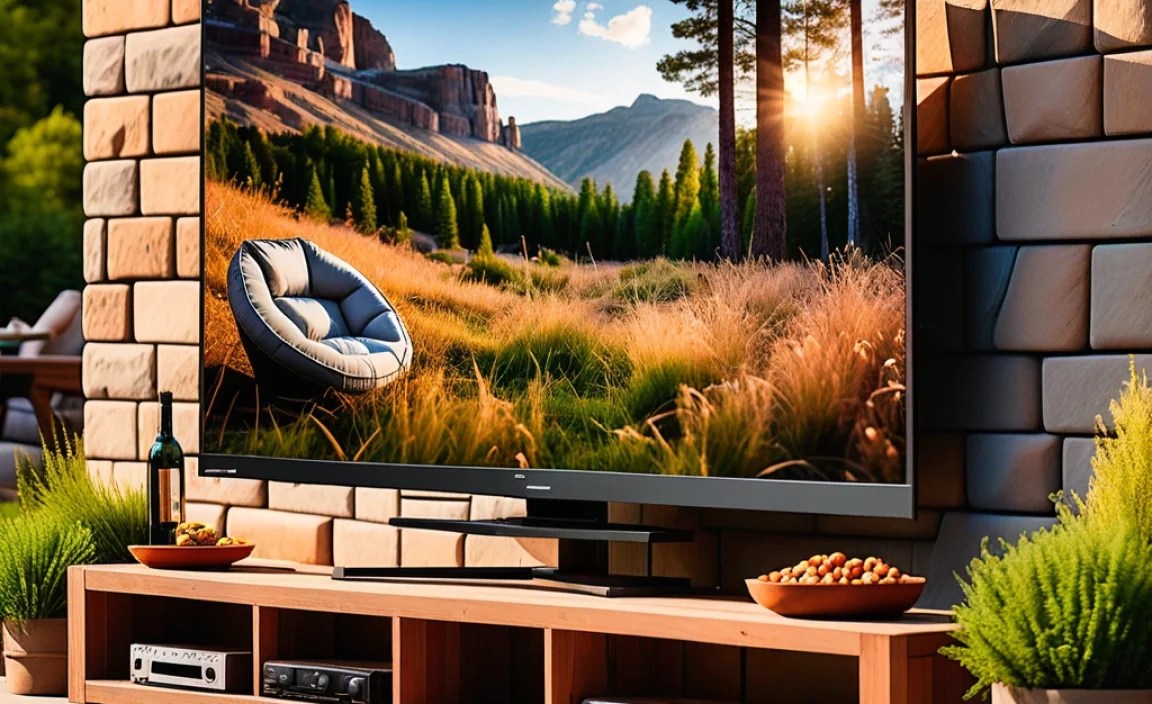
You might see specialized enclosures designed to protect indoor TVs from the elements. While this can be a more budget-friendly option, it comes with its own set of considerations.
Outdoor TV
- Pros: Designed from the ground up for outdoor conditions, optimal brightness and anti-glare, integrated weather sealing, better heat management.
- Cons: Higher upfront cost, limited selection compared to indoor TVs.
Indoor TV in an Enclosure
- Pros: Potentially lower initial cost, access to a wider range of TV models.
- Cons: Glare can still be a significant issue, heat dissipation is a major concern (can damage the indoor TV), enclosures add bulk and can be unsightly, condensation can still form inside, weatherproofing is only as good as the enclosure’s seal.
For the best performance, longevity, and viewing experience, a dedicated outdoor TV is almost always the superior choice. Enclosures are a compromise and require careful management of heat and moisture.
Where Will Your TV Be Placed?
The placement of your outdoor TV is crucial in determining the type of TV you’ll need. Consider the following scenarios:
1. Full Sun Exposure
If your viewing area is a sunny patio, deck, or open backyard, you’ll need a full-sun outdoor TV. These TVs are designed to combat the harshest sunlight with extreme brightness and anti-glare screens.
2. Partial Sun or Shade
If your TV will be under a covered porch, a pergola with a roof, or a large tree that provides significant shade, a partial-sun outdoor TV might be sufficient. They offer better brightness than indoor TVs but are not built to compete with direct, intense sunlight.
3. Covered but Breezy Areas
Even if covered, areas exposed to wind might need robust construction and good speaker systems to overcome ambient noise. Consider TVs with good sound or plan for an external audio setup.
Important Considerations When Buying
Beyond the core features, a few other factors can enhance your outdoor viewing experience and ensure a sound purchase.
1. Screen Size
Outdoor viewing distances can vary. For larger patios or backyards, you’ll want a bigger screen to maintain immersion. Think about how far away people will typically be sitting.
- General Guideline: For every foot of viewing distance, aim for about 10-12 inches of screen diagonal. So, if people sit 10 feet away, a 100-120 inch screen would be ideal, though most outdoor TVs come in more standard sizes like 55″, 65″, 75″, and 85″.
2. Refresh Rate and Motion Handling
If you plan on watching sports or playing video games, a higher refresh rate (e.g., 120Hz) will result in smoother motion and less blur. While outdoor TVs prioritize brightness and weatherproofing, good motion handling is still a plus.
3. Input Lag
For gamers, input lag (the delay between your controller input and the action on screen) is critical. Look for TVs with a “Game Mode” or low input lag specifications.
4. Installation: Wall Mounting Outdoors
Consider how you’ll mount the TV. You’ll need a weather-resistant outdoor mount. Ensure the mounting location is sturdy and can support the TV’s weight. Professional installation is often recommended for safety and proper setup.
5. Power and Cable Management
Outdoor power outlets need to be weatherproof. Running cables outdoors also requires protection from the elements. Consider using conduits or specialized outdoor-rated cables and surge protectors. For more on safe outdoor electrical practices, consult resources from organizations like the National Fire Protection Association (NFPA), which provides safety guidelines for electrical installations.
6. Budget
Outdoor TVs are an investment. They are significantly more expensive than comparable indoor models. Prices can range from roughly $1,000 for smaller, partial-sun models to $5,000 or more for larger, full-sun, high-end units.
Top Outdoor TV Brands and Models to Consider
Several brands have made a name for themselves in the outdoor TV market. While specific models change frequently, these brands are consistent leaders:
- SunBriteTV: Often considered a pioneer in dedicated outdoor TVs. They offer various lines for full sun, shade, and specific commercial applications. Known for robust build quality and weather resistance.
- Samsung: Their “The Terrace” line offers full-sun and partial-sun QLED TVs designed for outdoor use, combining excellent picture quality with outdoor durability.
- LG: LG also offers specialized outdoor models, often leveraging their OLED or QNED technology for brilliant displays, although these are typically best suited for shaded or partially shaded environments due to heat and brightness constraints of current OLED outdoor tech.
- Peerless-AV: While primarily known for mounting solutions, they also offer outdoor-rated displays and TVs, often targeting commercial or more professional installations but suitable for high-end residential use.
- TCL: Increasingly offering outdoor-specific models that aim to provide good value with necessary outdoor features like higher brightness and weatherization.
When looking at specific models, always check the brightness (nits), IP rating, and operating temperature range. Reviews from reputable tech sites can also provide valuable insights into real-world performance.
Installation and Maintenance Tips
Once you’ve purchased your outdoor TV, proper installation and ongoing maintenance are key to its longevity.
Installation
- Choose a Strategic Location: Mount the TV where it minimizes direct sunlight during peak viewing hours if possible, or ensure it’s bright enough for full sun. Protect it from direct rain if not fully waterproof.
- Secure Mounting: Use a heavy-duty, weather-resistant wall mount designed for outdoor use and the weight of your TV. Ensure it’s anchored securely to a strong support structure.
- Proper Cable Management: Use cable covers or conduits to protect wires from UV rays, moisture, and physical damage. Ensure all connections are secure and weatherproofed.
- Power Protection: Use outdoor-rated power outlets and surge protectors. Consider a GFCI (Ground Fault Circuit Interrupter) outlet for added safety.
Maintenance
- Cleaning: Regularly clean the screen and casing with a soft, microfiber cloth. For tougher grime, use a gentle cleaning solution specifically designed for electronics, applied to the cloth, not directly to the screen.
- Check Seals: Periodically inspect any seals or gaskets around the screen, ports, and casing for signs of wear or damage.
- Winterization (in extreme climates): If you live in an area with harsh winters and your TV is not rated for extremely low temperatures, consider removing it or covering it with a protective, breathable cover.
- Ventilation: Ensure the TV has adequate ventilation, especially if it’s in a semi-enclosed space, to prevent overheating.
Outdoor TV Specifications Compared
Here’s a quick comparison to help you visualize the differences between TV types and their key specs for outdoor use:
| Feature | Indoor TV (Standard) | Partial-Sun Outdoor TV | Full-Sun Outdoor TV |
|---|---|---|---|
| Brightness (Nits) | 200-500 nits | 700-1,000+ nits | 1,000-2,500+ nits |
| Glare Resistance | Poor / Standard | Good (Anti-reflective coatings) | Excellent (Anti-glare, matte finishes) |
| Weatherproofing (IP Rating) | None | Typically IPX4-IP55 (Splash/jet resistant) | Typically IP55-IP65 (Dust-tight, powerful jet resistant) |
| Operating Temperature | 32°F to 104°F (0°C to 40°C) | -22°F to 122°F (-30°C to 50°C) | -22°F to 140°F (-30°C to 60°C) |
| Durability | Low (for outdoor use) | Moderate to High | Very High |
| Cost | Lowest | Mid-range to High | Highest |
| Best For | Indoor use only | Shaded patios, covered porches | Direct sunlight, open patios/decks |