
Finding the best TV for apartment accessories means focusing on size, smart features, and connectivity for your specific space. We’ll guide you through choosing a TV that maximizes your small-to-medium living area, easily integrates with devices like soundbars and gaming consoles, and enhances your overall entertainment experience without overwhelming your room.
Living in an apartment often means making smart choices about technology, especially when it comes to your TV. You want a great viewing experience, but space can be a real concern. Picking the right TV isn’t just about screen size; it’s about finding a model that fits seamlessly into your home, connects easily with your favorite gadgets, and doesn’t break the bank. It can feel a bit overwhelming, right? But don’t worry, this guide is here to help. We’ll walk you through everything you need to know, from understanding screen sizes for smaller rooms to choosing smart features that actually make your life easier.
Choosing the Right TV Size for Your Apartment

One of the biggest challenges in apartment living is maximizing your space. When it comes to TVs, this directly translates to choosing the right screen size. A TV that’s too big can dominate your room, making it feel cramped, while one that’s too small might not provide the immersive experience you’re looking for. The key is balance.
Think about the primary viewing distance – how far away will you typically be sitting from the screen? A good rule of thumb is that for every inch of screen diagonal, you should be about 1.5 to 2.5 feet away. For most apartment living rooms, this usually falls into the 32-inch to 55-inch range.
Understanding Viewing Distance
This is crucial. If you’re sitting too close to a large TV, you’ll be moving your head to see the whole picture, which is tiring. If you’re too far from a small one, you might miss details.
- Small Rooms (Under 8 feet viewing distance): 32-inch to 43-inch TVs are often ideal.
- Medium Rooms (8-12 feet viewing distance): 43-inch to 55-inch TVs usually hit the sweet spot.
- Larger Apartment Spaces (Over 12 feet viewing distance): You might consider up to a 65-inch TV, but always measure.
Measuring Your Space
Before you even look at TVs, grab a tape measure. Measure the wall space where you plan to put the TV, and importantly, measure your typical viewing distance from the couch or main seating area. This will prevent costly mistakes. Remember to also account for the TV stand or any wall mount clearance.
Essential TV Features for Apartment Dwellers

Beyond size, specific features can make a big difference in how well a TV fits into your apartment lifestyle. We’re talking about smart capabilities, connectivity, and even how the TV looks when it’s off.
Smart TV Functionality
Most modern TVs are “smart,” meaning they connect to the internet and have built-in apps like Netflix, Hulu, YouTube, and more. This is fantastic for apartments because it reduces the need for extra boxes (like streaming sticks), saving precious space and simplifying your setup.
- Operating Systems: Popular smart TV platforms include Roku TV, Google TV (Android TV), Amazon Fire TV, and LG’s webOS. Each has its own interface and app selection. For beginners, platforms like Roku are known for their simplicity and ease of use.
- App Availability: Ensure the TV’s smart platform supports all the streaming services you use regularly.
- Updates: Smart TV platforms receive regular software updates. It’s good to know if the manufacturer is committed to ongoing support.
Connectivity Options (Ports)
This is where you connect all your accessories. More ports mean more possibilities.
HDMI Ports: This is the most important connection for modern devices. You’ll need at least one HDMI port for a cable box or satellite receiver, another for a Blu-ray player or gaming console, and potentially one for a soundbar. Aim for a TV with at least 2-3 HDMI ports. Higher-end TVs might offer HDMI 2.1, which is great for next-gen gaming but not essential for most apartment setups.
USB Ports: Useful for playing media files from a USB drive or powering small devices. One is usually sufficient.
Audio Outputs: To connect a soundbar or external speakers, you’ll typically use an HDMI ARC (Audio Return Channel) port, an optical audio output, or sometimes a headphone jack. HDMI ARC is the most convenient as it sends audio and can receive commands from your TV remote.
Design and Aesthetics
In a smaller space, how the TV looks matters. Slim bezels and a sleek stand can make the TV feel less intrusive. Consider if you’ll be wall-mounting it, as that can save valuable surface space.
Soundbars and Audio Accessories

Let’s be honest, most apartment TVs have pretty weak built-in speakers. To truly enjoy movies, shows, and especially music, an external audio solution is almost a must-have accessory. A soundbar is often the perfect choice for apartments because they are compact and can significantly improve sound quality without taking up much space.
Why a Soundbar is Great for Apartments
- Space-Saving: Soundbars are typically long, slender units designed to sit in front of or below the TV, or be mounted on the wall. They are far less bulky than traditional surround sound speaker systems.
- Easy Setup: Most soundbars connect with a single cable (usually HDMI ARC or optical audio) to your TV, making setup a breeze.
- Improved Immersion: Even a basic soundbar offers clearer dialogue, richer bass, and a wider soundstage than TV speakers.
Types of Soundbars
Soundbars range from simple 2.0 channel (left and right speakers) to more complex 3.1 (adds a dedicated center channel for dialogue) or even 5.1 (includes wireless rear speakers for surround sound). For apartments, a 2.1 or 3.1 channel soundbar is often the best balance of performance and simplicity.
Other Audio Options
If a soundbar isn’t your style, consider these:
- Bookshelf Speakers: A pair of good quality bookshelf speakers can offer excellent stereo sound and can be placed on shelves or stands.
- Compact Subwoofer: Some soundbars come with a wireless subwoofer, or you can add one separately for a deeper bass.
- Headphones: For late-night viewing or when you don’t want to disturb neighbors, a good pair of headphones is an essential accessory. Many smart TVs allow you to pair Bluetooth headphones directly.
Connectivity Accessories: Streamlining Your Setup
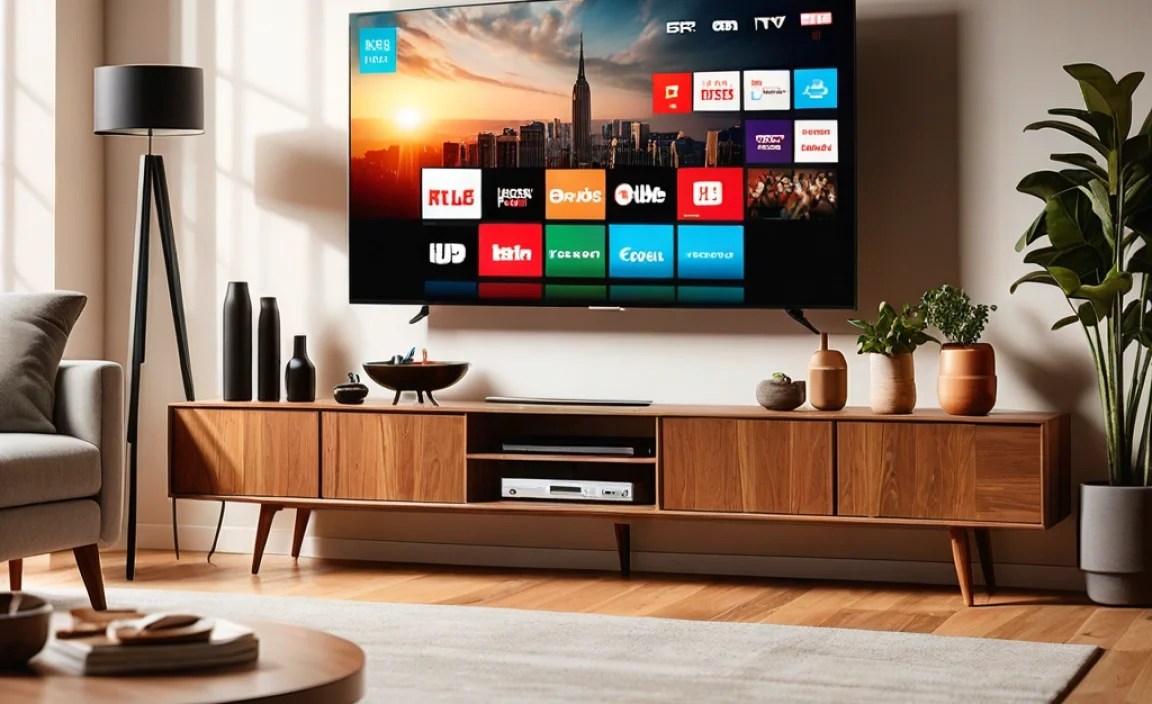
Beyond audio, other small accessories can make a big difference in managing your wires and ensuring everything works smoothly.
Streaming Devices
Even with smart TVs, some people prefer dedicated streaming devices like a Google Chromecast, Amazon Fire TV Stick, or Apple TV. These can offer a different user interface, potentially more apps, or simply better performance than a TV’s built-in smart system. They are tiny and plug directly into an HDMI port, adding minimal bulk.
Wall Mounts
If you want to free up floor or surface space, a TV wall mount is an excellent accessory. Just ensure you have a sturdy wall – drywall with studs is ideal. There are fixed mounts, tilting mounts, and full-motion mounts. For apartments, a tilting or full-motion mount can be very useful for optimizing viewing angles in smaller, multi-purpose rooms.
Important Consideration: Always check the weight and VESA mounting pattern compatibility of your TV with any wall mount you consider. Most TVs and mounts adhere to VESA standards, ensuring they can connect.
Cable Management Solutions
Nothing makes an apartment look more cluttered than a spaghetti of wires. Invest in cable ties, raceways, or sleeve organizers to keep those wires tidy and out of sight. Many are inexpensive and make a huge aesthetic difference.
Top TV Series to Consider for Apartments (Examples)

Here are a few types of TVs and series that tend to be great fits for apartment living, focusing on size, features, and value. Keep in mind that specific models change yearly, but these series offer consistently good options.
| TV Series/Brand Examples | Typical Apartment Suitability Factors | Pros | Cons |
|---|---|---|---|
| TCL 4-Series / 5-Series (Roku TV) | Available in 32″ to 55″ sizes. Excellent smart TV interface. | Affordable, great value, simple Roku interface, good picture for the price. | Motion handling can be less refined than premium TVs, may lack some advanced features. |
| Hisense U6K / U7K Series | Sizes typically start from 50″ or 55″, but offer good value in the 43″-55″ range. Google TV or other smart platforms. | Good brightness, decent contrast, supports HDR (HDR10+, Dolby Vision), good for gaming features on higher models. | Color accuracy out-of-the-box can vary, sound quality is average. |
| LG UQ/QNED Series (Non-OLED) | Various sizes often including 43″ and 49″ options. LG’s webOS smart platform. | Sleek design, intuitive webOS, good color reproduction, often slim profile. | Can be pricier than TCL/Hisense for similar specs, black levels not as deep as OLED. |
| Samsung Crystal UHD Series | Sizes typically from 43″. Samsung’s Tizen smart platform. | Stylish design, vast app support via Tizen, decent smart features. | Limited local dimming (affects contrast), can be more expensive for equivalent specs. |
Choosing Between 4K, HDR, and Refresh Rates
For most apartments, a 4K TV is standard now and offers a sharp picture. High Dynamic Range (HDR) content (like HDR10, HDR10+, Dolby Vision) provides better contrast and colors. Look for HDR support on any TV you consider for a more vibrant image. Refresh rate (e.g., 60Hz vs. 120Hz) matters most for fast-action content like sports or gaming. For typical movie/TV watching in an apartment, a 60Hz TV is usually perfectly adequate and more budget-friendly.
Setting Up Your Apartment TV Accessories
Once you have your TV and accessories, the setup should be straightforward. Here’s a general approach:
- Unboxing and Placement: Carefully unpack your TV. Decide if it’s going on a stand or being wall-mounted. If on a stand, attach it according to the manual. If wall-mounting, ensure you use appropriate hardware for your wall type and follow the mount’s instructions precisely. Seek professional help if you’re unsure about wall mounting.
- Connecting Power and HDMI: Plug in the power cord. Connect your primary devices (cable box, streaming stick, game console) to the HDMI ports on the back of the TV.
- Connecting Audio: If you have a soundbar, connect it to the TV using an HDMI ARC port (if available) or an optical audio cable. Turn on both devices.
- Initial TV Setup: Turn on the TV and follow the on-screen prompts. This will include connecting to your Wi-Fi network (for smart features) and selecting your language.
- Configuring Smart Features: Log in to your various streaming accounts on the TV or your connected streaming device.
- Audio Setup: If using a soundbar, ensure the TV is set to output audio via the correct port (HDMI ARC or Optical). You might need to go into the TV’s sound settings.
- Testing: Play some content from different sources to ensure everything is working and the picture and sound are to your liking. Adjust picture and sound settings as needed.
Troubleshooting Common Issues
If you encounter problems, don’t panic. Check these common culprits:
- No Picture/Sound: Ensure all cables are securely plugged in at both ends. Check that the correct input source is selected on the TV.
- Smart TV Apps Not Loading: Verify your Wi-Fi connection. Restart your TV and router.
- Soundbar Not Working: Make sure the soundbar is set to the correct input. Ensure the HDMI cable is plugged into the ARC-compatible port on both the TV and soundbar if using ARC. Check the TV’s audio output settings.
- Remote Control Issues: Ensure the batteries are fresh and inserted correctly. Check for any obstructions between the remote and the TV.
Frequently Asked Questions (FAQ)
What’s the best TV size for a small apartment?
For most small apartments, a TV between 32 inches and 43 inches is ideal. This size offers a good viewing experience without overwhelming limited space. Always measure your viewing distance to confirm.
Do I really need a soundbar for my apartment TV?
While not strictly mandatory, a soundbar is highly recommended for apartment TVs. Built-in TV speakers are often weak, and a soundbar significantly enhances dialogue clarity, bass, and overall audio immersion, making movies and shows much more enjoyable.
How many HDMI ports do I need on an apartment TV?
Aim for at least two to three HDMI ports. This allows you to connect a streaming device, a gaming console, and a soundbar simultaneously without constantly swapping cables.
Are 4K TVs too much for small apartments?
No, 4K TVs are not too much for small apartments. In fact, they are now the standard and offer a much sharper, more detailed picture than older HD TVs. The higher resolution is beneficial even at closer viewing distances common in apartments.
Should I wall-mount my TV in an apartment?
Wall-mounting is a great space-saving option for apartments, especially in smaller rooms. It frees up surface space and can improve viewing angles. Just ensure you have a suitable wall structure and the correct mounting hardware.
What is HDMI ARC, and why is it useful for apartment TV setups?
HDMI ARC (Audio Return Channel) allows audio to travel from the TV to a soundbar or receiver using the same HDMI cable that sends video to the TV. This simplifies your setup with fewer cables and often allows you to control the soundbar volume with your TV remote.
Are OLED TVs a good choice for apartments?
OLED TVs offer incredible picture quality but are typically more expensive and often come in larger sizes that might not be suitable for very small apartments. However, if you find a smaller OLED model (like 42-inch or 48-inch) and budget allows, it can offer a premium viewing experience.
Conclusion
Finding the best TV for apartment accessories is all about making smart choices that balance your space, budget, and entertainment needs. By focusing on appropriate screen sizes, leveraging the convenience of smart TV features, and enhancing your audio with a compact soundbar, you can create an impressive home theater experience without filling your entire living area. Remember to measure your space, prioritize connectivity, and consider how accessories like wall mounts and cable management can further optimize your setup.
Don’t be afraid to explore different brands and their offerings, especially those known for good value in smaller screen sizes. With a little planning and this guide in hand, you’re well on your way to enjoying a fantastic entertainment setup that perfectly complements your apartment living.