
Unlock stunning 4K visuals on your budget TV in 2025! This guide provides simple, genius settings adjustments for picture, sound, and gaming, making your affordable TV look and sound far more expensive. Get ready for an amazing viewing experience without breaking the bank.
So, you’ve snagged a fantastic budget 4K TV for 2025, and you’re excited to enjoy those gorgeous, sharp pictures. But wait – is the picture looking a bit… off? Colours a little muddy? Motion a bit flickery? You’re not alone! Many people find that out-of-the-box TV settings don’t do their new screen justice. It can feel frustrating when you know your TV can look better, but you’re not sure how to make it happen. The good news? You don’t need to be a tech guru to get amazing results. This guide is designed to walk you through the simple, genius settings tweaks that will transform your budget 4K TV into a home theater powerhouse. We’ll cover picture modes, colour calibration, sound enhancement, and even gaming optimisations, all with easy-to-follow steps.
Your Budget 4K TV: Unlocking Its Full Potential in 2025

Buying the “best budget 4K TV 2025” is smart shopping. You get incredible resolution – four times that of Full HD – without the premium price tag. But that sharp pixel count is only half the story. The real magic happens when you dial in the TV’s settings. Think of it like buying a great pair of headphones; they sound good out of the box, but a quick EQ tweak can make them sing! Similarly, these budget-friendly TVs have hidden capabilities, waiting for you to unlock them with the right settings.
We’re going to demystify those confusing menus and turn them into your best friends. Forget complicated jargon; we’ll focus on practical, easy-to-implement changes that make a real difference for movies, sports, and gaming. Get ready to see your favourite content in a whole new light!
Understanding Your TV’s Picture Modes: The Foundation

The first step to a better picture is choosing the right picture mode. These modes are pre-set configurations designed for different viewing scenarios. Using the wrong mode can make colours look unnatural or the picture too dim or too bright. For our budget 4K TV setup, we’re aiming for accuracy and vibrancy.
The Most Common Picture Modes and What They Do
- Standard/Normal: This is usually the default mode. It often boosts brightness and saturation to look good in a brightly lit showroom, but it’s not the most accurate for home viewing and can lead to washed-out colours or unnatural skin tones.
- Dynamic/Vivid: This mode cranks up the brightness, contrast, and colour to the max. It makes colours pop, but it really sacrifices accuracy. Whites can be blown out, blacks can lose detail, and colours will look oversaturated. Best avoided for serious watching.
- Movie/Cinema/Filmmaker Mode: This is usually your best bet! These modes are designed to reproduce the image as the filmmaker intended. They tend to be more accurate with colours, better preserve detail in both bright and dark scenes, and avoid artificial sharpening.
- Sports: This mode often boosts motion handling and brightness to make fast action look smoother and colours appear more vibrant, which can be good for live sports but less ideal for movies.
- Game Mode: Crucial for gamers! This mode significantly reduces input lag, which is the delay between your controller input and the action on screen. We’ll talk more about this later.
What’s the Best Picture Mode for Most Content?
For general viewing, especially movies and TV shows, Movie, Cinema, or Filmmaker Mode is almost always the winner on budget TVs. These modes are designed for accuracy. If your TV has a “Filmmaker Mode,” that’s often the most advanced and faithful option, aiming to disable most of the TV’s image processing to show you the content as it was meant to be seen.
Basic Picture Settings: Beyond the Mode Name
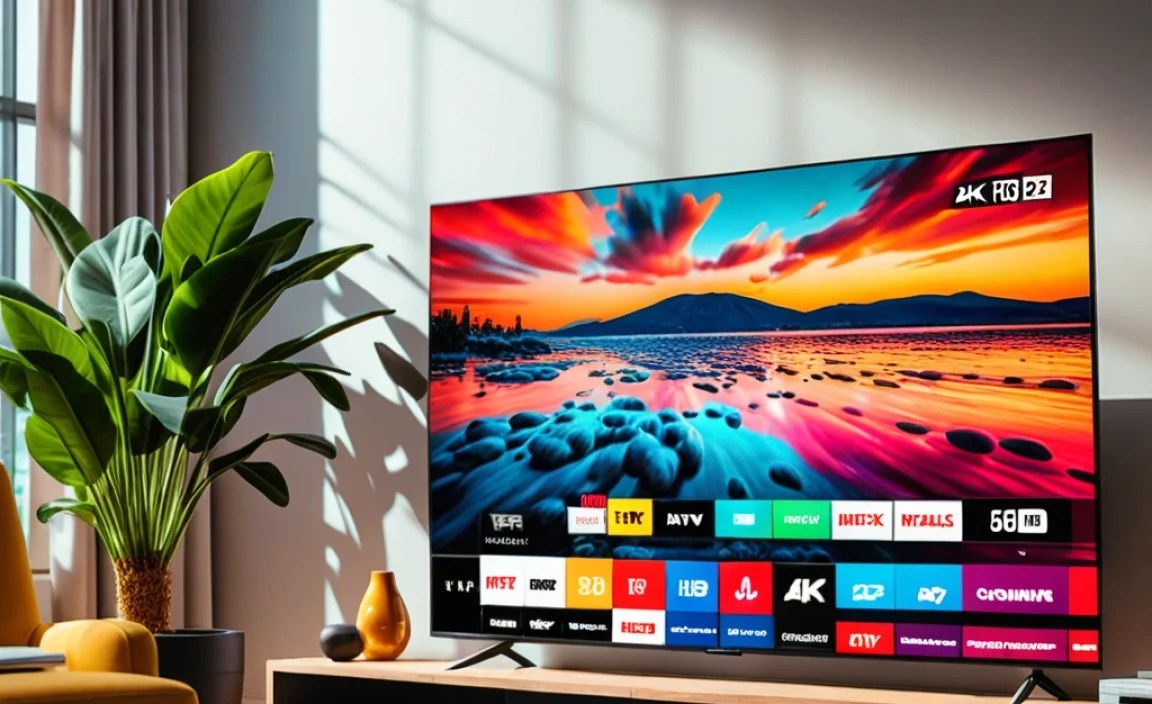
Once you’ve selected your preferred picture mode (likely Movie/Cinema), it’s time to fine-tune the individual settings. Don’t be intimidated by all the options; we’ll focus on the most impactful ones.
Brightness, Contrast, and Backlight
These are the cornerstones of picture quality. Adjusting them correctly can make a huge difference in how much detail you see in dark and bright areas.
- Brightness: This setting controls the black level of the picture.
- Too high: Blacks will look grey and washed out, losing detail.
- Too low: You’ll lose detail in dark scenes; shadows will be completely crushed.
- Contrast: This controls the white level of the picture.
- Too high: Bright areas will lose detail (blown out); colours might look unnatural.
- Too low: The picture will look flat and lack punch.
- Backlight: This is often the most important setting for overall picture brightness. It controls the intensity of the panel’s illumination.
- Too high: Can make the picture too bright for a dark room, cause eye strain, and potentially shorten the lifespan of the LEDs.
- Too low: The picture will be too dim to enjoy fully.
How to Adjust Brightness, Contrast, and Backlight: A Simple Test
- Start with Brightness and Contrast at their default (or 50).
- Select your Movie/Cinema picture mode.
- For Backlight: In a dimly lit room, adjust the Backlight until the picture is comfortable to watch. A good starting point is often between 40-70%, depending on your room’s ambient light. If it looks too dim, increase it. Too bright? Decrease it.
- For Brightness: Use a known dark image or scene. Slowly increase Brightness until you can just start to see details in the very darkest parts of the image. Then, decrease it by one or two notches until those dark areas are solid black again, but without losing all information.
- For Contrast: Use a known bright image or scene. Increase Contrast until bright areas start to lose detail or “clip” (become pure white without texture). Then, reduce it slightly until you can see the detail in those bright textures again.
Refer to visual aids like the Spears & Munsil UHD Benchmark disc or online calibration patterns (search “4K calibration patterns” on YouTube) for the most accurate results. Many modern TVs also have built-in calibration tools.
Colour Temperature: Getting Skin Tones Right
Colour temperature affects the “warmth” or “coolness” of the picture. A higher colour temperature (like “Cool” or “Blue”) makes whites appear bluish, while a lower one (like “Warm” or “Red”) makes them appear yellowish. For natural-looking images, especially skin tones, you want colours to be as “neutral” or “warm” as possible.
- Cool/Blue: Makes whites and skin tones look unnatural, often giving a sallow or sickly appearance.
- Neutral/Standard: A good middle ground if available.
- Warm/Red: This is usually the closest to accurate for movies and TV. Most professional reviews and calibration guides recommend a warm setting (often labelled as Warm1 or Warm2 if there are multiple).
Tip: If you have a “Warm” setting that looks too yellow, try a slightly cooler warm setting (e.g., Warm1 instead of Warm2) or a “Standard” if it appears more accurate than the warmest option. The goal is natural skin tones.
Sharpness: Less is Often More
Sharpness controls how defined the edges of objects in the picture are. While you might think more sharpness equals a better 4K picture, it can actually introduce artificial-looking edge enhancement, also known as “haloing,” which can make the image look harsh and introduce artifacts.
- On most budget 4K TVs, the optimal setting for Sharpness is often quite low, sometimes even zero or near zero.
- A good starting point in Movie/Cinema mode is often between 0 and 10.
- Adjust by looking at fine details like text or thin lines. If they look overly crisp or have a white outline, reduce sharpness. If they look blurry, slightly increase it, but stop before you see halos.
Colour Saturation and Tint
Colour Saturation: This controls the intensity of colours. In Movie/Cinema mode, the default is usually a good starting point. If colours look too muted, you can increase it slightly. If they look unnatural or overly vibrant, decrease it.
Tint/Hue: This adjusts the balance between green and red. It’s rare that you’ll need to adjust this unless you’re trying to correct a strong colour cast. For most viewers, leaving this at its default setting is best.
Advanced Picture Settings (Optional but Recommended)

These settings can offer further improvements but are sometimes more complex. Feel free to experiment, but always remember your baseline adjustments.
Dynamic Contrast and Colour Enhancers
Many TVs have settings like “Dynamic Contrast,” “Black Enhancer,” “Auto Motion Plus,” “Colour Enhancer,” or “Digital Noise Reduction.”
- Dynamic Contrast/Black Enhancer: These settings try to improve contrast and black levels dynamically. On budget TVs, they can often crush shadow detail or introduce artifacts. Try turning them off first and see if your manual adjustments are better. If you still want more punch, experiment with them at a low setting.
- Colour Enhancer/Live Colour: Similar to Dynamic Contrast, these can make colours pop but often at the expense of accuracy. It’s usually best to disable these in your chosen accurate picture mode.
- Digital Noise Reduction (DNR) / MPEG Noise Reduction: These settings are designed to clean up picture noise found in lower-quality content (like old DVDs or some streaming). If you’re watching native 4K content, these are usually unnecessary and can soften the image. Turn them off for 4K material.
Motion Smoothing (The Soap Opera Effect)
This is one of the most debated picture settings. Found under names like “Motionflow,” “TruMotion,” “Auto Motion Plus,” or “Clear Motion,” this feature interpolates frames to make motion look smoother. While it can be good for fast-paced sports, it often creates the “soap opera effect” (SOE) in movies, making them look like a low-budget video, which most filmmakers dislike.
- For Movies/TV Shows: Turn motion smoothing OFF or set it to its lowest, least intrusive setting. If your TV has a “Cinematic” or “Judder Reduction” setting, you might use that sparingly if you notice judder (choppy motion) in slow pans, but “off” is generally preferred.
- For Sports: You might want to experiment with this setting. A moderate level can make fast action look clearer.
- For Gaming: Turn this OFF. It adds input lag.
For more on the “Soap Opera Effect” and how to combat it, check out resources like Rtings.com, a reputable TV review site, which explains it thoroughly.
Optimizing Sound Settings for Your Budget TV

While picture quality is paramount, good sound makes a huge difference to your viewing experience. Most budget TVs have limited speaker power and quality, but a few simple adjustments can help.
Standard Sound Modes
- Standard/Normal: Similar to picture settings, this is the baseline.
- Music: Can sometimes boost clarity in vocals or instruments.
- Movie/Cinema: Often attempts to create a wider soundstage or more immersive experience.
- Clear Voice/Dialogue Enhancement: This is very useful! It boosts the mid-range frequencies where dialogue is most prominent, making it easier to understand speech, especially in loud scenes.
- Custom: Allows for EQ adjustments if your TV has them.
Recommended Sound Settings
On your budget TV, the best approach is usually:
- Select “Clear Voice” or “Dialogue Enhancement” if available. This makes a noticeable difference for people.
- Consider “Movie” or “Standard” for general listening.
- If your TV has an equaliser (EQ): You can try boosting frequencies around 1kHz-5kHz slightly to help with dialogue, but be careful not to make it sound tinny.
Don’t Expect Miracles: For truly immersive sound, consider a soundbar or a home theater system. Even a budget soundbar can dramatically outperform built-in TV speakers.
Gaming Settings: Lag-Free Fun
If you’re a gamer, these settings are non-negotiable. Input lag can make games feel sluggish and unresponsive. Fortunately, most TVs have a dedicated mode.
Input Lag Explained
Input lag is the delay between when you press a button on your controller and when that action appears on screen. High input lag makes games feel like you’re playing through syrup, especially in fast-paced action or competitive games. A budget 4K TV can still be great for gaming if you tackle this.
The Crucial “Game Mode”
- What it does: Game Mode bypasses much of the TV’s image processing that adds latency. This dramatically reduces input lag.
- To enable: Navigate to your TV’s picture or general settings and find “Game Mode” or “Game Picture.” Turn it ON.
Other Gaming Settings
- Picture Mode: Within Game Mode, you may still be able to select a picture preset. Often, “Standard” or “Dynamic” are the only options available, or you might be able to choose “Movie” for slightly better colour. Use what looks best to you.
- Motion Smoothing: For gaming, ALWAYS turn motion smoothing OFF (0), regardless of the mode. It adds input lag.
- Sharpness: Set this to a low value in Game Mode, similar to how you would for movies, to avoid artifacts.
- HDMI Input Settings: Some TVs have specific settings for HDMI ports, like “HDMI Deep Colour” or “HDMI Ultra HD Deep Colour.” Ensure these are enabled for the HDMI port you’re using for your console to get the full 4K HDR experience if your TV/console supports it.
Testing Input Lag: You can get a rough idea of input lag using a fast camera on your phone and a stopwatch app. Compare the time the button press occurs on screen in a game to the exact moment it’s registered by your console (if the game displays this) or by looking at the on-screen reaction. For more scientific testing, consult DisplayLag.com.
Putting It All Together: A Settings Cheat Sheet for 2025
Here’s a quick reference table to help you dial in those settings. Remember that exact menu names can vary by manufacturer.
| Setting Category | Recommended For Movies/TV | Recommended For Gaming | Notes |
|---|---|---|---|
| Picture Mode | Movie, Cinema, Filmmaker Mode | Game Mode | Always start with the most accurate/lowest lag mode. |
| Backlight | 20-70 (adjust to room light) | Varies (often fixed in Game Mode) | Controls overall brightness. |
| Brightness | Adjust for black detail (50 or custom) | Adjust for black detail (50 or custom) | Controls black levels. |
| Contrast | Adjust for white detail (50 or custom) | Adjust for white detail (50 or custom) | Controls white levels. |
| Colour Temperature | Warm or Warm1 | Standard or Warm | Aim for natural skin tones. |
| Sharpness | 0-10 | 0-10 | Avoid edge enhancement. |
| Motion Smoothing | Off | Off | Avoid “Soap Opera Effect” and input lag. |
| Dynamic Contrast / Enhancers | Off (or Low experimentation) | Off | Can degrade picture quality. |
| Noise Reduction (DNR) | Off (for 4K content) | Off | Soft |